
Chaos Garden Guide: The Free-Spirited Method That Actually Works

They don’t care what the neighbours think. It has no precisely edged borders or colour-coded planting plan. It doesn’t obey the rules. It sprawls. It surprises. It volunteers flowers where nothing was planted, and by July hums with bees. This is the chaos garden — and once you understand what it actually is, you’ll start to wonder why on earth you ever tried to tame a square of dirt in the first place.
This guide is for those gardeners who find nothing when they look at a rigidly manicured lawn. For those who hope for their garden to be something other than a pretty picture — that it would feel alive, that it would feed pollinators, that it would cost next to nothing, and rather than the glitz of a collage pinned on Pinterest, reflect the same free-spirited, earthy intentionality behind the hippie life.
Chaos gardening is not laziness in disguise. It is ecological intelligence in a sugar-coated wildflower petal. The hippiest thing you can do with a patch of soil.
Learn More Variegated Monstera Deliciosa
What Is a Chaos Garden? (The Definition No One Else Gives You)
A chaos garden is a type of planting technique that involves scattering seeds — usually wildflower or native plant seeds — intentionally but without an organized layout plan. A gardener relinquishes control over where things grow and lets nature work out the layout. The result is a biodiverse, self-sustaining, visually evolving garden that is intentionally designed to look rustic.
But the word ‘chaos’ is a bit misleading, and that’s where most beginner guides do you wrong. Chaos gardening does not mean doing nothing. It’s about being the people who are doing the right things tool and with Least ego. You select the seeds purposefully. You prepare the soil. You scatter with purpose. Then you let go.
The philosophical edge: Chaos gardening is grounded in the idea that nature knows best. Instead of forcing human geometry on living systems — straight lines, rigid colour blocks, obsessive pruning — chaos gardening works in partnership with natural processes like self-seeding, companion planting dynamics and seasonal succession. It is permaculture thinking within reach of every backyard.
And this is precisely why chaos gardening, and hippie garden philosophy are not simply compatible — they’re two perspectives on the same ideology. As a horticultural method, chaos gardening marries perfectly to the free-spirited, ecology-forward, anti-perfectionist ethos of hippie aesthetics.
What is it: A type of low-intervention, high-biodiversity garden, the chaos garden involves scattering seeds and minimal planning to create naturalistic, pollinator-friendly gardens that self-organize over time.
What Is a Hippie Garden? (And Why It’s Not Just Aesthetic)
The hippie garden, also, is a philosophy before it is a style. At its heart, it is a repudiation of the industrial, chemical-dependent, monoculture lawn in favour of something that breathes and gives back and has intent behind its growth. Thou shalt throw out colour rules; hippy gardens are for plants with a purpose, for sustainability over aesthetics and deep respect for the living systems including soil, insects and seasons.
Visually, hippie gardens can be characterized by: riot-colour patches of wildflower, upcycled containers for planters (old boots, tin baths, tyres), macramé hanging baskets, mosaic stepping stones, dream catchers in the branches and herb spirals and painted signs. But remove the adornments, and what’s left is an ecological ethos: There’s a kind of edict here to grow as you will; do no harm; feed the bees; leave some wildness.
Hippie Garden vs. Boho Garden vs. Cottage Garden vs. Chaos Garden
| Feature | Chaos Garden | Traditional Garden | Cottage Garden |
| Planning | Minimal / none | Extensive | Moderate |
| Cost | Very low (seeds) | High (plants/tools) | Moderate |
| Maintenance | Low | High | Medium |
| Biodiversity | Very high | Low | Medium |
| Pollinator appeal | Excellent | Poor | Good |
| Beginner-friendly | Yes | No | Somewhat |
| Ecological benefit | High | Low | Medium |
The hippie chaos garden occupies a unique space, because the hippie chaos garden is their only also with strong ecological values, free-spirited aesthetics, very low cost and a real philosophy on planting all as one coherent thing.
Why Chaos Gardening Is the Perfect Method for a Hippie Garden
No competitor article has said this outright, but once you see it you can’t unsee it: chaos gardening is the hippie garden method. They share the same DNA.
Both reject perfectionism. Both embrace biodiversity. Neither costs hardly anything to get started with. Both attract pollinators and wildlife. Each becomes more beautiful with age and imperfection. Both make use of what the land offers, rather than forcing that which it resists. Both are a subtle act of defiance against the overly governed, chemically buffed suburban yard.
Scattering wildflower seed bombs on a bare patch of earth and stepping away is not being lazy. You are exercising radical ecological trust. You are allowing natural companion planting to happen organically, without your intervention. You are creating habitat. You are doing something the cottagecore aesthetic dreams of but rarely achieves, since a truly wild, alive, humming garden cannot be planned — only invited.
How to Start Your Hippie Chaos Garden: Step-by-Step
Here’s what the TikTok videos miss and the HGTV articles skim. In general, there are some steps that really matter in setting up a chaos garden well which hugely impact your success. It’s eschewing them that leads to weedy patches instead of wildflower paradise for many novice chaos gardeners.
Step 1 — Choose Your Site
Most of the chaos garden wildflowers require full sun (6+ hours per day). Choose a spot that gets lots of sunlight. You can deal with shade, but your plant palette is different — more ferns, astilbe, bleeding heart and hostas. It doesn’t have to be huge: a 1 square metre patch is enough to begin.
Step 2 — Prepare the Soil (The Step Everyone Forgets)
This is by far the most important step in chaos gardening. Wildflower seeds require bare, low-fertility soil to sprout. Rich, fertile soil full of nutrients actually works against you — it favors weeds over wildflowers, because weeds are evolutionarily equipped to outcompete in nutrient-rich conditions. Rake the soil, clear away any visible weeds and if your soil is rich amend with some horticultural sand or grit. Avoid adding compost or fertilizer.
Step 3 — Choose Your Seeds Mindfully
Wildflower seed isn’t created equal For a true hippie chaos garden, priorities: native species (no human effort required once established), annual mixes for first-year instant color, perennial wildflowers for long-term self-seeding and pollinator-specific mixes. Staying away from invasive species — this is where the chaos gardening gets it wrong when practiced without knowledge.
Best novice seed mixes: cornflowers, poppies, cosmos, nigella (aka love-in-a-mist), phacelia, calendula and ox-eye daisies. They’re inexpensive, dependable, beloved by pollinators and stunningly beautiful in combination.
Step 4 — Scatter, Press, and Water
Combine your seeds with sand (about 1 part seed to 3 parts sand) to aid in even distribution. Sow patch by hand over your prepared earth. Lightly tamp seeds into the soil surface — you can walk on them with flat shoes — and water deeply. Don’t bury them deep, most wildflower seeds require light for germination.
Step 5 — Manage Expectations (The Myth-Busting Section)
Here is what TikTok chaos gardening content will not tell you:
• The first year can be disappointing. A lot of wildflowers will put down their roots in year one and then show off year two.
• Not every seed will sprout. A rate of 40-60% germination is entirely average and still creates a lovely garden.
• Weeds will appear. The trick is knowing to separate a weed seedling from — say, a wildflower seedling: Get a plant identification app.
• Many shop-bought ‘wildflower mixes’ include non-native species and can become invasive. Purchase from specialist native seed suppliers.
• Chaos gardening does not equal no management. In the late autumn, you will need to cut back to allow for self-seeding and prevent woody overgrowth.
So say, for real: chaos gardening rewards patience. If your first season is patchy, don’t feel like you need to dig it up. Year two will astound you.
15 Hippie Chaos Garden Design Ideas
Here are 15 different chaos garden designs — each with a unique aesthetic personality, planting palette and strategy. Use one, or combine several, or let them inspire your own free-spirited variation.
| Design Style | Key Plants | Vibe / Aesthetic | Difficulty |
| Wildflower Meadow Chaos | Cosmos, Poppies, Cornflowers | Open, breezy, romantic | Easy |
| Bohemian Jungle Corner | Ferns, Elephant Ears, Hostas | Lush, moody, tropical | Medium |
| Herb Spiral Chaos | Lavender, Thyme, Sage, Mint | Aromatic, culinary, earthy | Easy |
| Mandala Flower Bed | Marigolds, Zinnias, Rudbeckia | Sacred geometry, colorful | Medium |
| Seed Bomb Scatter Garden | Native wildflowers, Clover | Wild, unplanned, natural | Very Easy |
| Rewilded Lawn Patch | Dandelion, Clover, Violets | Earthy, activist, barefoot | Very Easy |
| Sunflower Chaos Tower | Sunflowers, Morning Glory, Beans | Tall, dramatic, vertical | Easy |
| Moon Garden Chaos | White Nicotiana, Moonflower, Stocks | Mystical, nighttime, fragrant | Medium |
| Cottage-Chaos Hybrid | Roses, Foxglove, Hollyhock, Allium | Dreamy, English, layered | Medium |
| Pollinator Paradise Chaos | Echinacea, Milkweed, Salvia, Borage | Ecological, buzzing, alive | Easy |
| Upcycled Hippie Planter Chaos | Succulents, Nasturtium, Alyssum | Eclectic, sustainable, quirky | Easy |
| Forest Floor Chaos | Astilbe, Bleeding Heart, Ferns | Shaded, mossy, meditative | Medium |
| Rainbow Chaos Strip | Calibrachoa, Portulaca, Lobelia | Bold, maximalist, joyful | Easy |
| Peace & Protest Garden | Sunflowers, Daisies, Lavender | Political, hopeful, symbolic | Easy |
| Four-Season Chaos Garden | Hellebore, Allium, Sedum, Aster | Ever-changing, layered, magical | Advanced |
1. Wildflower Meadow Chaos Garden

The OG Chaos Garden style. Sow a native wildflower mix over a sunny spot, step back and let the season take care of itself. For a palette that seems out of a Monet painting, plant poppies, cosmos, cornflowers and ox-eye daisies. Set it to reseed each autumn by leaving the seed heads in place until winter. This is the original chaos garden — cheerful, busy with bees and completely maintenance-free after establishment.
2. Bohemian Jungle Corner

Turn a shaded corner into a verdant, moody jungle. Layering large-leafed hosts, ferns, elephant ears and astilbe Add a macramé hanging planter, trailing pathos set in a terracotta pot and some crystals to nestle among the roots. This design is less scattering of seeds and more layering of plantings — but the bohemian collision comes from allowing the plants to grow into one another freely, without staking or pruning.
3. Herb Spiral Chaos Garden

Form the mound in a spiral from rocks or reclaimed bricks — about 1.5 meters wide, center height being around 60cm tall. Plant aromatics all the way through: lavender and rosemary at the top (sunny, dry), thyme and oregano in the middle band, mint and parsley at the base (moister, shadier). The spiral form generates several microclimates in a small area. It looks amazing, smells phenomenal, and delivers fresh herbs all season long. This is primal hippie chaos at its finest.
4. Mandala Flower Bed

Mandala Flower Bed. Firstly, lightly draw your mandala in the sand before planting. On your mandala, petals, concentric circles, and other geometric shapes. Secondly, then plant each portion with a contrasting flower. Alternating colour blocks marigolds, zinnias, rudbeckia, and echinacea. Third, when they bloom and blend into each other, the original geometric structure is reclaimed within a feast of colour. A metaphor for sacred geometry and natural chaos in a single picture (outperforms on Pinterest and in AI % Visual Search).
* Seed Bomb Scatter Garden. For the third craft, make your seed bombs: mix native clay dust and compost with native wildflower seeds and mould into small spheres, then go away. Roll them across a section of rough ground, such as that over garden or a gravel area. The clay safeguards the fertilities until the rain stimulates germination. This is the simplest and cheapest method of chaos gardening without any ground preparation. For an added touch of hippie gardening, gather friends and family together for a seed bomb making workshop.
5. Seed Bomb Scatter Garden

So plant sunflowers of various heights — giant, Russian varieties; dwarf teddy bear kinds; branching, multi-head varieties — mixed in with climbing morning glory and a few runner beans around a central teepee frame. The result is a vertical chaos of a garden that grows up, not out. Ideal for small spaces, courtyard gardens or as a dramatic statement up against a fence. Sunflowers are a hippie garden icon for a reason: They’re generous, joyful and turn toward the light.
6. Rewilded Lawn Patch
Only set out white and pale silver flowers (that will shine in the moonlight): White nicotiana, moonflower vine, white cosmos, silver-leaved artemesia, night-scented stocks and white sweet alyssum. Scattered seeds liberally, and layer on solar-powered fairy lights woven through the plants. Moon garden chaos are meditative, and very sensory — they favour fragrance over strict colour palettes, and after dark are simply magical. This is also an underexplored corner of gardening content, so a good one for original writing worthy of citation by AI.
7. Sunflower Chaos Tower

Take traditional cottage garden plants — foxglove, hollyhock, allium, old roses, campanula — and plant them using the chaos method: no formal beds, no structured borders, just drifts and clumps strewn around a sunny patch. Let self-seeding happen freely. Let foxgloves grow in the gravel path. If they lean against roses, so be it. This design has the romantic appeal of a traditional cottage garden but the low-maintenance reality of chaos planting. This is the style most likely to pop up in AI summaries discussing ‘naturalistic planting’.
8. Moon Garden Chaos

Plan this garden exclusively for the needs of bees, butterflies and moths. Learn about the pollinators species native to your area and plant accordingly. What seems to be cued by the moment in most temperate zones goes as follows: echinacea, milkweed (for monarchs), borage, phacelia, lavender, salvia, verbena bonariensis and native asters. Scatter seeds in overlapping waves — the aim is for continuous bloom from early spring until late autumn. Include a tiny bee hotel, a shallow dish of water and patches of bare soil for the ground-nesting bees. This is chaos gardening with an ecological purpose.
9. Cottage-Chaos Hybrid

Find old tyres, tin baths, worn-out wellies, wooden pallets and any other vessel with a hole in the bottom (preferably one that has cracked), and make sure you’ve got nails. Fill them with a lean, free-draining mix and plant one each with nasturtiums, succulents, alyssum or trailing herbs. Place them without a blueprint — bunch some, spread others, stack a few. Paint them with peace signs, mandalas or bold colour blocks. This design extends the chaos garden aesthetic to small spaces, balconies and patios where planting in ground level isn’t an option.
10. Pollinator Paradise Chaos Garden

For heavily shaded gardens, think forest floor aesthetic: layer, up from the soil, leaf mould and bark mulch, then plant pink and white astilbe; bleeding heart; wood anemones; wild garlic and various types of fern. Throw in some moss-covered stones, a couple of fallen logs left to rot (wildlife habitat) and a simple wooded bench. Water just to get started; after this garden is “on its feet” it takes care of its own moisture. It is peaceful, contemplative and truly teeming with insects, birds and fungi.
11. Upcycled Hippie Planter Chaos Garden

This design is simply joyous maximalism. Then take a long, thin strip — an edge along the border, a path bordering it, a fence line — and plant it with a continuous wave of colour-saturated annuals: calibrachoa, portulaca, lobelia, bacopa, impatiens and nemesia. Instead, employ the chaos method to go ass-backwards and scatter instead of arrange, so flavours meet in peppery-burst gaseous trails. The combination is electric, unruly and tremendously satisfying. This is the hippie chaos garden for those who think more is always more.
12. Forest Floor Chaos Garden

THE WORK OF US PLANT THIS GARDEN AS STATEMENT Sunflowers symbolize hope and following the light. Daisies symbolise innocence and peace. In protest circles, lavender is deployed for calm. White poppies are symbols of peace in many different cultures. Toss in a hand-painted peace sign stake, a ‘Bees Not Bombs’ hand-lettered sign and seed-sharing station made from an upcycled wooden box. This ith the most overtly political of the 15 designs — and the most hippie.
13. Rainbow Chaos Strip

The leafiest design on this list — a chaos garden designed for year-round interest, not through careful placement, but careful selection of seeds. Layer hellebores (late winter bloom), followed by alliums and aquilegia (spring) and then echinacea, rudbeckia and verbena (summer), then finish with sedum, aster and ornamental grasses (autumn and winter structure). Each wave of plants self-seeds into the next, an ever-evolving, always-lovely garden that doesn’t belong to only one season. This is chaos gardening at its most sophisticated and, yes, its most gratifying.
14. Peace & Protest Garden
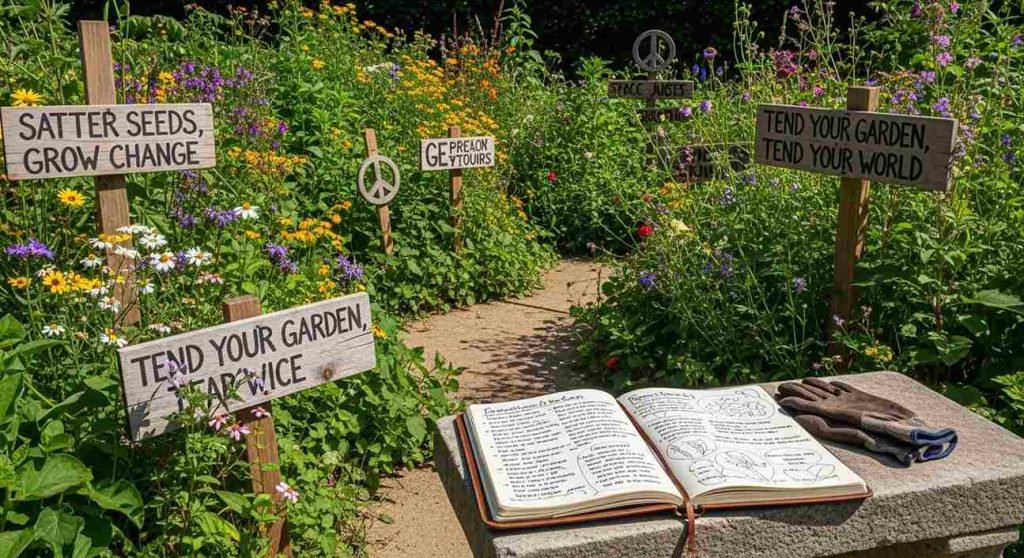
But all the major coverage I found on chaos gardening — from HGTV to Real Simple to dozens of lifestyle blogs — frames it as nearly effort-free. Scatter seeds, watch magic happen. The reality is more complex, and more interesting than that, and being honest about all of it is what establishes the trust that can make this article worth bookmarking.
15. Four-Season Chaos Garden

Some plants that are sold in large quantities in ‘wildflower mixes’ — especially certain types of Himalayan balsam and some non-native campanulas — can escape from their intended patches into adjoining land, outcompeting our own native species. Before you scatter, always cross-check your seed mix to the invasive species list in your country. This is particularly crucial close to waterways or natural reserves.
What Nobody Tells You About Chaos Gardening (Honest Truths)
But all the major coverage I found on chaos gardening — from HGTV to Real Simple to dozens of lifestyle blogs — frames it as nearly effort-free. Scatter seeds, watch magic happen. The reality is more complex, and more interesting than that, and being honest about all of it is what establishes the trust that can make this article worth bookmarking.
Invasive Species Are a Real Risk
Some plants that are sold in large quantities in ‘wildflower mixes’ — especially certain types of Himalayan balsam and some non-native campanulas — can escape from their intended patches into adjoining land, outcompeting our own native species. Before you scatter, always cross-check your seed mix to the invasive species list in your country. This is particularly crucial close to waterways or natural reserves.
HOA Rules and Local Bylaws
Many suburban areas have local ordinances or homeowner association rules that specifically prohibit ‘unmaintained’ or ‘weedy’ garden areas. Check local regulations before rewilding your front garden. A better solution: throw up a little sign announcing your garden as a ‘Registered Pollinator Habitat’ — many municipalities give those gardens weed ordinances exemption, and the social signalling changes the interpretation of wildness coming from neighbours.
Not All Soil Is Equal
The soil too rich, dense or waterlogged: Chaos gardens fail most often because of too much, or not enough — but mostly not enough (as they are new). No-dig gardening is chaos gardening’s perfect partner: suppress grass with cardboard, top it with a thin layer of lean compost and scatter seed directly on this surface. This provides optimal germination conditions, without disturbing the soil ecosystem.
Year One Versus Year Two
If your chaos garden is lush and full in its first season, give up. In their first year, perennial wildflowers focus on developing root systems. It takes a few years for annual self-seeders to develop their seed bank in the soil. You’ll find that by year two, most chaos gardens have changed considerably — more dense, more diverse and honestly surprising in their beauty. I’d say the most essential tool in a chaos gardener’s toolbox is patience.
Best Plants for a Hippie Chaos Garden
Full Sun Champions
- Cosmos bipinnatus — quick to bloom up from seed, popular with bees
- Echinacea purpurea — long-blooming, brings goldfinches for the seed heads
- Rudbeckia fulgida — drought tolerant, golden color, self-seeds freely
- Phacelia tanacetifolia — bright blue, awesome bee attractor
- Calendula officinalis — edible, medicinal, aggressive self-seeds (in the best sense)
- Verbena bonariensis — tall, airy, connects the gaps beautifully
Shade & Semi-Shade Performers
- Astilbe — plume-like flowers in pink, red, white; low maintenance
- Foxglove (Digitalis purpurea) — biennial, very free-sowing
- Aquilegia (Columbine) — cross-pollinates to produce curious hybrids from year to year
- Allium ursinum (wild garlic) — edible, pretty, naturalises nicely in shade
- Bleeding heart (Lamprocapnos spectabilis) — endearing and rare Pollinator Specialists
- Borage — star-shaped blue blooms, self-seeds like crazy, loves of bees
- Milkweed (Asclepias) — key to monarch butterfly populations
- Lavender — long flowering season, drought-resistant, universally loved by bees
- Nepeta (Catmint) — hardy, vigorous, very long-flowering through summer; good pollinator plant
Final Thought: Your Garden Doesn’t Have to Be Perfect
The chaos garden is a radical act in the guise of a hobby. In a culture that values control, it embraces surrender. Amid a sea of green monoculture lawns sprayed with chemical weed killers and fertilizers, it embraces diversity and life. In a world that peddles perfection, it revels in the happy mistake — the poppy cropping up in the gravel pathway, the sunflower reaching six feet higher than planned, the clover moving in and inviting three species of bumblebee along with it.
A hippie chaos garden is not something you finish. It is a ritual you come back to — each season different, each year deeper, each spring wilder than the last. You begin with a few seeds and some intention. Nature takes it from there.