
Industrial Garden Ideas: Beautiful Designs That Actually Work

There’s something about an industrial garden that stops people mid-scroll. Maybe it’s the contrast — soft plants spilling over hard metal edges. Maybe it’s the feeling that someone made something real out of something rough. Either way, if you’ve been looking at your backyard and thinking “this needs a complete personality,” industrial garden design might be exactly what you’ve been circling around.
This isn’t about spending a fortune or hiring a designer. Most of the ideas below can be pulled off on a weekend with materials you can find at a salvage yard, hardware store, or — honestly — your own garage.
Let’s get into it.
Learn more:How to Grow Snake Plants Indoors: Care Tips, Design Ideas
What Makes a Garden “Industrial” Anyway?
Before we get to the ideas, it helps to understand what actually defines this style — because “industrial” gets thrown around loosely.
An industrial garden leans on raw materials: exposed steel, galvanized metal, concrete, reclaimed timber, weathered iron, and black pipe fittings. The color palette stays cool — charcoals, rusted oranges, muted greens, raw wood tones. Nothing too polished. Nothing that looks like it came straight out of a box.
Plants in an industrial garden tend to be structural and bold — ornamental grasses, succulents, black-stemmed bamboo, ferns, lavender, and climbing vines that soften hard edges without hiding them.
The whole look says: built with intention, worn with time.
And the good news? You don’t need a big space. Some of the best industrial gardens are small courtyards, narrow side passages, or modest patios transformed by smart material choices.
1. Corrugated Metal Raised Garden Beds

This one’s probably the most popular industrial garden feature right now — and for good reason.
Corrugated metal panels (the kind used for roofing and siding) make excellent raised beds. They hold heat well, which extends your growing season. They’re durable enough to last 15–20 years without much maintenance. And the ribbed texture gives your garden that instantly recognizable industrial look.
You can build a simple rectangular bed with metal sheets and timber corner posts, or go fully metal with welded steel frames. Either way, line the inside with landscape fabric before filling with soil — it prevents rust from leaching in significant amounts and keeps the roots healthier.
Height matters here. Knee-height beds (around 24 to 30 inches) look the most intentional and save your back.
What to plant: Cherry tomatoes, herbs, kale, or strawberries look especially good spilling over the metal edges.
2. Black Steel Pipe Trellises

Garden centers sell plastic and wooden trellises by the thousand. Skip them.
Black steel pipe — the kind plumbers use — makes a trellis that looks like it was designed, not just purchased. You can screw fittings together without any welding. A simple ladder-style trellis against a wall costs less than $40 in pipe and fittings from a hardware store and takes about two hours to assemble.
The black finish weathers beautifully over time, picking up a slightly matte, charcoal look that plant green absolutely pops against.
Climbing plants that work especially well here: jasmine, clematis, climbing roses, and black-eyed Susan vine. The contrast between the delicate blooms and the heavy-looking pipe is genuinely striking.
3. Concrete Planter Blocks

Not concrete pots you buy at a garden center. Actual concrete blocks — or DIY cast concrete planters made from basic molds.
You can make your own using two nested cardboard boxes, a bag of fast-setting concrete, and a few hours. The results look like something from a high-end landscape architect’s portfolio. Rough edges, slightly imperfect shapes, raw grey surfaces.
Group them in odd numbers — three or five — at varying heights. Plant succulents, sedums, or ornamental grasses in them. The grey of the concrete and the grey-green of succulents create a palette that looks intentional without trying too hard.
And they’re heavy, which means they stay exactly where you put them.
4. Reclaimed Wood and Metal Bench Seating

The industrial garden isn’t just about plants. It’s about the whole outdoor living space.
A bench made from reclaimed scaffold boards and steel hairpin legs (available online for around $25–$40 per set) creates a seating piece that fits the aesthetic perfectly. The weathered wood, the raw steel — it reads as considered and casual at the same time.
Place it against a brick wall or a corrugated metal fence panel. Add a few cushions in canvas or linen if you want comfort without sacrificing the look. A couple of industrial lanterns on either side, and you’ve got a seating area that looks like it belongs in an architectural magazine.
5. Galvanized Water Trough Planters

Stock tanks and water troughs from farm supply stores have been a secret weapon of industrial garden designers for years. They’re meant for livestock. They work remarkably well as planters.
A standard 100-gallon galvanized trough runs about $80–$120 depending on where you buy it. Drill drainage holes in the bottom, fill with quality potting mix, and plant something dramatic — ornamental grasses, agave, or a clump of black bamboo.
The galvanized finish oxidizes slightly over time, which only makes it look better. Place one as a standalone feature in a gravel courtyard, or line up three in a row along a fence for a more structured, garden-bed feel.
6. Weathered Steel Edging

This is a small change that makes an outsized difference.
Corten steel edging (also called weathering steel) forms a controlled, rust-patina border along your garden beds that looks like it cost three times what it did. It comes in strips that you drive into the ground, creating clean, permanent lines between lawn, gravel, and planting areas.
The rust tone — warm, orange-brown — sits beautifully against dark soil, green grass, and grey gravel. And unlike plastic edging, it doesn’t fade, crack, or warp.
If you’ve got a garden that feels shapeless or unfinished, corten edging alone can pull it together.
7. Upcycled Factory Drums and Oil Barrels

Old metal drums — the 55-gallon steel barrel kind — have found a second life in industrial gardens across the country. Cut them in half horizontally and you’ve got two substantial planters. Cut them vertically and you’ve got tall, narrow containers perfect for columnar plants.
Sand the cut edges smooth, drill drainage holes, and treat the inside with non-toxic sealant if you’re growing edibles. The exterior? Leave it. The dents, the stenciled numbers, the faded paint — that’s the whole point.
These work especially well in pairs flanking a doorway or garden entrance. Fill them with something tall and dramatic: fountain grass, phormium, or tall lavender.
Learn more:Backyard Office Ideas That’ll Make You Want to Work From Home
8. Gravel and Pea Shingle Ground Cover
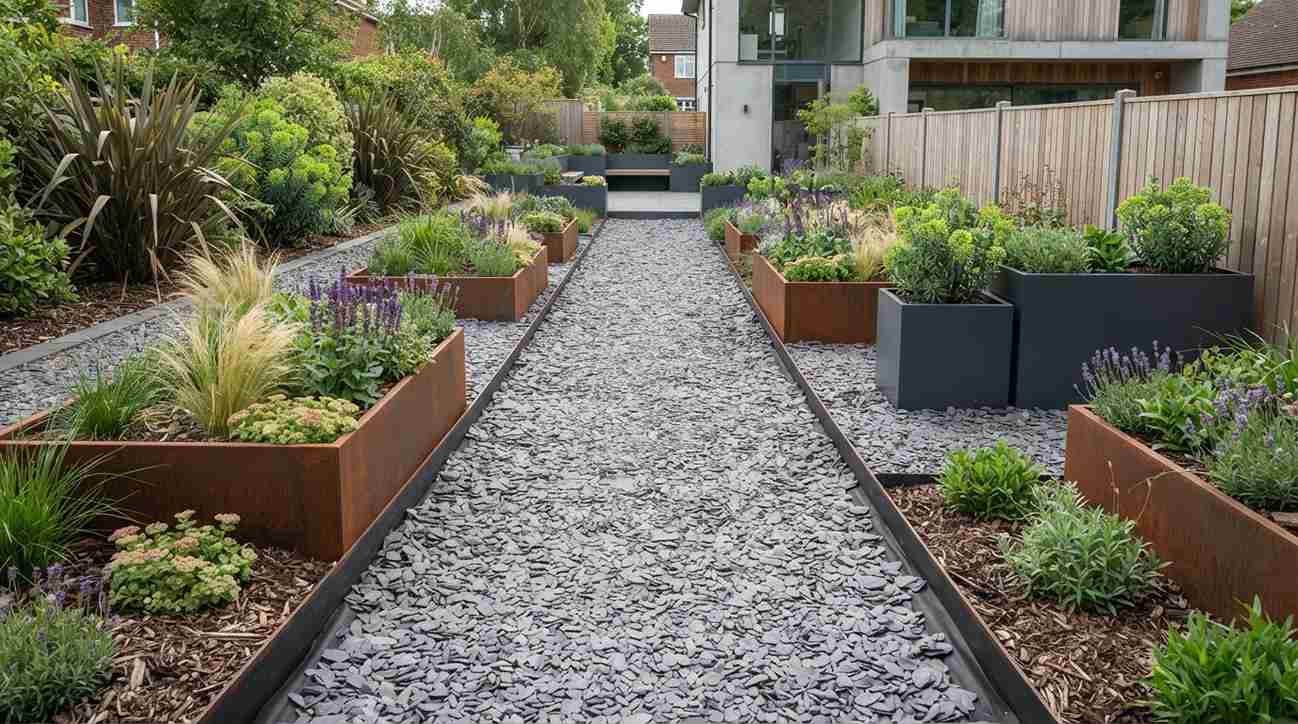
The lawn is lovely. But in an industrial garden, bare soil paths or patchy grass undercut the whole aesthetic.
Gravel — specifically grey slate chippings, black basalt pebbles, or pale pea shingle — does the opposite. It ties everything together, suppresses weeds, and gives the whole space a clean, finished quality that complements the raw materials elsewhere.
The key is edging. Use that corten steel edging from idea #6, timber sleepers, or simple concrete blocks to define where the gravel goes. Without borders, it migrates. With them, it looks deliberate.
Laying a proper weed membrane underneath takes an extra hour but saves you from pulling weeds every other week. Worth doing right the first time.
9. Industrial Lighting — Edison Bulbs and Iron Fixtures

The way a garden looks at night matters just as much as how it looks during the day.
For an industrial garden, skip the solar-powered plastic stake lights. Instead, look for:
- Pendant lights with Edison bulbs strung between fence posts or garden posts using heavy-duty black cable
- Wall-mounted iron lanterns in matte black or antique bronze
- Spike spotlights in gunmetal grey aimed up at key plants or features
The warm glow of Edison bulbs against steel and raw wood creates an atmosphere that no other lighting style quite matches. It’s the difference between a garden that gets used after dark and one that gets avoided.
10. Vertical Pallet Wall Gardens

Wooden pallets — the kind stacked behind almost every hardware store and warehouse — are one of the most useful raw materials in industrial garden design.
A single pallet mounted vertically on a wall becomes a planting structure for herbs, succulents, strawberries, or trailing plants. Stack two or three and you’ve got a living wall that costs almost nothing to build.
The rough, unfinished wood sits naturally within the industrial palette. You don’t need to sand or paint them — though a coat of outdoor wood stain in a dark walnut or ebony tone lifts them from “found object” to “design feature” fairly quickly.
Make sure the pallet is marked HT (heat-treated) rather than MB (methyl bromide treated). The MB ones aren’t safe for growing food. Most pallets you’ll find are HT, but worth checking.
11. Repurposed Scaffolding Plank Pathways
Scaffold boards — thick, chunky timber planks that construction companies use for temporary flooring — are endlessly useful in an industrial garden.
Laid horizontally across gravel or bark chip ground cover, they create a pathway that looks substantial and intentional. The rough-sawn edges, the occasional paint splash or stencil mark — all of it adds character rather than subtracting from it.
Space them slightly apart so rain drains through naturally. Treat them with a hardwax oil or exterior decking oil once a year to extend their life. Properly maintained scaffold boards last easily 10+ years outdoors.
They also work as raised bed walls, bench seating surfaces, and simple shelving mounted to outdoor walls.
12. Black Bamboo as a Living Privacy Screen
Here’s where hard materials meet living structure — and this might be the single most dramatic thing you can do in an industrial garden.
Black bamboo (Phyllostachys nigra) grows tall, stays relatively narrow, and produces deep green canes that darken to a rich black-purple within the first year. Against a steel fence, a concrete wall, or corrugated metal panels, it looks extraordinary.
Plant it in a buried root barrier to prevent it spreading — bamboo can travel aggressively if you’re not careful. A simple rubber root barrier installed 18–24 inches deep around your planting area is all you need.
Within two or three seasons, you’ll have a living screen that’s dramatic, year-round, and completely in keeping with the industrial aesthetic. Pair it with low gravel planting at its base and a steel pot nearby, and it anchors the whole garden.
The Materials That Make Industrial Gardens Work
If you’re building your garden from scratch or starting to gather materials, these are the ones worth focusing on:
Metals: Galvanized steel, corten steel, black iron pipe, corrugated zinc, weathered cast iron
Timber: Scaffold boards, railway sleepers, reclaimed oak, rough-sawn pine treated for outdoor use
Stone and aggregate: Grey slate chippings, black basalt, concrete pavers, raw limestone
Plants that fit the aesthetic:
- Ornamental grasses (feather reed grass, blue fescue, Japanese forest grass)
- Structural shrubs (phormium, pittosporum, black bamboo)
- Hardy perennials (lavender, echinacea, sedum, salvia)
- Climbers (clematis, jasmine, ivy, climbing hydrangea)
A Few Honest Notes Before You Start
Don’t try to do all 12 ideas at once. Pick two or three that fit your space and budget, get them right, and build from there. An industrial garden that’s pulled off well looks intentional. One that’s overcrowded with features just looks chaotic.
Also — and this matters — not every idea works in every climate. If you’re in a wet, rainy region, untreated metals will rust faster than you’d like. Either choose corten steel (which rusts in a controlled, stable way) or seal raw steel before using it outdoors. If you’re somewhere hot and dry, some of the shade-loving plants mentioned here will need adjustment.
Start with what you’ve got. A galvanized trough from a farm store, a bag of gravel, some black pipe fittings — that’s enough to begin.