
House with Yard Design Ideas That Actually Work in Real Life

Look, I’ve walked past enough cookie-cutter houses to know what makes one stop you in your tracks. It’s not always the biggest yard or the fanciest landscaping—sometimes it’s just one smart choice that makes the whole space click.
Whether you’re staring at a blank front yard wondering where to even start, or you’ve got a backyard that’s… let’s call it “underutilized,” I’m going to walk you through designs that real people actually pull off. Not the kind that requires a landscape architect on speed dial.
Some of these I’ve seen in my own neighborhood. A couple I tried myself (with mixed results, I’ll be honest). And a few came from friends who sent me photos saying “finally got it right.”
Here’s what I’ve learned: your yard doesn’t need to look like it belongs in Architectural Digest. It just needs to feel like yours.
Learn more: Laundry Folding Table Ideas That Actually Work
1. The Gravel Pathway Front Yard (My Personal Favorite)
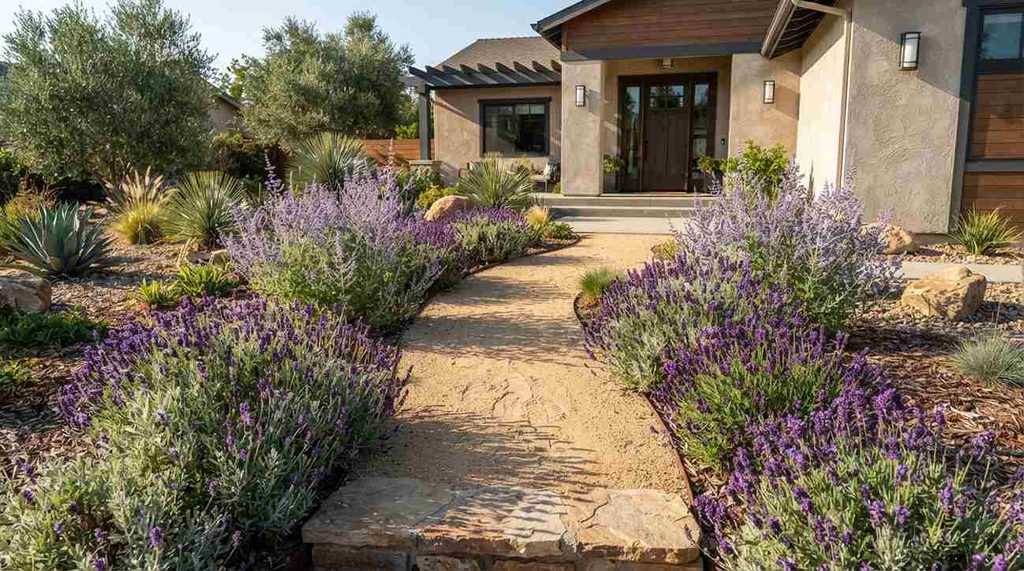
This one surprised me.
A neighbor replaced their patchy grass with decomposed granite pathways leading to the front door, bordered by drought-tolerant plants. Lavender on one side, Russian sage on the other. Cost her maybe $400 total from the local garden center.
Now? Every single person who visits asks about it.
Why it works: Low maintenance. Looks intentional even when you forget to water for two weeks. And honestly, the sound of footsteps on gravel is just… nice.
Best for: Front yards in dry climates, or anyone who’s tired of fighting with grass that won’t grow in shade.
2. Tiered Garden Beds in Sloped Backyards
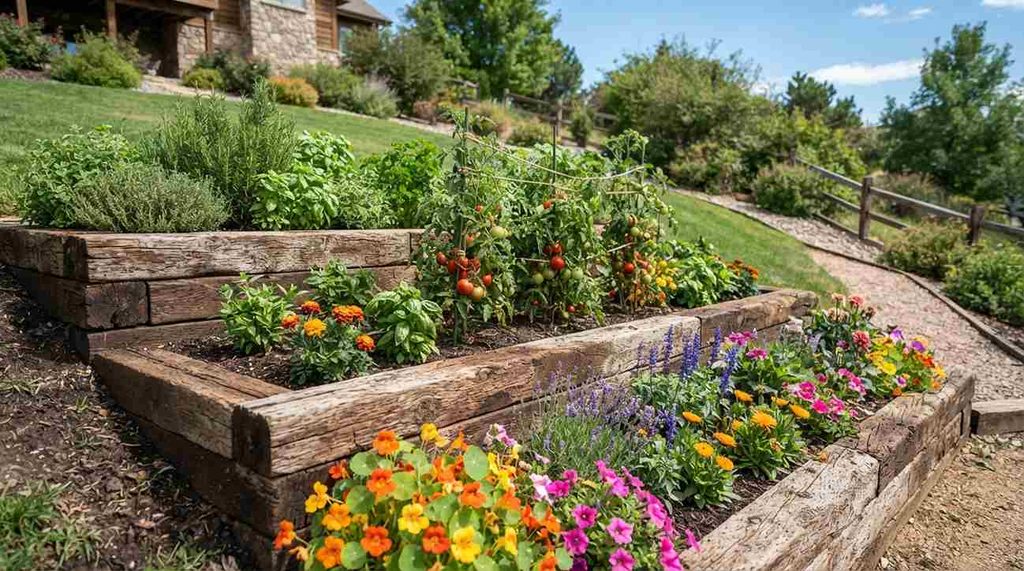
If your backyard has any kind of slope, you’ve probably thought “this is a problem.”
It’s not. It’s an opportunity.
I watched my brother-in-law build three-tier garden beds using railroad ties (the modern composite kind, not the creosote-soaked old ones). He planted herbs at the top level, tomatoes in the middle, and flowers at the bottom.
Took him two weekends. The first weekend did not go smoothly—let’s just say YouTube tutorials make everything look easier than it is.
Pro tip: Start at the bottom and work your way up. I don’t know why, but apparently that’s the move.
3. The “Outdoor Room” Patio Setup

This is where you treat your backyard like an actual room.
String lights overhead (the Edison bulb kind, if you want to avoid looking like a tiki bar). A weatherproof rug. Real furniture, not just plastic chairs from a big-box store.
One of my friends did this on a budget—secondhand wicker loveseat, outdoor pillows from a Labor Day sale, and $30 worth of string lights. Her backyard went from “we never use this” to “we eat dinner out here four nights a week.”
The trick: Anchor it with something permanent. A pergola if you’re ambitious. A large umbrella if you’re not.
4. Native Plant Front Garden (Less Work Than You Think)

I’ll admit—I used to think “native plants” meant “boring plants.”
I was completely wrong.
A house three doors down replaced their entire front yard with California natives. Penstemon, California poppies, white sage, and a couple of manzanita shrubs.
They water maybe twice a month in summer. That’s it.
And every spring? The poppies come back like clockwork. Orange everywhere. It’s kind of stunning.
Why this matters: Native plants don’t just survive—they thrive. Because they’re literally designed for your exact climate.
5. Raised Deck with Built-In Planters

Saw this at an open house last year and immediately thought “yeah, that’s smart.”
Instead of planters on the deck, the builder integrated planter boxes into the deck railing itself. Herbs on one side, trailing flowers on the other.
You get greenery without losing floor space. And if you’re growing basil or mint, you can literally reach over while grilling and grab what you need.
Cost check: If you’re building a deck anyway, adding planter boxes doesn’t add much. If you’re retrofitting? Might be worth skipping unless you’re handy.
6. The Classic Cottage Garden Chaos (In a Good Way)

There’s a house two blocks over that looks like it wandered out of an English countryside postcard.
No formal rows. No symmetry. Just roses, foxgloves, delphiniums, and lavender all mixed together in what looks like organized chaos.
The owner told me she literally just plants whatever she likes and lets it do its thing. No plan. No grid.
Somehow, it works.
Warning: This style requires decent rainfall or a commitment to watering. Don’t attempt this in Arizona unless you hate yourself.
7. Minimalist Modern with Three Trees

Sometimes less really is more.
One of the cleanest front yards I’ve ever seen: three Japanese maples, evenly spaced. Dark mulch underneath. That’s it.
No flower beds. No lawn. Just trees, mulch, and confidence.
Why it’s genius: Three trees cost less than a full landscape design. Maintenance is basically zero. And it looks expensive even though it’s not.
8. Fire Pit Gathering Zone

If you want your backyard to actually get used, put a fire pit in it.
Doesn’t have to be fancy. A simple metal fire ring surrounded by Adirondack chairs works fine. I’ve seen people do this for under $300 total.
The reality: You’ll use it more in fall and spring than summer. But when do you use it? It’s the only place anyone wants to be.
9. Vertical Garden Wall on a Fence

Small yard? Go vertical.
I tried this with a modular pocket planter system mounted to my back fence. Planted strawberries, lettuce, and a few herbs.
Did it look like Pinterest? Not exactly. Did it work? Mostly. The lettuce bolted in July, but the strawberries were legit.
Best for: Renters or small spaces where ground room is limited.
Learn more: Black Accent Wall Ideas: 12 Designs for Every Room
10. Pergola with Climbing Vines

This takes patience. But wow, the payoff.
A coworker planted wisteria along a new pergola five years ago. For the first three years, she kept saying “I don’t think it’s working.”
Now she has a canopy of purple blooms every April that makes her yard look like a wedding venue.
Fair warning: Wisteria is aggressive. If you’re not into high-maintenance plants, try climbing roses or clematis instead.
11. Symmetrical Boxwood Entry

You know that classic look—matching boxwood shrubs flanking a front door?
There’s a reason it’s a classic. It works on literally every house style.
I watched a neighbor plant four boxwoods (two on each side of the walkway) and suddenly their builder-grade house looked like it had been there for decades.
Maintenance: You’ll need to trim them once or twice a year to keep the shape. That’s it.
12. Backyard Vegetable Patch with Raised Beds
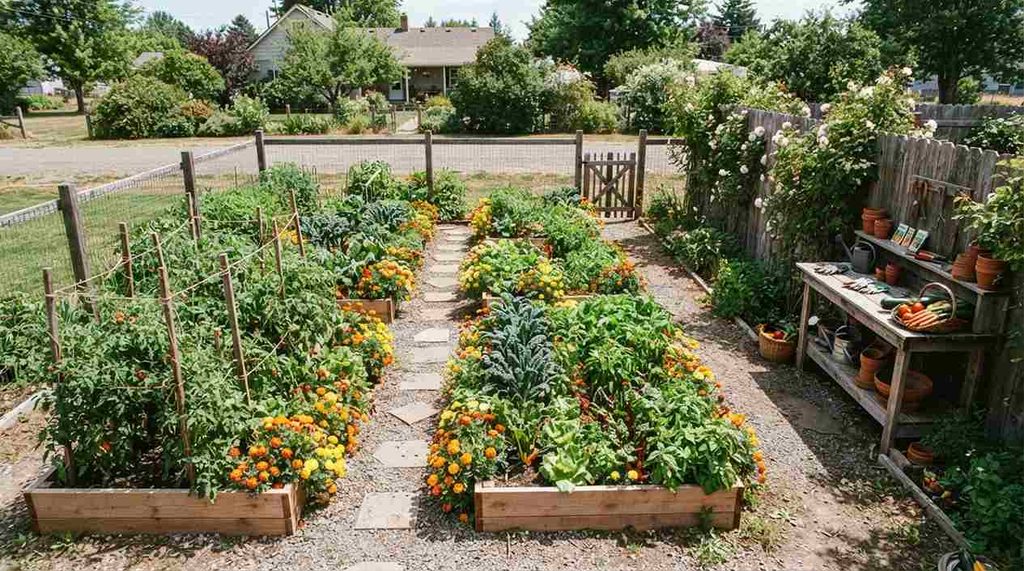
This is where function meets design.
Instead of hiding the vegetable garden in the back corner, put it front and center. Four or five raised cedar beds, gravel paths in between, maybe some marigolds mixed in for color.
I’ve seen this done so well that it becomes the backyard’s main feature. Not an afterthought.
Pro move: Add a small potting bench on one end. Makes the whole setup feel intentional.
What Actually Makes a Yard Design Work
After looking at what feels like hundreds of these setups—some great, some… not—here’s what I’ve noticed:
Scale matters more than style.
A tiny front yard with one big statement (like a Japanese maple or a bold front door color) beats a tiny yard trying to do ten things at once.
Repetition creates polish.
Three of the same plant looks intentional. One of everything looks like you couldn’t decide.
Maintenance is part of the design.
If you’re not going to edge your lawn every week, don’t design a yard that requires it. Work with your actual habits, not your aspirational ones.
Lighting changes everything.
I cannot overstate this. The same backyard that looks “fine” during the day can look magical at night with the right lighting. Uplighting on trees. Path lights. String lights. Pick one and commit.
Front Yard vs. Backyard: Different Rules
Your front yard is public-facing. It sets expectations.
You don’t need to go wild here—clean, simple, and well-maintained wins every time.
Your backyard is for you.
This is where you can experiment. Try the weird plant. Build the fire pit. Let the garden get a little wild if that’s your vibe.
I’ve seen people obsess over their front yard and completely ignore the back. And I’ve seen the opposite—gorgeous backyard, front yard that’s just… existing.
Both feel off.
The sweet spot? The front yard gets 60% of your attention. Backyard gets the other 40% plus your actual time and energy.
Final Thoughts
Your yard doesn’t need to be finished. It probably never will be, honestly.
Gardens grow. Priorities shift. What worked five years ago might not work now.
But if you pick one or two of these ideas and actually do them? Your house will feel different. More intentional. More like the place you actually want to come home to.
Start with the space you see every day—usually the front yard or the view from your kitchen window. Get that right first.