
12 Best Duck HouseIdeas Your Ducks Will Absolutely Love
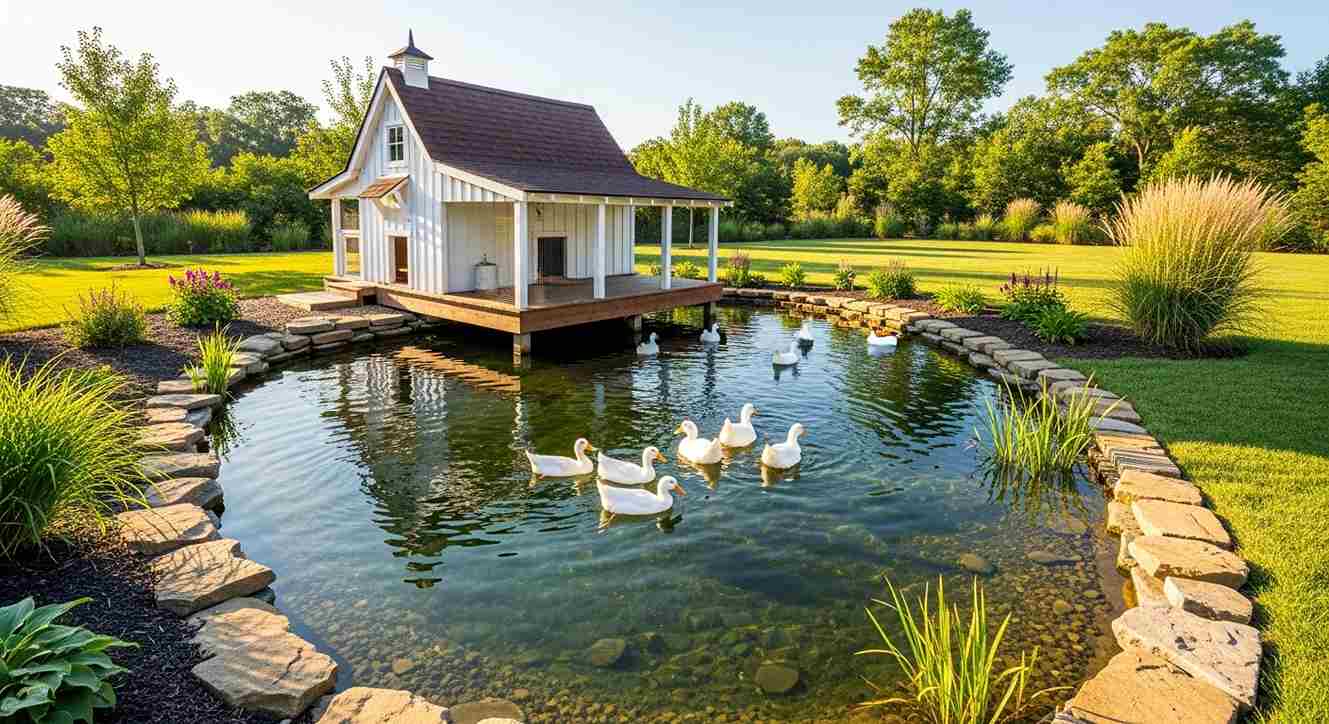
You’re thinking of keeping ducks, but you don’t have a clue where to begin with housing. The right duck house can make a huge difference, whether you live in a large country property or have a small backyard.
This complete guide will walk you through twelve stunning duck house designs. We’ll cover everything from spacious coops and pens for your ducks to predator-proof runs, beautiful duck ponds, or modern backyard duck enclosures.
Learn more:12 Stunning French Country Kitchen Style and Grace (2026)https://www.claytonhomesgarden.us/decor/french-country-kitchen/
Why Duck Housing Matters More Than You Think

Let’s discuss before we get into the designs.
Ducks may be incredibly tough birds, but still require:
- Shelter for predators such as foxes and raccoons
- Proper ventilation prevents respiratory diseases
- Accessing water to bathe and feed
- Dry bedding Keep their feet healthy
- There should be enough space for each duck to occupy at least 4 square feet in the coop
Quick fact: Ducks do not roost perches like chickens. Ducks sleep on the floor, so a flat, dry and well-bedded surface is important for a healthy, happy duck.
12 Best Duck House Ideas for Every Backyard
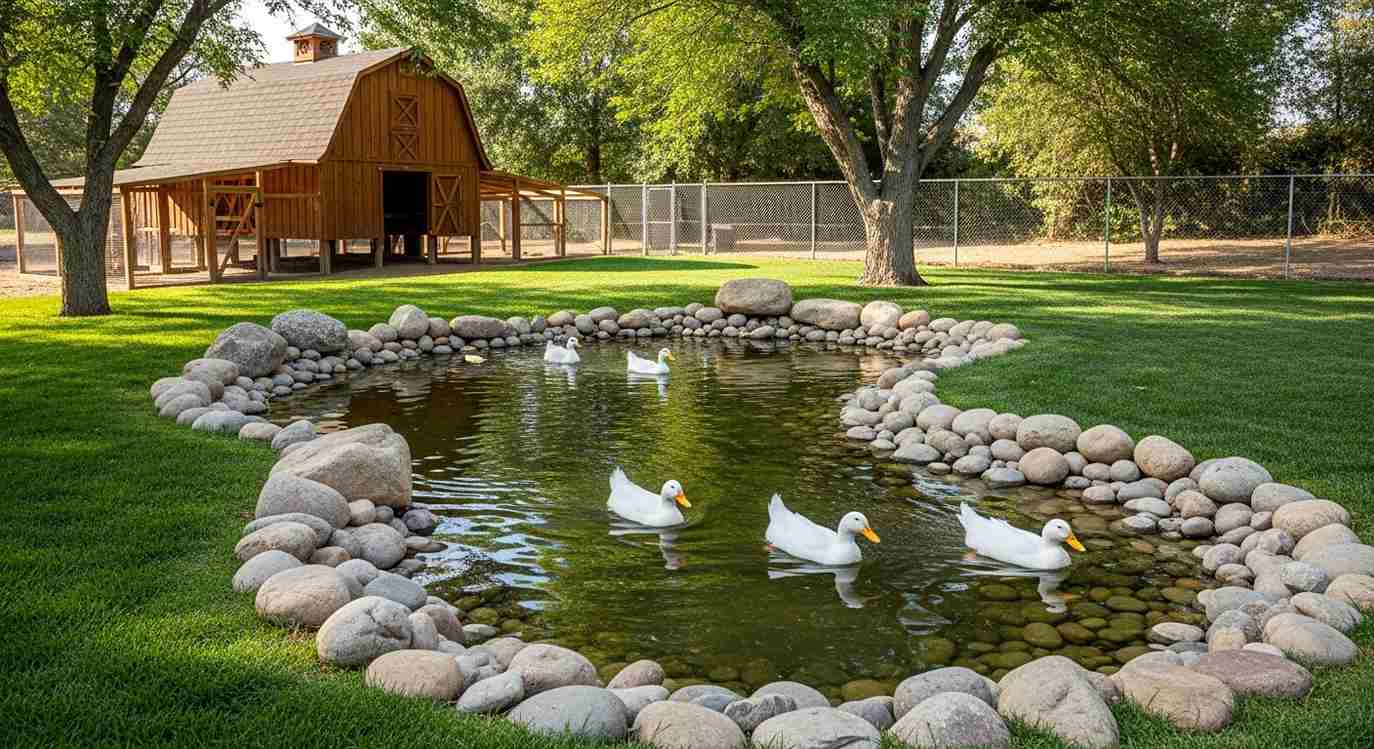
1. Natural Stone Pond Duck Habitat
Best for: Large yards and homeowners who desire a naturalistic appearance
One of the most stunning duck house ideas that you’ll see is a combination of a stone-bordered natural pond and a shed-style duck coop as the backdrop. The setup, like that in our first image of inspiration, features:
- A kidney shaped pond surrounded by smooth river stones
- White Pekin Ducks Swimming freely in clean water
- A classic Barn-style coop with a chain link fenced run behind it
- Natural foraging in lush green grasses
Why Does It Work?
Natural stone ponds provide ducks with constant access to water, which is essential for their happiness and health. Ducks require water that is deep enough for their bills to be submerged in order to clean their noses and eyes. The rock bordered pond is a beautiful addition to any backyard. It can also be used as a landscaping feature.
Pro tips for this design:
- Around the edge of the pond, use smooth river stones (no sharp edges).
- Install a filter or pond pump for clean water
- Keep bedding away from the pond by placing the coop 10 feet or more away.
- For a more natural feel, add native plants to the area around rocks.
2. Elevated White Farmhouse Duck Coop with Pond

(Modern Aesthetic duck house with water Feature)
Best for: Homeowners looking for style AND functionality
This is the ultimate duck house design. This setup was inspired by our second competitor’s pin. It features:
- An elevated white duck house, with a dark-red roof
- Wooden Deck Platform with Ramp Access for Easy Duck Entry
- White picket railing around elevated deck
- In the foreground, a natural pond with a gravel border.
- Landscape rocks and ornamental grasses
Why Ducks love it:
The elevated design ensures that the ducks’ sleeping area is completely dry, which is one of the most challenging aspects of duck keeping. The ramp allows ducks to access the pond without any stress.
Pro Tips:
- Paint with exterior grade weather-resistant paint
- Use hardware fabric under the deck platform (not chicken wire).
- Add a water trough for drinking water every day.
- It is important to have grip strips on the ramp so that ducks do not slip
3. Floating Duck House on Pond

(Ultimate natural waterfowl habitat)
Best for: Property with large water features or existing ponds
This design is perfect if you have a pond or lake in your yard. The floating duck house is placed directly on the water. This gives ducks a place to:
- Access to 100% Natural Swimming at All Times
- Predator protection built-in – Most land predators cannot reach a floating Island
- The look of weathered wood in any setting is completely natural with .
- Multiple entry hole for easy access to ducks
- The best way to protect your roof from the weather is with a cedar shingle roof
Why it’s genius:
Predators are one of the biggest killers of backyard ducks. This problem is solved by a floating duck house. Foxes, mink, and raccoons cannot swim to your flock. Every night, your ducks will sleep comfortably.
Pro Tips:
- Anchor it with and a stake to keep it from floating away
- To prevent rot, use cedar or treated wood .
- Include ventilation slots near the roofline
- Make sure that the platform is big enough to allow all ducks to stand comfortably
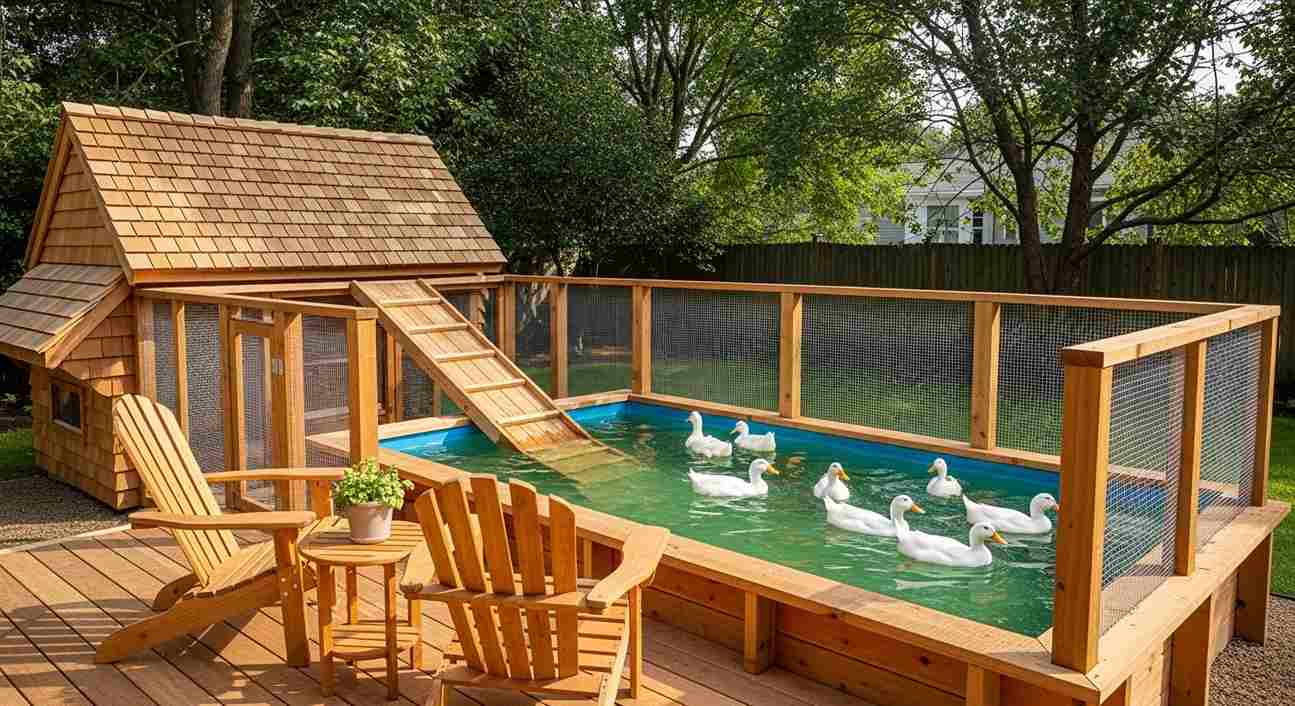
4. Duck Coop with Integrated Swimming Pool and Deck
(Modern Backyard duck run with Human Sitting Area).
Best for: Duck fans who enjoy watching their flock.
This amazing design shows that a Duck Run doesn’t need to be ugly. It features:
- The cedar deck includes Adirondack chairs, a table and a table for YOU to enjoy your ducks.
- A rectangular swimming pool with wooden frames.
- The ramp is made of wood and slopes down to the deck.
- Side panels with hardware cloth for predator Protection
- The side of a traditional peaked roof coop
This Design is Brilliant:
It’s not just a duck pond, it’s also a backyard feature. You can enjoy your morning coffee on your deck while watching your ducks swim. This design combines animal welfare with human enjoyment in a way few other designs can.
Pro Tips:
- For beauty and longevity, use cedar decking
- Install a Drain Plug at the bottom of your pool for easy cleaning
- The pool depth should be between 8 and 12 inches – deep enough for swimming but safe
- For hot summer days, add a shade sailing over the seating area.
5. Rustic Cottage Duck House with Garden Path

Best for: Cottage Garden Lovers and Rural Homesteaders
This rustic duck house is inspired by our fifth pin.
- Reclaimed Wood Siding in a beautiful grey weathered finish
- Corrugated Metal Roof that can handle any weather
- Climbing vines Growing naturally up the sides and the coop
- The garden path is bordered with stone and leads to the entrance of the coop
- Sunflower Garden next to a galvanized bathtub water feature
- Ducks freely grazing in a mulched area
Why it’s perfect for homesteaders:
This design embodies the lived-in, natural beauty that is a working farmstead. The vines are a natural way to insulate the home during summer, and they look stunning. Mulch keeps mud off the entrance to the coop. This is one of the best duck-keeping tips.
Pro Tips:
- Use deep-litter method, with wood shavings or straw inside
- Plant sunflowers, herbs and other plants around the coop to attract ducks.
- The corrugated metal roof is inexpensive, durable and easy to install
- Add a small picket fencing in order to define the ducks’ foraging area
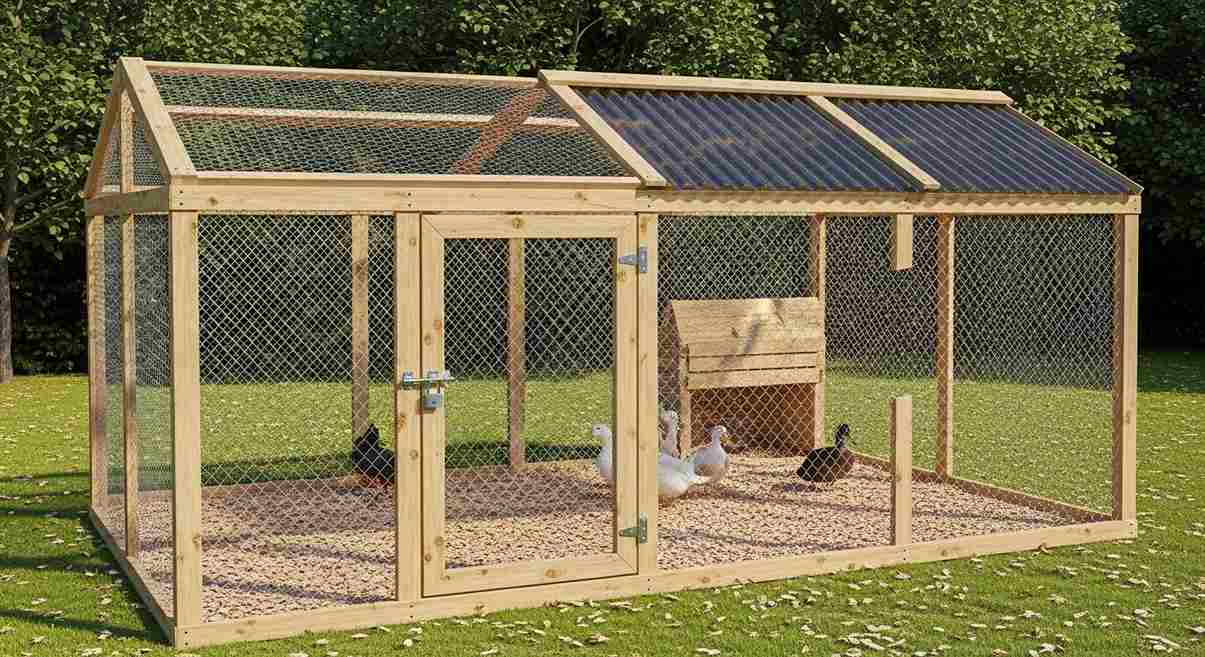
6. Predator-Proof Duck Run with Hardware Cloth
Best for: Urban duck keepers concerned about predators**
This design is a must-have if you live in a neighborhood with raccoons or hawks.
- Hardware cloth on ALL sides, including the floor
- Hardware cloth buried apron 12 inches underground to prevent diggers
- Raccoons can easily open simple door latches
- Solid Roof Covering To Protect from aerial Predators
- Shaded Area Within the Run for Hot Days
Difference between Hardware Cloth and Chicken Wire:
The chicken wire is a barrier that keeps predators out, but not ducks in. It can be ripped apart by a determined fox or even raccoon. Hardware cloth is the only material which will protect your flock.
Pro Tips:
- Put the hardware cloth in the ground and bend it outward.
- Use carabiner clip on any door latch
- For shade and rain protection, cover at least half of the roof in solid material
- Minimum run size: 10 sq ft per duck
7. A-Frame Duck House with Attached Run

Best for: Small backyards and beginners**
The classic A frame duck house has been a popular choice for duck house beginners for many years.
- Easy to Build – just triangular frames and wood panels
- Compact, portable – Move it around to prevent mud patches
- Open frame design naturally ventilated
- Attach the small run to the front of the container for daytime containment
- Low Cost — Can be built for less than $200 with basic lumber
Why it’s great for beginners:
An A-frame can be a great starting point if you have never built anything. You can find hundreds of free online plans, many of which you can build in one weekend using basic tools.
Pro Tips:
- Make it portable by adding wheels or handles.
- Cover with waterproof exterior stain or paint
- For standard breeds, the entry hole should be 10-12 inches wide.
- Add ventilation stripes to the top of the A frame
8. Duck House with Natural Pond and Planted Borders
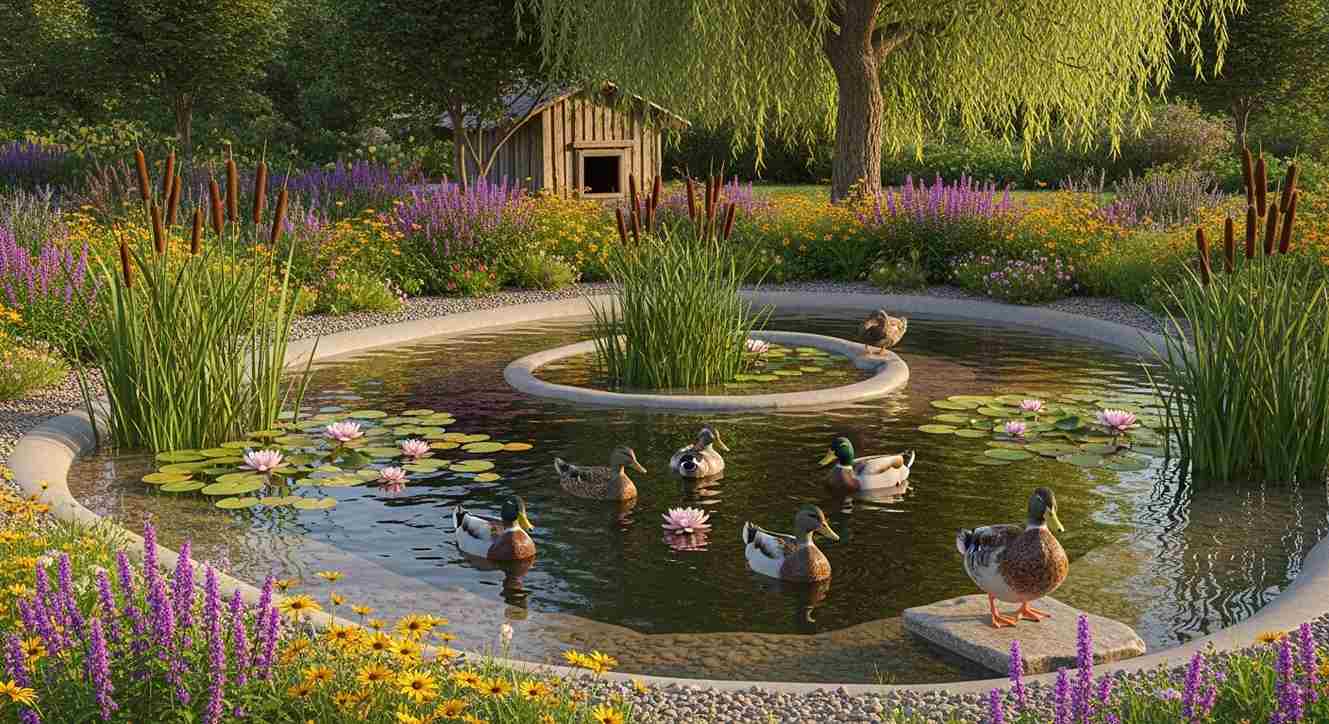
Best For: Wildlife garden enthusiasts**
Combine your duck house and a wildlife pond with native plants to create a natural ecosystem.
- Cattails, ornamental grasses, and pond edges
- Native wildflowers attract insects to duck foraging
- Shallow pond edge for duck entry and easy exit
- Shade trees such as the weeping willow nearby
- The coop is a simple wooden coop that can be placed at the edge of the pond.
This design is designed to work WITH nature, not against it. It creates a habitat that can sustain itself, where ducks forage on their own, reducing feed costs.
Pro Tips:
- Use bog plant for a natural filtering of duck waste in the pond
- Avoid deep water — ducks prefer 6-18 inch depths
- Ducks like to play in the mud.
9. Brick and Wood Permanent Duck House

Best for: Serious Duck Keepers who want a permanent home for their flock**
If you want to build a permanent duckhouse of professional grade, this is the product for you:
- Brick or Block Lower Walls for Insulation and Durability
- Upper structure in timber frame with proper roofing
- Concrete flooring with drainage channel to make it easier to hose out
- Large Windows with Hardware Cloth Covers for Ventilation
- Electricity to run a heater in winter or an automatic door opener
10. Upcycled Shed Duck House Conversion

Best For: Budget-conscious duck keepers**
Have an old garden shed lying around? Turn it into a duckhouse!
- Add ventilation slots to the roofline
- Install a 10×10 inch small duck door at the ground level
- Add Hardware Cloth Windows to airflow
- Lay rubber mat on floor and cover with deep straw bedding
- Paint the exterior with Weatherproof Paint
If you already own a shed, an upcycled shed can be converted for less than $100.
11. Insulated Winter Duck House

Best For: Cold climate duck keepers
Ducks can survive in the cold, but having a winter duck house is a big help.
- Foam Board Insulation Between Wall Studs
- Ventilated but draft-free — Cold air shouldn’t directly blow on ducks
- Deep straw bedding (6-8 inch) for warmth
- Automatic Duck Door that Closes at Dusk to Keep Heat in
- Heated Water Bowl to Prevent Freezing
Expert tip: Ducks generate body heat when they are together. In a house with good insulation, 4-6 ducks rarely require artificial heating in cold temperatures.
12. Modern Minimalist Duck Coop with Clean Lines

Best For: Modern home aesthetics**
The backyard duck keeper who is design conscious:
- With flat or monopitch roof, clean geometric lines
- Paint in neutral colors — White, grey or sage-green
- Integrated Storage for Feed and Bedding Supplies
- Sleek Hardware — matching metal hinges, latches and hinges
- Raised from the ground on cleaned wooden legs
This design shows that practical housing for ducks can be beautiful.
Duck House Quick Reference Guide
You can also Design Your Own | Best for | Cost | Difficulty | Space Required |
Natural Stone Pond | Large yards | $800-$2,500 |
| 500+ sq ft |
Elevated Farmhouse | Modern aesthetic | $1,200-$3,000 |
| 300-500 sq ft |
Floating Duck House | Ponds | $500-$1,500 |
| Existing pond |
Pool & Deck Combo | Enjoy the Entertainment | $2,000-$5,000 |
| 400-600 sq ft |
Rustic Cottage | Homesteaders | $300-$900 |
| 200-400 sq ft |
Predator-Proof run | Urban keepers | $200-$800 |
| 100-300 sq ft |
A-Frame | Beginners | $100-$400 |
| 50-150 sq ft |
Natural Pond | Wildlife garden | $600-$2,000 |
| 300+ sq ft |
Brick & Wood | Permanent Setup | $2,000-$8,000 |
| 200+ sq ft |
Conversion of Sheds | Budget Keepers | $50-$300 |
| Existing shed |
Winter Insulated | Cold climates | $400-$1,200 |
| 100-200 sq ft |
Modern Minimalist | Modern Homes | $800-$2,500 |
| 200-400 sq ft |
Final Thoughts: Which Duck House Idea Is Right for You?
The duck house is a three-part process:
- Your budget – from $100 A frames to $8,000 brick masterpieces
- Your space – small backyard in the city or sprawling country property
- What you need to know about your ducks — the breed, flock size and climate
Remember that happy Canadians need only three things:
- Protection against predators
- Sleeping area with a feeling of dryness
- Access to water for bathing, drinking and other activities
If you do these three things correctly, your ducks can thrive in any house that is well-designed.