
Small Narrow Garden Designs That Actually Transform Tight Spaces

Maybe it’s a long, thin strip of yard that runs alongside your house. Maybe it’s a side yard that nobody ever uses because it feels too tight, too shaded, too nothing. You’ve scrolled Pinterest for hours, saved a dozen posts, and still don’t know where to start.
Here’s the thing most guides won’t tell you: narrow gardens are actually easier to design than wide open spaces. The limitations do half the work for you. When you can’t go wide, you go smart — and that’s where the real magic happens.
I’ve pulled together 12 small narrow garden designs that work in real yards, for real homeowners, without requiring a landscape architect or a second mortgage.
Learn more:Magical Outdoor String and Fairy Light Ideas That Actually Work
Why Narrow Gardens Are Actually a Designer’s Secret Weapon
Before we get into the ideas, let’s flip the script for a second.
Most people treat a narrow garden like a problem to solve. But designers? They treat it like a canvas with built-in structure. The long, linear shape naturally creates movement — your eye travels down the space, and that journey can be intentional if you plan it right.
You get natural zones. You get a built-in sense of depth. And you get walls or fences on both sides that you can use as vertical growing surfaces — which a wide, open yard simply doesn’t give you.
So stop apologizing for your garden’s shape. Let’s use it.
1. The Diagonal Path Design

This is probably the single most effective trick for a narrow garden, and it’s genuinely underused.
Instead of running a path straight down the center (which only makes the space look longer and thinner), you cut across it diagonally. A gravel or stepping-stone path that angles from one corner to the opposite side immediately adds width to the visual experience.
Plant low ornamental grasses on one side of the path — Karl Foerster is a good pick, grows about 5 feet tall without spreading aggressively. Keep the other side lower with creeping thyme or mondo grass.
The diagonal line tricks the brain. It genuinely works. I’ve seen it transform a 6-foot-wide side yard into something that felt almost roomy.
2. The Three-Zone Layout
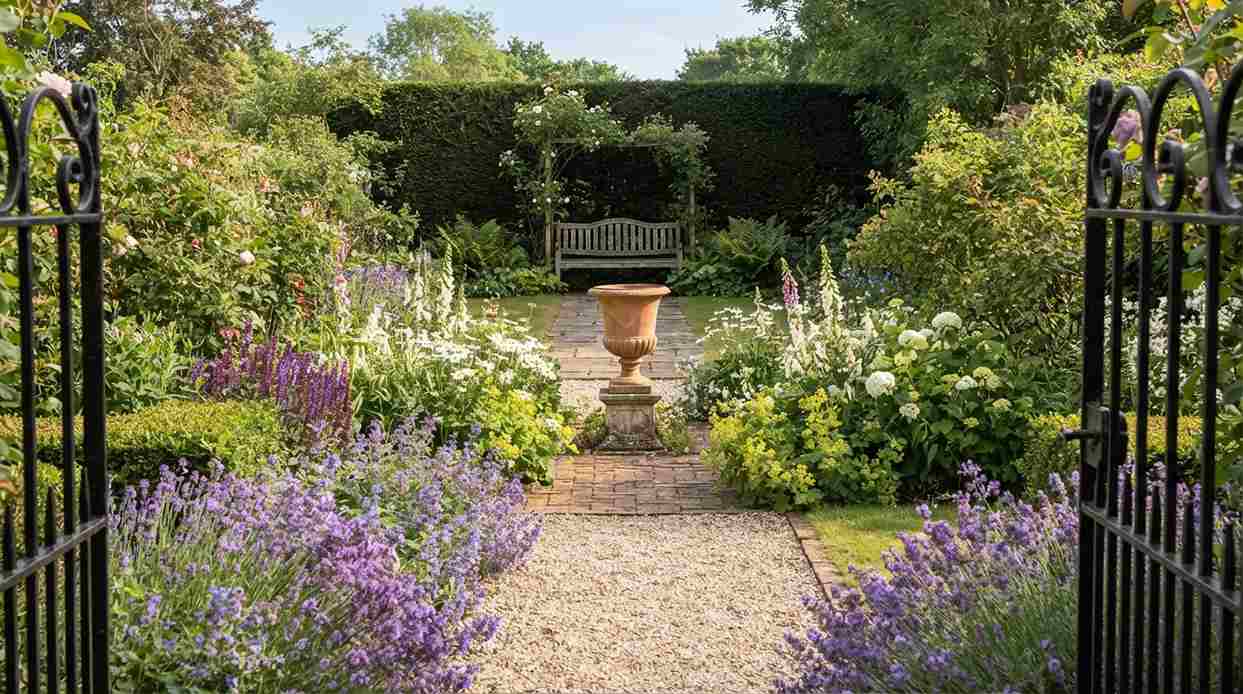
This is the approach used by most professional garden designers for long, narrow spaces, and once you see it, you can’t unsee it.
Divide your narrow garden into three distinct sections:
- Zone 1 (entry/front): Soft planting, welcoming texture — think lavender, catmint, or ornamental alliums
- Zone 2 (middle): A focal point — a small tree, a water feature, a raised bed, or even a single statement urn
- Zone 3 (back/end): A destination — a bench, a small patio area, or a dense planting wall
The idea is that each zone gives the eye a reason to pause. You’re not staring down a long, thin tunnel anymore. You’re moving through a sequence of experiences.
The width of the garden doesn’t matter much here. I’ve seen this work in strips as narrow as 5 feet.
3. Vertical Garden Walls

If your narrow garden runs alongside a fence or wall, that vertical surface is prime real estate. And most people completely ignore it.
Install a simple trellis system — cedar wood is a great choice, holds up well outdoors — and grow climbing plants like:
- Clematis (flowers May through October in most US zones)
- Climbing hydrangea (slower to establish but absolutely stunning once it’s going)
- Espaliered fruit trees (apple or pear trained flat against a wall — practical and beautiful)
The vertical planting pulls the eye up rather than down the length of the garden, which makes the space feel wider and taller rather than just long.
Not every plant works well on a wall, though. Wisteria is gorgeous but can damage older fence structures. Something worth knowing before you commit.
4. The Mirrored Planting Design

Symmetry is your friend in a narrow space. When both sides of the garden mirror each other — same plants, same containers, same height — the eye reads the width, not the length.
Pick one anchor plant and repeat it on both sides every few feet. Boxwood balls work well for this if you want a more formal look. If you’re going for something looser and more cottage-style, try Russian sage or feather reed grass planted in matched pairs.
The effect is a bit like standing between two rows of trees in a French garden. Sounds fancy. It’s not that complicated to pull off.
5. Raised Beds Along One Side
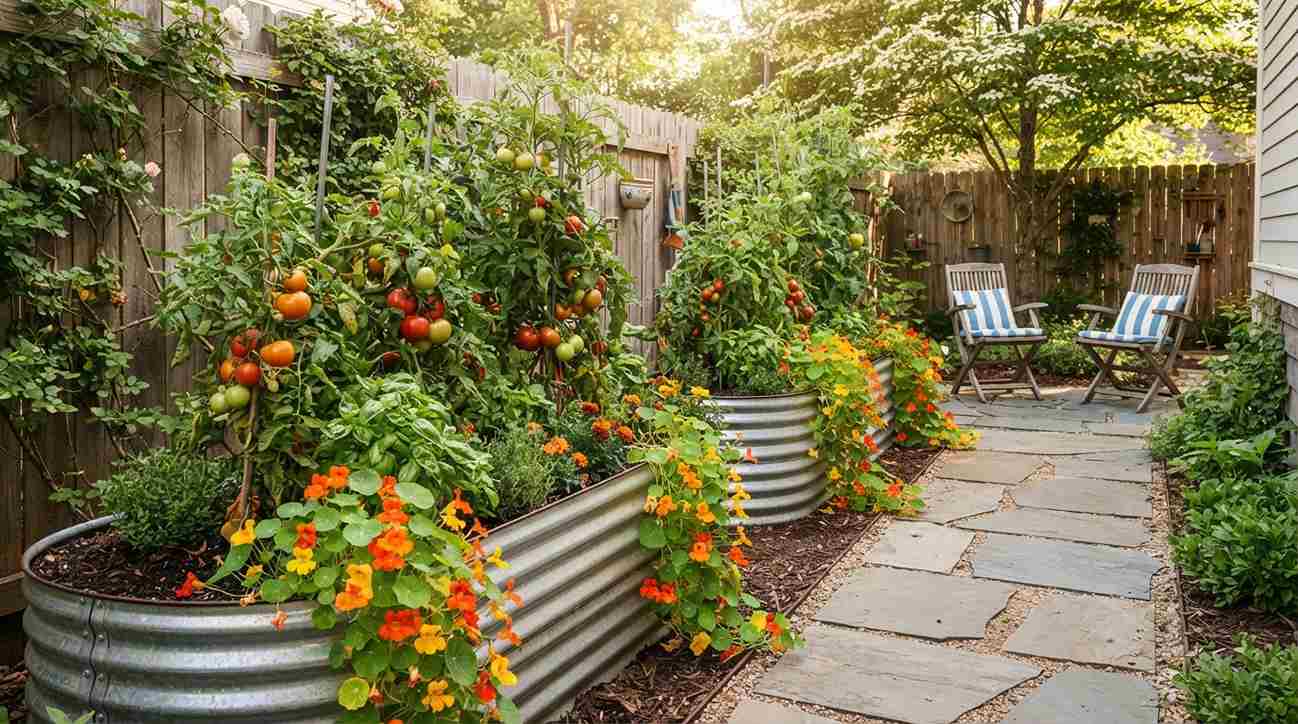
This one’s practical as much as it’s beautiful.
Instead of trying to plant in-ground on both sides, build a raised bed along one side of the narrow garden — maybe 12 to 18 inches high — and keep the other side open as a path or lawn strip.
Raised beds do a few things at once:
- They add height variation, which breaks up the linear feeling
- They make the planting feel intentional and organized
- They’re genuinely easier to maintain than in-ground beds (no bending as far, better drainage, fewer weeds getting a foothold)
Use reclaimed wood for a natural look, or go with galvanized steel raised beds if you want something more modern and long-lasting. Cedar is also great — naturally rot-resistant, no need for chemical treatment.
For planting, mix edibles with ornamentals. A raised bed with tomatoes, herbs, and a trailing nasturtium along the edge? Looks like something out of a magazine. It tastes good too.
6. The Curved Border Strategy
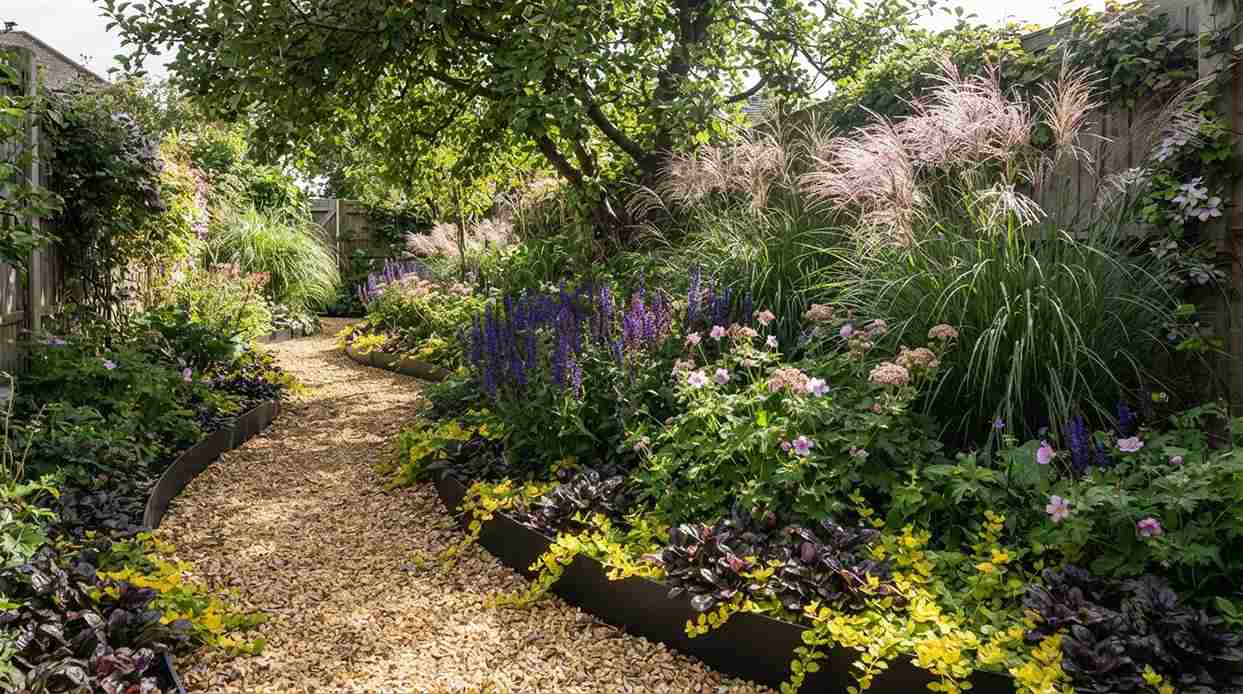
Straight lines emphasize length. Curves interrupt it.
If your narrow garden feels like a runway, try introducing a gently curved border on one or both sides. The curve doesn’t have to be dramatic — even a subtle S-shape planting bed along the edge will break the visual tunnel effect.
Use flexible garden edging (plastic or metal) to create the curve first, then fill the bed with plants that have varied heights and textures:
- Low front: Ajuga or creeping Jenny
- Mid-level: Salvia or geranium
- Back: Ornamental grasses or small shrubs
The curve draws the eye sideways, which makes the space read wider. Simple geometry, honestly. But it works every single time.
7. The Japanese-Inspired Zen Strip

Some narrow gardens aren’t meant to be lush and planted. Sometimes the right answer is restraint.
A Japanese-inspired design using raked gravel or decomposed granite, with just a few carefully placed elements, can turn a thin side yard into something genuinely calm and intentional:
- 2–3 large smooth boulders placed asymmetrically
- A single ornamental grass — Japanese forest grass (Hakonechloa macra) is perfect here
- Bamboo screening along the fence for privacy
- Fine gravel or pea gravel as ground cover, raked in simple lines
This style works especially well in gardens that get a lot of shade, where growing lush plants is a real struggle. Less competition from plants. Lower maintenance. And honestly — it photographs beautifully.
Learn more:Corner Sofa Designs: 12 Ideas That Transform Your Living Room
8. Potted Plant Parade

Don’t want to commit to in-ground planting? Containers are an underrated solution for narrow gardens.
Line one or both sides of your narrow space with containers of varying heights. Tall urns, medium terracotta pots, low wooden planters — mix sizes and materials for a look that feels curated rather than cluttered.
The advantage here is obvious: you can move things around. If something isn’t working, you pick it up and try it somewhere else. No permanent decisions.
For a cohesive look, stick to two or three pot materials — say, terracotta and weathered wood — and let the plants be the variety. Tall grasses in the back containers, trailing plants in the front ones, flowering annuals for seasonal color in the middle.
Change them out seasonally and your garden looks different every few months without any major redesign.
9. The Green Tunnel Effect

This one’s more ambitious, but the payoff is genuinely spectacular.
Train climbing plants or use arched metal structures to create a living tunnel along the length of your narrow garden. Walk through it, and you feel like you’re in a secret garden. It’s one of those design moves that makes people stop and stare.
Rose arches work beautifully — ‘New Dawn’ climbing rose is a classic choice, vigorous and fragrant. Wisteria creates an absolutely breathtaking tunnel effect in late spring but takes a couple of years to establish and needs a strong support structure.
Even a simple series of metal hoops with sweet peas or morning glory trained over them creates the tunnel feeling on a budget. Plant them from seed in early spring and by summer you’ve got a real feature.
10. The Layered Cottage Border
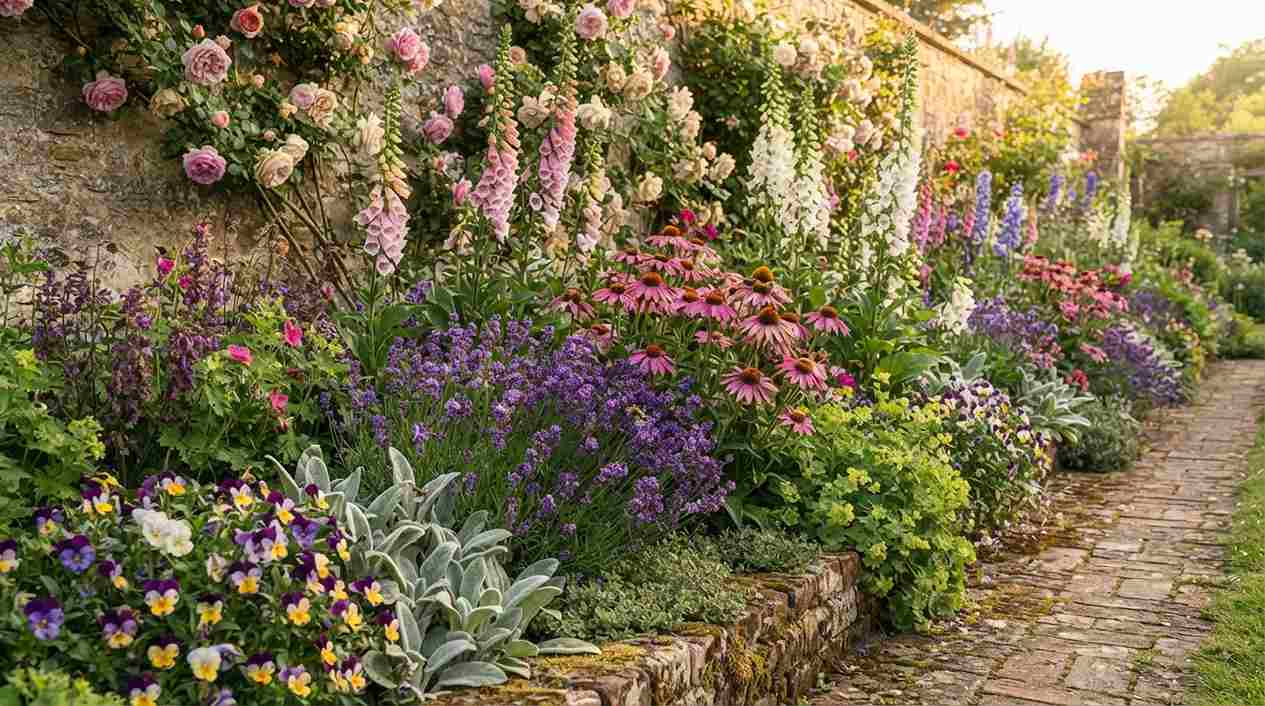
If you love that lush, overflowing English cottage garden look, a narrow space is actually perfect for it.
The key is layering plant heights so nothing looks sparse or one-dimensional:
- Front of border: Pansies, violas, creeping thyme (under 6 inches)
- Mid-border: Lavender, salvia, echinacea (1–3 feet)
- Back of border: Foxglove, delphinium, tall alliums (3–5 feet)
Let plants spill slightly over the path edges. That “overflowing” look is what makes cottage gardens feel so alive. Don’t try to keep everything tidy and contained — that’s what kills the style.
The color palette matters here too. Soft purples, blush pinks, and white with occasional pops of deep burgundy look cohesive without being matched-set boring.
11. Water Feature as a Focal Point

A narrow garden needs something to stop your eye from racing straight to the end of the space. A small water feature does exactly that.
You don’t need much room — a 24-inch diameter container pond or a wall-mounted fountain takes up almost no floor space. But the sound alone changes the whole character of a garden. There’s something about moving water that makes a small space feel like a retreat.
Place it roughly one-third of the way into the garden from the entrance — not at the back where people might never notice it, and not right at the front where it loses the element of discovery.
Surround it with moisture-loving plants: ferns, hostas, ligularia. Let it feel like the water feature belongs there, grew there, almost.
12. The Night Garden Design

Most people design their narrow garden for daytime only. And then it sits there in the evening, dark and unused.
Add simple solar lighting along the path edges, uplighting on any statement plants or trees, and maybe a string of warm white lights along the fence. The garden transforms completely after sunset — suddenly it’s an evening destination, not just something you glance at from the kitchen window.
For planting, include some white or pale-colored flowers that almost glow in low light: white foxglove, pale pink roses, silver-leafed plants like artemisia or lamb’s ear. The effect at dusk is genuinely lovely.
It’s also worth knowing that night gardens feel more private, somehow. The darkness outside the lit path creates a sense of enclosure that a wide, open garden can never quite replicate.
A Few Things Worth Knowing Before You Start
Don’t try to do everything at once. Pick one or two of these ideas, live with them for a season, and see how you feel. Narrow gardens evolve. The best ones I’ve ever seen were built slowly, with intention, over a couple of years.
Also — measure twice before buying anything. Seriously. A raised bed that’s 2 inches too wide for your pathway makes the whole space feel cramped. The difference between comfortable and claustrophobic in a narrow garden is sometimes just a matter of inches.
And don’t be afraid to borrow light. Light-colored gravel, pale stone, white-painted fences — these all bounce light around and make narrow spaces feel more open. It’s one of those things that sounds too simple to matter until you try it and realize it actually matters quite a lot.