
Moroccan Garden Ideas: Transform Your Yard Into a Stunning Retreat
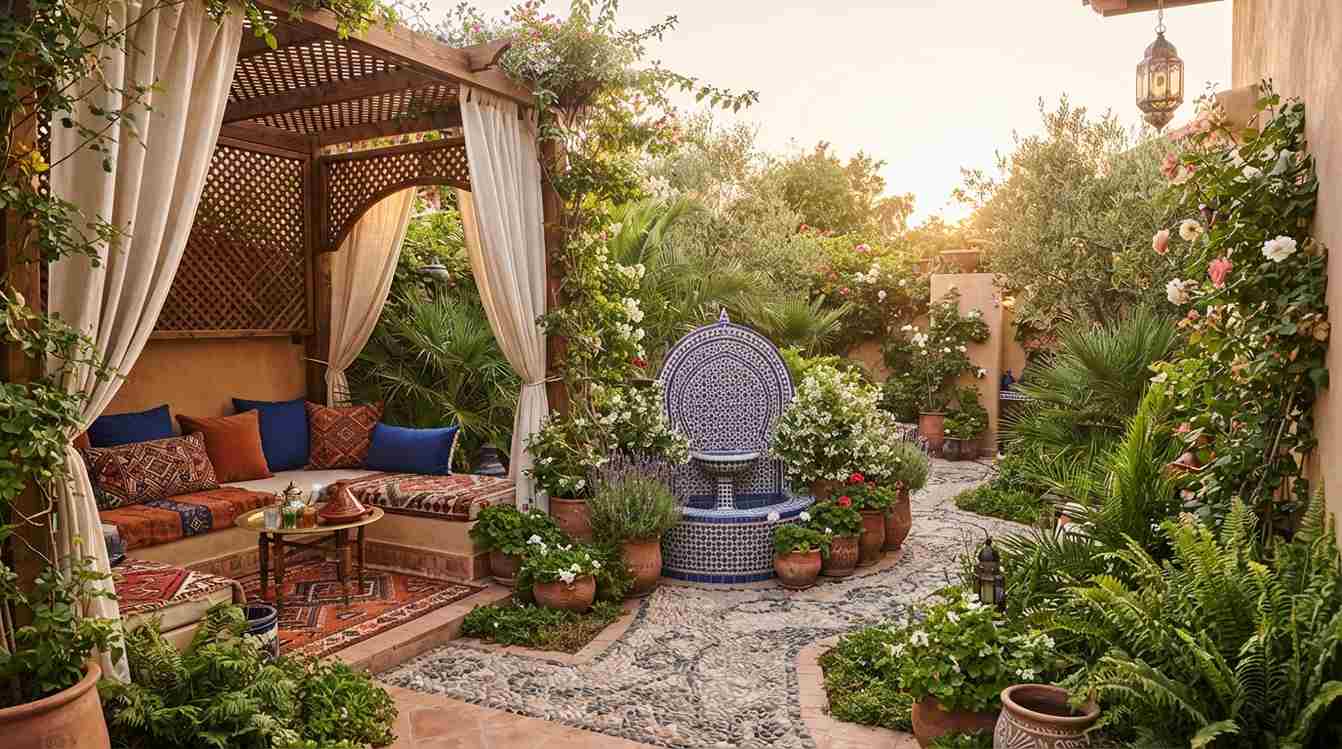
You know that feeling when you walk into a space and everything just… clicks? The colors, the textures, the way the light hits at exactly the right angle?
That’s what happened to me the first time I stepped into a real Moroccan courtyard garden in Marrakech. And honestly, I haven’t looked at my own backyard the same way since.
Here’s the thing about Moroccan garden design — it’s not just about throwing some colorful tiles around and calling it a day. It’s this whole approach to outdoor living that makes even a cramped city patio feel like a secret sanctuary. And the best part? You don’t need a massive budget or a trip to North Africa to pull it off.
I’ve spent the last two years experimenting with these ideas in my own space (some worked brilliantly, others… well, we’ll get to that). What I’m sharing here isn’t theory from a design textbook. It’s what actually works when you’re dealing with real dirt, real weather, and a real budget.
Let’s break down 12 design elements that’ll get you there.
Learn more:Industrial Garden Ideas: Beautiful Designs That Actually Work
1. The Zellige Tile Foundation — Start Here or Don’t Start at All

If Moroccan gardens had a signature, it’d be zellige tilework.
These aren’t your basic Home Depot ceramic squares. Traditional zellige tiles are hand-cut terracotta pieces glazed in those deep blues, emerald greens, burnt oranges, and ivory whites you see everywhere in Marrakech. The patterns interlock in geometric designs that somehow feel both intricate and calming at the same time.
Here’s what I learned the hard way: you don’t need to tile your entire patio. Seriously. I priced that out and almost gave up on the whole project.
Instead, try this:
- Create one focal wall or fountain backdrop with authentic zellige (or a good replica — more on that below)
- Use solid terracotta pavers for the main flooring
- Add a small zellige accent border where two surfaces meet
I found convincing Spanish-made replicas for about $8 per square foot online. The Moroccan imports run closer to $25-30, which is gorgeous but not realistic for most of us. The replicas worked perfectly for my fountain wall, and honestly, guests can’t tell the difference.
One weird tip that saved me: buy 10% extra tiles. The cutting process for installation means you’ll lose some, and trying to match a dye lot six months later is basically impossible.
2. Water Features — The Soul of the Space

Walk through any traditional Moroccan riad and you’ll hear water before you see it.
That gentle trickling sound isn’t just decorative. In those scorching North African summers, moving water actually cools the air around it. Your Dallas or Phoenix backyard might not be quite that hot, but the principle holds.
I installed a simple three-tier fountain as my centerpiece two summers ago. Cost me about $340 at a local stone yard (they had it sitting in back — never hurts to ask what they’re trying to clear out). The installation was surprisingly straightforward with a basic recirculating pump.
What makes it Moroccan specifically:
- The basin sits at ground level or slightly raised — not those tall pedestal fountains
- Tile the interior and surrounding edge in zellige or solid cobalt blue
- Keep the water flow gentle, not that aggressive waterfall sound
- Position it as your central axis point — everything else radiates outward from here
If a built fountain feels too permanent or expensive, I’ve seen people absolutely nail this with large glazed ceramic bowls (18-24 inches wide) and a small submersible fountain pump. Tuck it into a corner surrounded by potted palms and jasmine. Works beautifully.
The only real mistake I made was positioning mine in full afternoon sun. Algae became a weekly battle until I added some strategically placed lattice for partial shade.
3. Enclosed Courtyard Feel — Even When You Can’t Actually Enclose Anything

Most of us don’t have the option to build actual walls around our garden.
But you can fake that intimate, enclosed courtyard feeling pretty convincingly.
I used a combination approach:
- Wooden lattice panels (stained dark walnut) along one side — $45 each at the hardware store, I needed four
- Two tall Italian cypress trees flanking the main seating area
- A pergola overhead strung with outdoor curtains in a cream canvas fabric
The cypress trees were the game-changer. They shoot up fast (mine grew almost three feet the first year) and create these dramatic vertical lines that scream Mediterranean and North African gardens. I paid $89 each for five-gallon containers. Worth every penny.
The outdoor curtains added that final layer of enclosure. I hung them on a simple wire cable system. On breezy evenings, they billow just enough to make the whole space feel romantic and separate from the rest of the yard.
Could I see my neighbor’s shed before? Yep. Can I now? Barely — and when I do catch a glimpse, the curtain and trees soften it enough that I don’t really care.
4. The Color Palette — Don’t Overthink This Part

Moroccan gardens work with a pretty specific color story: deep blues, bright whites, terracotta oranges, sunny yellows, and pops of emerald green.
But here’s where people get paralyzed. They think everything needs to match perfectly.
It doesn’t.
My approach: pick one dominant color for your hardscaping (I went with natural terracotta), one accent color for tiles and pottery (cobalt blue), and then let plants add the rest. Bougainvillea brings in magenta and orange naturally. Jasmine adds white. Citrus trees contribute green and yellow.
The colors layer themselves if you don’t force it.
I did make one color mistake worth mentioning — I bought these gorgeous teal pots that photographed beautifully but clashed weirdly with my blue tile in person. The lesson? Bring a tile sample when you’re shopping for pottery. Hold them next to each other in natural light. Trust your gut.
5. Mosaic Pathways That Actually Lead Somewhere

Moroccan gardens use pebble mosaics and tile pathways not just for decoration — they create flow and guide you through the space.
I laid a simple pebble mosaic path (about 3 feet wide) from my back door to the fountain. Used river rocks in white, black, and terracotta. Set them in mortar over a gravel base.
Did it take forever? Kind of. Was it worth it? Completely.
The path does this thing where it makes my small garden feel intentionally designed rather than randomly thrown together. Plus, no more muddy feet when I water the plants.
If a full pebble mosaic feels too ambitious, even just terracotta pavers set in a geometric pattern with pea gravel between them creates that Moroccan vibe. I’ve seen this done beautifully with pavers from big box stores — nothing fancy required.
6. Fragrant Plant Layers — Your Garden Should Smell Like Something

This is where Moroccan gardens really separate themselves.
Walk through one at dusk and you’re hit with jasmine, citrus blossom, roses, mint, lavender — all these fragrance layers that shift as you move through the space.
My current plant lineup:
- Night-blooming jasmine along the back fence (intoxicating but almost too strong — I’d plant it farther from seating areas next time)
- Spanish lavender in terracotta pots clustered near the fountain
- Meyer lemon tree in a large glazed pot (brings fragrance and fruit)
- Rosemary as a low hedge along the path (I brush against it walking by — instant aromatherapy)
- Mint in a contained pot (it’ll take over everything if you plant it directly in soil, trust me)
The fragrance thing works best when you layer plants that bloom at different times. My jasmine peaks in summer. Citrus blossoms come in spring. Lavender does its thing pretty much constantly in my climate.
One surprise winner: scented geraniums. I picked up three varieties at a local nursery sale for $4 each. Rose-scented, lemon-scented, and peppermint. They smell incredible when you touch the leaves, and they filled in my pots way faster than I expected.
7. Lanterns and Outdoor Lighting — This Makes or Breaks Nighttime

Moroccan lanterns are having a moment right now, which means you can find them everywhere from Target to specialty import shops.
I own seven at this point. Mix of sizes and metal finishes.
Here’s what works:
- Hang 2-3 larger lanterns (12-16 inches tall) from the pergola at varying heights
- Cluster smaller lanterns on side tables and along pathways
- Use battery-operated LED candles inside (real candles sound romantic until you’re dealing with wind and wax drips)
The warm, flickering light through pierced metal creates these incredible shadow patterns on walls and paving. Totally transforms the space after sunset.
I also added some subtle uplighting on the cypress trees — just small LED spots tucked at the base pointing up. Gives the whole garden this dramatic nighttime presence you can see from inside the house.
Pro tip: buy lanterns in mixed metals. All brass feels too matchy. I have brass, copper, and dark bronze mixed together and it looks way more authentic and collected-over-time.
Learn moreIndoor Staircase Gardens Designs That Actually Work
8. Low Seating Areas — Think Lounge, Not Dining

Traditional Moroccan gardens use low cushioned seating — daybeds, poufs, floor cushions piled high.
I built a simple L-shaped bench (about 16 inches high) using cinder blocks and 2×10 lumber. Stained the wood dark, left the cinder blocks exposed. Total material cost around $180.
Then I went slightly overboard on cushions and pillows. Outdoor fabric in patterns with geometric designs, stripes, and solid jewel tones. I probably have 12 pillows out there now. Excessive? Maybe. Comfortable? Absolutely.
The low seating changes how you use the space. You’re not perched up high like at a dining table. You’re settled in, closer to the ground, closer to the plants. It encourages longer conversations and lazy afternoons in a way regular patio furniture just doesn’t.
I keep the cushions in a deck box when it rains. That’s the only real maintenance.
9. Potted Plant Arrangements — Cluster, Don’t Scatter

Moroccan gardens pack plants into large decorative containers and cluster them in groups.
This was counterintuitive for me at first. I wanted to spread things out evenly. But massing pots together — like 5-7 pots of varying sizes in one corner — creates so much more visual impact.
My favorite combination:
- One large (20+ inch) glazed pot with a small citrus or olive tree
- Two medium (12-14 inch) terracotta pots with herbs or scented geraniums
- Three small (8-10 inch) pots with succulents or trailing plants
Mix heights, mix materials (terracotta, glazed ceramic, painted finishes), but keep them grouped.
I found most of my pots at estate sales and nursery clearance sections. The big blue glazed one I use for my lemon tree cost $12 because it had a chip on one side. I turned the chip toward the fence. Problem solved.
10. Archways and Doorways — Frame Your Views

You might not have an actual archway in your garden.
I didn’t either.
But I created the illusion of one using a simple wooden trellis arch over the entrance to my seating area. Painted it deep terracotta. Let a climbing jasmine start working its way up and over.
Cost about $75 for the arch kit, took maybe two hours to assemble and install.
That simple arch completely changed how the space feels. You walk “through” something to enter the garden zone. It creates separation and a sense of arrival — exactly what those traditional Moroccan courtyard entries do.
If you’ve got an existing pergola or covered patio, try hanging a beaded curtain or fabric panel in the opening. Same effect. You’re creating thresholds and transitions instead of one continuous open space.
11. Textured Walls and Surfaces — Smooth Is Boring

Moroccan design loves texture. Rough plaster walls. Carved wood screens. Hammered metal. Woven textiles.
I added texture to my plain fence in the cheapest way possible — outdoor fabric panels mounted on simple frames. I made five panels (each about 3×4 feet) using canvas drop cloth fabric in a natural cream color. Stretched them over basic wooden frames made from 1x2s.
Hang them on the fence in a pattern. Adds so much warmth and softness compared to bare wood.
Other texture ideas that worked:
- Woven palm leaf mat as a wall hanging
- Carved wooden mirror frame (indoor piece I moved outside — holding up fine so far)
- Macramé plant hangers (very on-trend right now anyway)
The goal is breaking up flat, hard surfaces with something that catches light differently and adds depth.
12. Edible Garden Integration — Beauty and Function Together

Moroccan gardens traditionally included herbs, fruits, and vegetables alongside ornamental plants.
This isn’t your suburban vegetable plot tucked in back. It’s basil planted in beautiful pots. Fig trees grown as architectural elements. Mint thriving in decorative containers.
I’ve got:
- A small fig tree (still young, but already giving me a few fruits each summer)
- Multiple herb pots — mint, rosemary, thyme, cilantro
- The Meyer lemon I mentioned earlier
- Strawberries in a tiered planter (more decorative than productive, but the kids love checking for ripe ones)
There’s something deeply satisfying about snipping fresh mint for tea from a hand-painted ceramic pot in your Moroccan-inspired garden. It connects the whole space to actual daily use instead of just being a pretty backdrop.
The Pieces That Matter Most (If You’re Starting Small)
Look, I get it. Not everyone wants to tackle 12 different elements at once.
If I had to prioritize based on what gave me the biggest impact for effort and cost, I’d start with:
- Water feature (even a small one) — it sets the whole tone
- Zellige tile accent somewhere — one wall, one fountain surround, something
- Fragrant plants in terracotta pots — instant atmosphere
- Lanterns for nighttime lighting — dramatic effect, minimal effort
Those four elements got me maybe 70% of the way to the vibe I was chasing. Everything else was refined and enhanced but wasn’t strictly necessary on day one.
What Didn’t Work (So You Don’t Waste Time)
Not everything I tried landed perfectly.
The bright yellow painted wall I was so excited about? Too much. Faded weirdly in the sun and felt more Easter egg than Moroccan within six months. I repainted it a warm cream and liked it way better.
The expensive imported Moroccan rug I bought for the seating area? Gorgeous indoors. Disaster outside. Mildewed even though the label said “outdoor safe.” I replaced it with a much cheaper synthetic outdoor rug in a geometric pattern and stopped stressing about it.
Trying to grow bougainvillea in my climate? Ambitious and ultimately unsuccessful. I’m too far north. It limped along for one season and died over winter. Should’ve researched that better before spending $45 on a plant.
Final Thoughts
The thing I love most about this approach to garden design is how it turns your outdoor space into an actual room — a place you want to be, not just a place you maintain.
My backyard went from “where the grill lives” to genuinely my favorite spot in the house. I have coffee out there every morning. We eat dinner by lantern light more nights than not in summer. Friends actually linger after gatherings instead of migrating back inside.
Is it authentically Moroccan in the way a 400-year-old riad in Fez is authentic? Of course not. I’m working with a suburban American lot and shopping at hardware stores, not traveling with artisan craftspeople.
But it captures something essential about those spaces — the sense of enclosure and calm, the engagement of all your senses, the feeling that someone cared enough to make this place beautiful.
Start with one element. See how it feels. Add another when you’re ready. These gardens aren’t meant to be installed in a weekend by a landscaping crew. They’re meant to evolve, layer by layer, until they feel completely yours.