
15 Stunning Garden Edging Ideas to Transform Your Yard

The difference between a garden that looks well-tended and one which looks designed is a properly edged garden. Garden edging is used to create clean, defined borders around your flower beds, planting areas, and pathways. This gives your outdoor space an intentional, polished appearance. The right edging can transform the way your garden looks and feels, whether you prefer the romanticism of a cottage landscape or the clean geometry of a modern landscape.
This guide will show you 15 different garden edgings, each with their own charm and purpose. You’ll find ideas for every budget and taste, from sun-drenched stone borders to lavender-lined gravel paths. Let’s dig in.
Learn More, budget-friendly Backyard Paver Patio Ideas
1. Flagstone Pathway With Flowering Borders

Natural flagstone combined with overflowing borders of lush flowers is a timeless style for garden edging. The irregular flat stones form a path with low-growing perennials, such as creeping thyme or alyssum. These plants soften the edges of the stones and spread over them. This design mimics a cottage style garden, while maintaining a distinct visual border between the path and the planting bed.
The best plants for the path edge are:Creeping Thyme, sweet Alyssum or lobelia.
Pro Tip: Choose flagstones with warm sandstone shades for an organic, sun-soaked feel. Allow groundcovers to naturally fill in the spaces between them by spacing them 3-4 inches.
Style: Cottage, Romantic, Country
2. Natural Stone Stepping Stones through Wildflower Borders
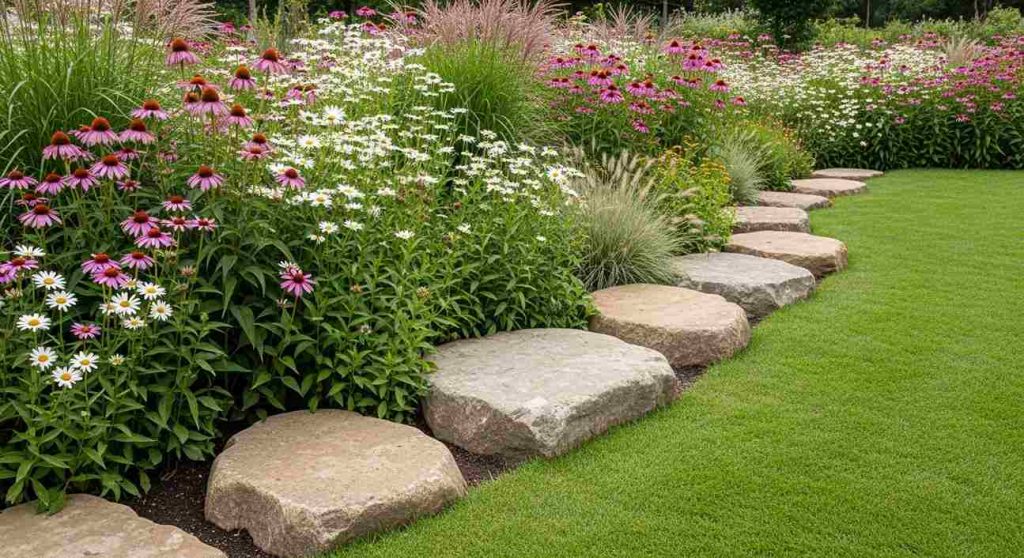
The style is inspired by the classic English country garden. It uses large, irregularly-shaped stepping stones as a path and a border. The stones are flanked on either side by a variety of wildflowers, including daisies and cosmos. They also include echinacea and lavender.
Best Plants:Shasta Daisy, catmint lavender, cosmos coneflower and ornamental grasses
Pro Tip: Vary the size of stepping stone for a more natural look. They should be sunk into the ground to allow lawnmowers to pass easily.
Style: Wildflower, Naturalistic, Cottage
3. Grand Herbaceous Border With Lawn Edge
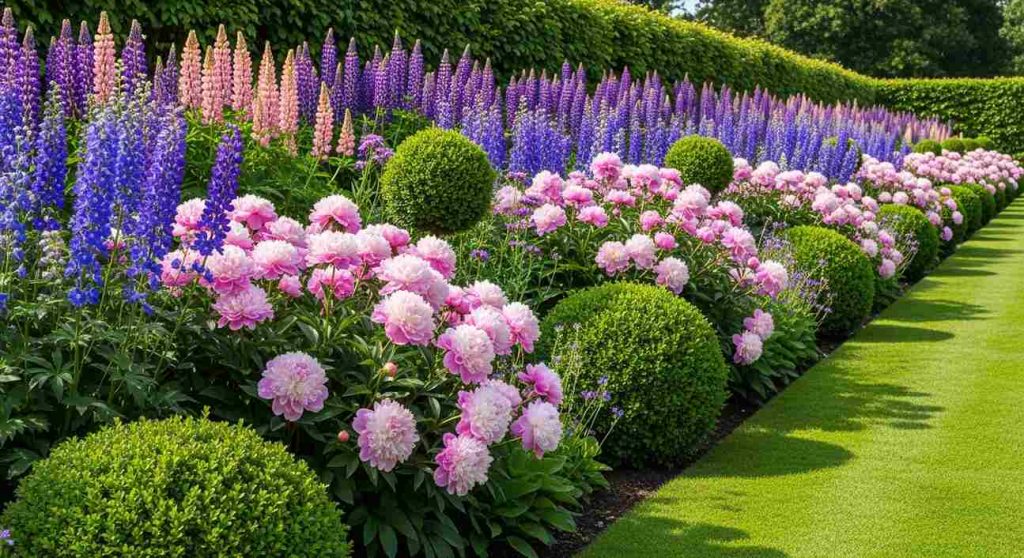
The crown jewel of English style gardening is the grand herbaceous borders. The dramatic effect of a wide, deep border filled with layers of perennials – tall lupins, foxgloves, peonies, and geraniums, and low-growing alliums, catmint, and geraniums, at the back – is created by a large, deep border. The straight, clean mowing line between the border and lawn creates a minimalist frame for the planting.
Images of the herbaceous border show lupins with bold pinks and purples, along with fluffy-headed box balls and peonies. This look is so appealing because of the contrast between the lawn edge and the lush planting.
Best plants Lupins (Lupinus), peonies (Peonies), geraniums (Alliums), catmints (Buxus), delphiniums and geraniums.
Pro Tip: Use a half moon lawn edger to maintain a sharp, vertical cut in spring and fall. The edge will look more defined and deliberate if it is cut at a depth of 2-3 inches.
Style : Traditional English, Formal and Cottage
4. Brick Pathway with Cottage Flower border
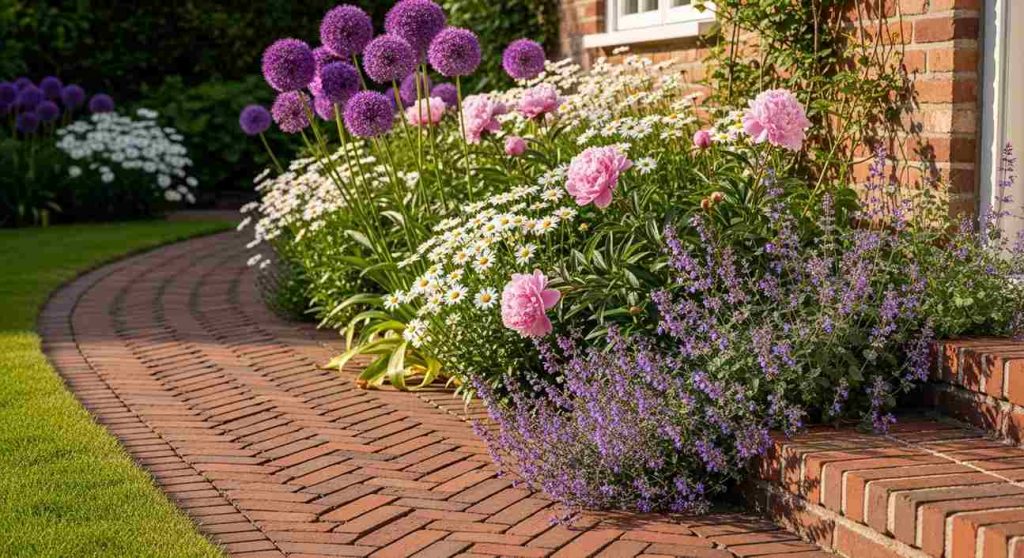
Bricks in classic red or terracotta are a warm, characterful and beautiful edging. Brick pathways laid in a herringbone pattern or running bond feel historic and welcoming. The effect of a border that is generously planted with alliums and roses and daisies and catmint, as in beautifully planted cottage borders, is welcoming and joyful.
Bricks are a natural complement to older homes and gardens. Its neutral background and gentle colour allow flower colors to shine.
Best Plants: Alliums, peonies roses catmint daisies sweet rocket and lavender
Pro Tip: Install bricks on a compacted base of sand and gravel for stability. To prevent bricks from heaving in the winter, recess the outer edge of the brick into the soil.
Style: Cottage, Heritage, Traditional
5. Rustic Picket Fence With Wildflower Edging

The rustic wood picket fence weathered into a silver grey creates a romantic and charming garden border. This look, which is characterized by tall foxgloves and umbellifers in front of tall oxeye daisies and bistro lights strung at dusk, reflects the unstructured, dreamy beauty of an English cottage garden. The fence becomes a vertical element of design, not only a boundary but also a backdrop.
This style is perfect for dividing a lawn from a wilder planting or a vegetable garden.
Best Plants:Rudbeckia, Queen Anne’s Lace, Chamomile, Ornamental Grasses, and White Foxgloves.
Pro Tip: Use rough-sawn, split chestnut to create a rustic and artisan look. Let it naturally weather to grey.
Style: Rustic, Cottage, Romantic, Moonlit
6. Stone Path Illuminated by Lanterns Through Lavender Borders

Lantern-lit stone paths are one of the best garden edging options. They feature flat flagstones that gently curve through massed plantings such as lavender, thyme and other aromatic herbs. At intervals, solar or electric lanterns can be placed along the path’s edge. This creates a warm glow that illuminates the stonework as well as the purple flowers. It is a magical effect.
This style, which is seen in the photo with lanterns and stone paths glowing against purple-mauve ground cover, combines practical path lighting with a sensory experience.
Best Plants:French Lavender, Creeping Thyme, Hardy Geraniums and Sedum.
Pro Tip: Choose flat-set stones (flagstone, sawn slate or sawn slate), rather than cobbles that are rounded for safety. Place lanterns at a distance of 4-6 feet apart to ensure even illumination.
Style: Romantic, Mediterranean, Sensory
7. Mixed colour fence-line border with tall perennials
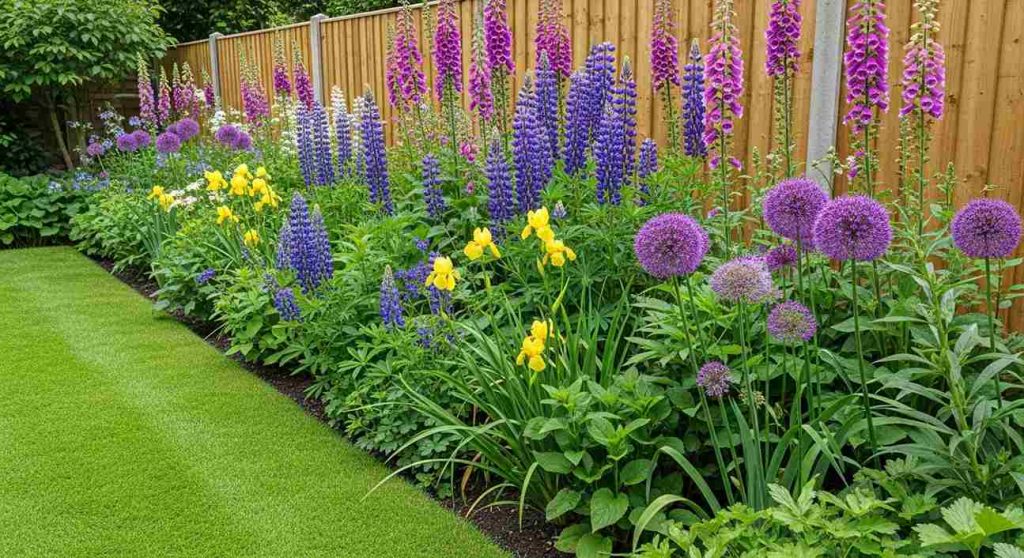
Fence-line borders are a great way to utilize space along the boundary that would have otherwise been wasted. Planting a mixed border against a wooden fence or lattice panel — with foxgloves and lupins combined, as well as alliums and iris — will add colour and privacy. The edge of the lawn in front of the border serves as a natural border.
This is a great solution for small gardens, where you don’t want to sacrifice usable space but still get maximum impact. The fence becomes a canvas.
Best plants Foxgloves (also known as lupins), iris, delphiniums and sweet rocket.
Pro Tip:Install 2-3 inches of mulch at the base in order to keep moisture in, suppress weeds and create an attractive visual border between lawn and borders.
Style: Cottage, Country, Mixed Perennial
8. String Light Canopy With Flower Borders

String lights in the bistro style draped over a garden border can create a magical outdoor room, especially when the border is filled with soft pinks, whites and purples. In the first image, Edison-bulb strings of lights are strung along a wooden fence, above a border filled with dahlias and phlox. Round stepping stones create the lower edge line. The result is an evening garden as stunning as the daytime one.
Best plants:Roses in pinks and whites, hydrangeas and phlox. Daisies and petunias are also good choices.
Pro Tip:Use solar-powered, weatherproof string lights instead of running cables through the garden. Hang the lights at 7-8 foot heights to create a canopy effect.
Style: Romantic, Garden Party, Twilight
9. Gravel Path with Stone Border, Cottage Planting and a Stone Border

A pea gravel path or crushed granite is a low-maintenance solution for edging that looks great in cottage and country gardens. The gravel is held in place by a simple line of larger stones, such as cobbles or granite sets. Reclaimed curbstones can also be used. Planting low-growing perennials up to the edge will blur the line between garden and gravel.
This style is perfectly captured in the image of a farmhouse garden, with lavender-daisies and a gravel pathway leading to a rustic barn. This style is relaxed, charming and easy to maintain.
Best Plants:Lavender. catmint. Shasta daisy. lamb’s ears. Russian sage.
Pro Tip:Lay a weed-suppressing barrier under the gravel to reduce maintenance. For the best surface, use 10mm pea-gravel or angular limestone.
Style: Country Farmhouse, Cottage
10. Border with Box Balls and Perennial Mix
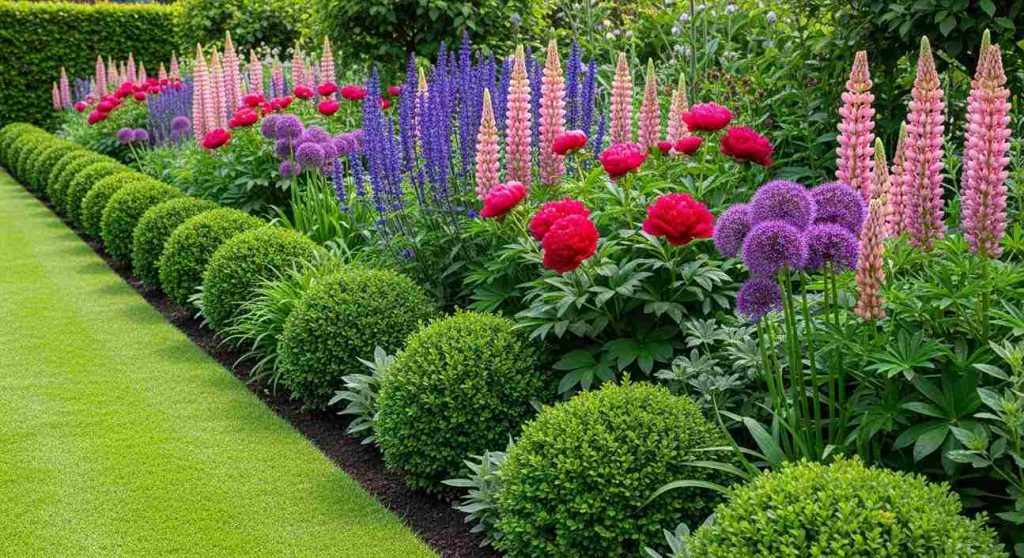
Clipped boxballs (Buxussempervirens), which are available all year round, add structure and punctuation to a flower border. They give a border of tall lupins and peonies an architectural look.
Best plants Buxus balls, lupins peonies hardy cranesbill Geraniums alliums and salvia
Pro Tip: Clip box balls two times a year to maintain their shape (early autumn and early summer). Be on the lookout for box blight, and use copper fungicide to treat it proactively.
Style :Formal English Cottage
11. Raised Flower Bed With Timber Edge

Raised beds with timber borders — particularly thick railway sleepers and sawn hardwood boards — provide bold, clean edges that enhance the visual impact of the plantings. They also improve drainage. The difference in height between the bed and the lawn allows for easier mowing, while the timber gives the design a natural, warm feel. Mix annuals with perennials to create a colourful display that will last all season.
Best Plants:Salvias and cosmos.
Pro Tip: Use naturally rot resistant timber, such as oak or treated pine. For the best visual impact, aim for a height of 6-12″ for your bed.
Style : Contemporary Cottage, Modern Kitchen Garden
12. Metal Corten Edge with Ornamental Grasses

Corten steel garden edging (weathering steel), has been a popular choice for many years. The warm, rusty surface of the steel ages beautifully, developing a beautiful patina to complement both formal and naturalistic plantings. It can be used as a thin, clean edging between the lawn and border to create a sharp visual boundary.
Best Plants:Feather Grass (Stipa tenuissima), Blue Oat Grass, Lavender, Echinacea and Black-Eyed Susan
Pro Tip: Install the corten strips at a depth of 4 inches or more to prevent them from lifting. Seal the back of patios in hot climates to prevent rust stains.
Style: Contemporary, Modern, Prairie
13. Reclaimed Brick with Cottage Rose border

A low-edging brick wall, just two to three courses high, creates an attractive border that is in keeping with the period. This works well for cottage and rose gardens. The aged bricks give the garden an unhurried, relaxed feel. Meanwhile, the raised wall prevents lawn grass from invading the border. This edging is romantic with its roses, catmint and foxgloves.
Best Plants:Old fashioned roses (old-fashioned), foxgloves (catmint), sweet williams and campanulas.
Pro Tip:Lay the reclaimed bricks over a bed of dry mortar for stability and rustic look. Let mosses and other lichens grow on the brick surface to give it an aged look.
Style:Vintage Cottage, Romantic
14. Pebble Mosaic with Drought Tolerant Planting
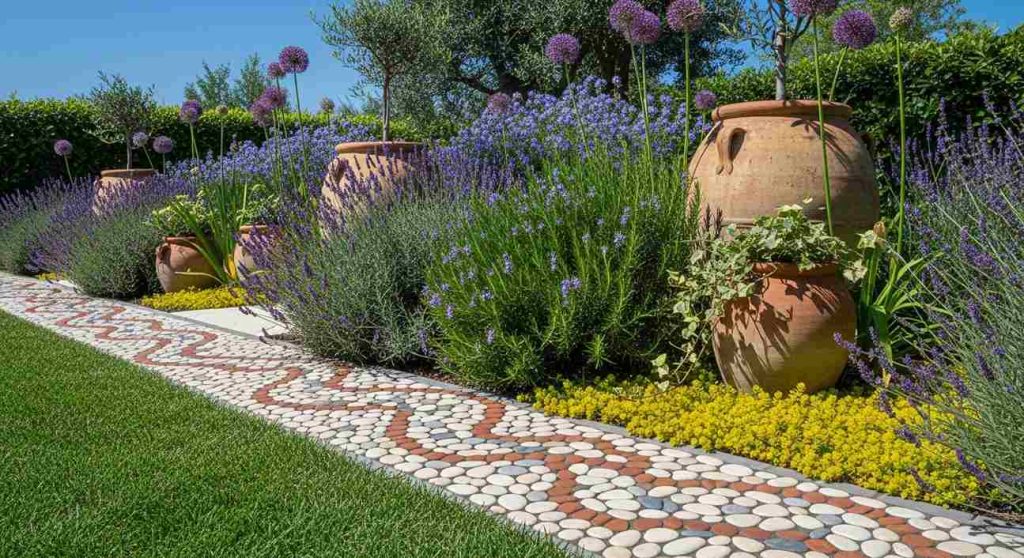
A pebble mosaic border is a practical and beautiful solution for gardeners looking for a truly unique and artistic edging. Pebbles of complementary colors are placed into a base of sand and cement to create an attractive border edge. The effect is striking and low-maintenance when combined with Mediterranean plants that are drought-tolerant, such as lavender, rosemary thyme and santolina.
Best Plants: Lavender, rosemary thyme euphorbia and ornamental alliums.
Pro Tip: Use a mixture of three to four pebble shades (cream, gray, charcoal, or terracotta), for the most rich visual texture. For maximum impact, a 6-8 inch wide band of mosaic is enough.
Style Mediterranean Artisan Low Maintenance
15. The Curved Edge of the Informal Curved Edge Plants

Some edging does not require a hard surface. A natural-looking informal curved edge, created by cutting into the lawn using a half-moon-shaped edger, and softened with ground cover plants such as ajuga or creeping Jenny. The plant becomes the edge, blurring the border between grass and the lawn in a way which feels natural, not artificial.
Best Plants:Ajuga (Lysimachia), alchemilla, dianthus, hardy cranesbill and creeping Jenny.
Pro Tip: Before cutting, use a hosepipe as a guide to cut the lawn edge into a gentle curve. Avoid sharp angles as they are more difficult to maintain and less natural looking.
Style: Naturalistic, Relaxed, Cottage
How to choose the right garden edging
There are many choices available for edging your garden. It all comes down to four factors: the style of your garden, the maintenance you can tolerate, the budget and the function that the edging will perform.
Create a garden that matches your existing style
Most successful garden edging options feel like they belong in the space. For a formal garden, with trimmed hedges and symmetrical bed patterns, a crisp steel or brick edge is required. For a wildflower border, a neat mow line is all that’s needed. Natural stone, reclaimed wood, or low picket fences are all great for a romantic cottage garden.
Maintenance
Once installed, some edging materials – such as natural stone or corten steel – require little maintenance. Some materials, such as timber or picket fences, need periodic maintenance. Two to three times per year, lawn-edge cuts should be recut. Consider the time commitment involved before choosing a particular style.
Consider Your Climate
Avoid terracotta or certain soft sandstones in climates prone to frost and rain. They can crack during the winter. Metal edging can be weatherproof, but it may rust if not properly treated. In humid climates, timber will need to be treated with a preservative. Corten steel is actually more durable in variable weather conditions, and develops its distinctive patina.
Create a realistic budget
Garden edging can be as inexpensive (cut lawn edges or collected pebbles), to as expensive (corten steel, recycled materials, stone set by hand). Flexible plastic or steel strips are a good middle ground. They’re affordable, durable and can be surprisingly beautiful when planted generously.
Final Thoughts
The garden edging will reward you for the time and effort that you put into it. A carefully chosen and installed border can transform not only the bed that it surrounds but also the character of the entire garden. It shows that you have taken the time to care for your plants.
The key to a successful garden is consistency. Whether it’s the rustic charm of a cottage flagstone path, or the dramatic drama of an herbaceous border. Install it correctly, choose a style and material that suits your garden and let the plants do the rest.
One border at a tim makes a great garden. This season, start with just one bed and watch the difference that a beautiful border makes.