
Traditional House: 15 Stunning Designs & Styles Explained (2026)

What Is a Traditional House?
A traditional house is a residential structure built in a style rooted in historical architectural precedents — drawing from centuries of cultural, regional, and craftsmanship heritage. Unlike contemporary or modern homes that prioritize minimalism and industrial materials, traditional houses emphasize symmetry, ornamental detailing, natural materials, and a sense of warmth and permanence.
Traditional homes are among the most searched real estate categories globally, and for good reason. They offer timeless curb appeal, a connection to cultural identity, and enduring resale value. Whether it’s the ivy-draped columns of a Georgian estate, the wraparound porch of a Southern Farmhouse, or the steeply pitched roofline of a Tudor Revival, each traditional house style tells a story.
Learn More, Best Small Studio Apartment Ideas
Why Traditional Houses Remain Popular in 2026
According to recent housing market data, over 60% of homebuyers still prefer traditional architectural styles over modern or contemporary designs. The reasons are layered:
- Emotional resonance — Traditional homes evoke feelings of safety, nostalgia, and community.
- Durability — Brick, stone, and hardwood have outlasted every design trend.
- Versatility — Traditional homes blend seamlessly into suburban, rural, and even urban landscapes.
- Investment value — Homes with classic architectural details hold or increase their value more consistently.
Quick Answer (AEO): A traditional house is defined by its use of historical architectural styles, symmetrical facades, natural building materials, and ornamental detailing that references cultural and regional design heritage.
15 Types of Traditional House Designs
1. Colonial House

The Colonial house is arguably the most iconic traditional American home style. Originating from the 17th and 18th centuries, it features a symmetrical facade, a centered front door, multi-pane windows, and a gabled roof. Common materials include brick or clapboard siding. Colonial homes often have two stories with evenly spaced windows and shutters .
2. Victorian House
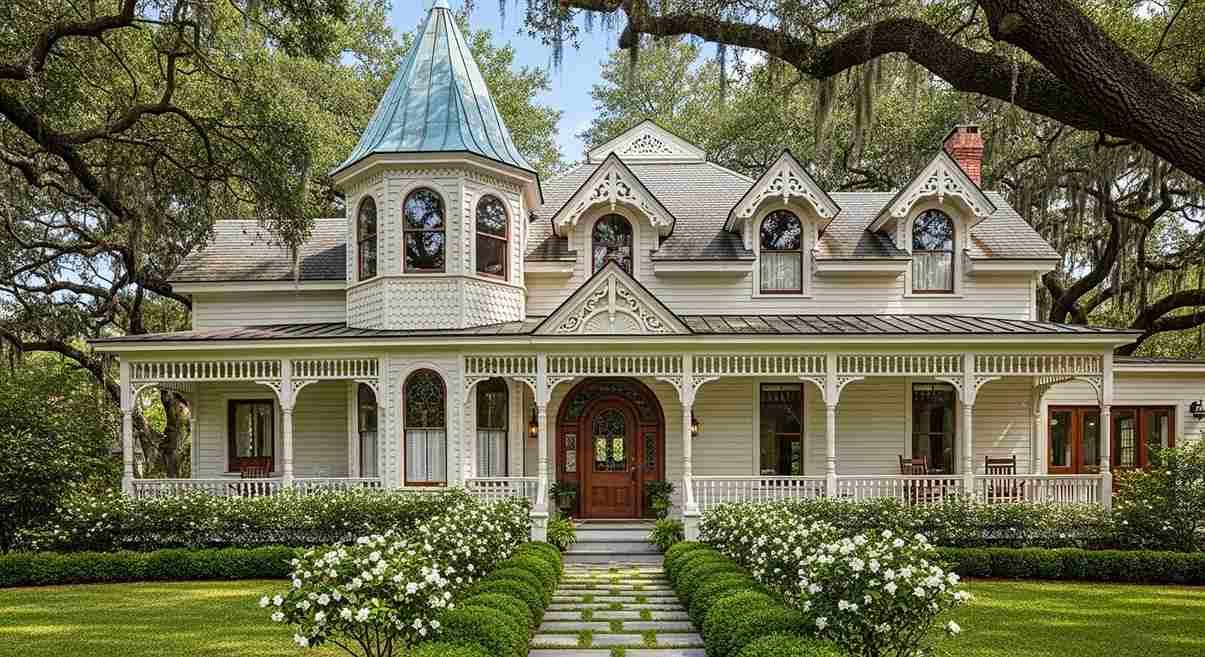
The Victorian house style, popularized during Queen Victoria’s reign (1837–1901), is known for its ornate detailing, steep gabled roofs, asymmetrical facades, and elaborate porches. From the painted ladies of San Francisco to the Gothic Revivals of New England, Victorian homes are a celebration of craftsmanship and individuality.
3. Craftsman Bungalow

Rooted in the Arts and Crafts movement, the Craftsman Bungalow emerged in the early 1900s as a reaction against mass production. These single or one-and-a-half story homes celebrate handmade quality with exposed rafter tails, tapered columns on stone or brick pedestals, built-in cabinetry, and natural wood detailing.
4. Cape Cod House

Originally designed for the harsh winters of New England, the Cape Cod house is a compact, efficient traditional style. It features a steep gabled roof, symmetrical windows, central chimney, and minimal ornamentation. Cape Cods are practical, charming, and deeply American in character.
5. Tudor Revival House

The Tudor Revival takes inspiration from medieval English architecture, featuring steeply pitched roofs, decorative half-timbering (dark wood beams against white or cream stucco), arched doorways, and tall chimney stacks. These homes look like they were transplanted from the English countryside.
6. Mediterranean / Italian Villa

As seen in the first reference image — a grand villa surrounded by rose gardens — the Mediterranean traditional house blends Italian, Spanish, and Greek architectural influences. Characterized by terracotta roof tiles, stucco exterior walls, arched windows and doorways, wrought iron balconies, and lush garden courtyards, these homes radiate old-world luxury.
7. Southern Plantation / Farmhouse
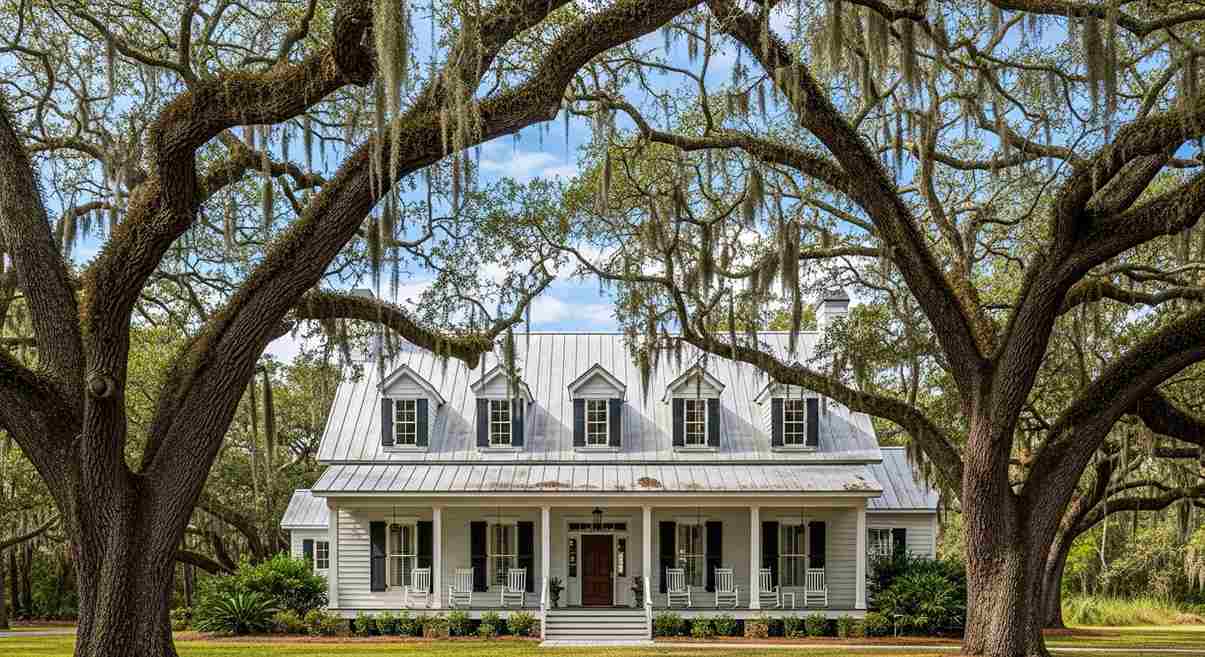
Iconic to the American South, the Southern Farmhouse — as illustrated by images 5, 6, and 7 in this collection — features a welcoming wraparound porch, dormer windows, a symmetrical facade, and is often framed by majestic trees draped with Spanish moss. These homes are defined by gracious living and connection to the landscape.
8. French Provincial House

The French Provincial style draws from the rural estates of the French countryside. It features steep hip roofs with dormer windows, symmetrical windows with curved arches, and limestone or stucco exteriors. The style balances grandeur with understated elegance.
9. Georgian House

The Georgian style (1700–1800) is one of the most formally symmetrical traditional house designs. Named after the British monarchs George I through IV, these homes feature a perfectly centered front door (often topped with a decorative pediment or fanlight), multi-pane sash windows evenly spaced on a flat facade, and brick or stone construction.
10. Spanish Colonial House

The Spanish Colonial style, prevalent in California, Texas, Florida, and the American Southwest, blends Spanish mission architecture with colonial traditions. White stucco walls, red barrel tile roofs, interior courtyards, ornate carved wood doors, and low-pitched roofs define this warm and inviting aesthetic.
11. Greek Revival House

Popularized in the early 19th century, the Greek Revival house mimics the grandeur of ancient Greek temples. The defining feature is a large, imposing front portico with tall classical columns (Doric, Ionic, or Corinthian) supporting a triangular pediment. These homes project power, civic dignity, and timeless beauty.
12. Cottage Style House

The Cottage style — beautifully illustrated in image 2 with its lavender door, stone walls, floral window boxes, and mosaic tile entry — celebrates coziness and organic beauty. Cottage homes are modest in size but rich in detail: stone or brick walls, steep thatched or shingle roofs, climbing roses, leaded glass windows, and charming garden entries.
13. Federal Style House

The Federal style (also called Adam style) evolved from Georgian architecture and flourished in the United States from roughly 1780 to 1840. It is more refined and delicate than Georgian, featuring elliptical or circular motifs, a fanlight above the front door, side lights, decorative swags and garlands, and elegant proportions.
14. Asian-Influenced Traditional House

As seen in image 4 — a white two-story home with dark tile roof, warm wooden window frames, red climbing roses, and paper lantern-style wall lights — the Asian-influenced traditional house blends Eastern architectural sensibilities with Western materials. Popular across East Asia and increasingly adopted globally, these homes emphasize harmony with nature, clean lines softened by natural wood, and lush garden integration.
15. Spanish-Craftsman Hybrid (Urban Traditional)

As illustrated in image 3 — a two-story home with a Spanish tile roof, brick gate pillars, iron fence, and craftsman-style woodwork — the Spanish-Craftsman hybrid represents the modern evolution of traditional architecture in urban settings. It combines the durability of Craftsman detailing with Spanish Colonial warmth, making it a popular choice for suburban neighborhoods.
Key Elements That Define a Traditional House
Regardless of the specific style, most traditional houses share these core design principles:
Element | Description |
Symmetry | Balanced facade with centered entry |
Natural Materials | Brick, stone, wood, terracotta |
Pitched Roofs | Gabled, hipped, or mansard profiles |
Detailed Trim | Cornices, columns, moldings, shutters |
Covered Entry | Porch, portico, or vestibule |
Garden Integration | Landscaped pathways, flower borders |
How to Choose the Right Traditional House Style
Step 1 — Consider Your Climate:
Cape Cod and Tudor styles suit colder, wetter climates. Mediterranean and Spanish Colonial designs thrive in warm, dry regions.
Step 2 — Evaluate Your Lot:
Grand styles like Italian Villa or Greek Revival require larger lots. Cottages and Bungalows work beautifully on compact urban plots.
Step 3 — Match Your Lifestyle:
Victorian and Craftsman homes suit buyers who value artisan detail. Colonial and Georgian homes appeal to those who prefer formal, structured living spaces.
Step 4 — Set a Budget:
Stone and brick construction (Tudor, Georgian) typically costs more than wood-frame styles (Cape Cod, Craftsman).
Step 5 — Think Long-Term:
Choose a style with strong resale value in your local market. Colonial, Craftsman, and Farmhouse styles consistently rank among the top-selling traditional home types.
Conclusion
A traditional house is more than a building — it is a living expression of history, craftsmanship, and cultural identity. From the grand rose-lined pathways of an Italian Villa to the mossy cobblestone path of a Southern Cottage, each of the 15 traditional house styles explored in this guide offers a unique way to connect with architectural heritage while creating a timeless, beautiful home.