
Barndominium Floor Plans & Cost Guide: 12 Best Designs for 2026

On a clear day, you can see them as you drive through rural Texas. You will notice wide metal roofs that catch the sun, porches wrapped around rolling pastures, and large barn-style doors swinging open to reveal a kitchen which would look right at home in a design mag. Barndominiums are quietly becoming one of the most popular housing concepts across the nation, and with good reason.
The word is a mix of barn and condo, but in reality it is much more complex. Barndos are not just a barn with some furniture inside. They’re also not condos in disguise. This is a house built with a steel or post frame construction that combines the strength of an agricultural building with the comfort and flow of a modern home.
Barndominiums don’t ask you to choose either beauty or function. It is a barndominium that offers both beauty and function at its best.
This guide will show you how to build these homes, what they cost and what floor plans and layouts are best for families. It also shows 12 designs that best represent what this style has to offer by 2026.
Learn More, Stunning Outdoor Deck Ideas 2026
Why so many buyers are choosing this path
Barndominiums are a simple financial proposition. It all starts with the framework. The pre-engineered steel components and post frames arrive assembled, reducing construction time and avoiding the waste of materials that is common in traditional builds. A barndo shell is up and weather-tight within two to three weeks, while a traditional home may take six months to frame.
This speed advantage can add up to real money. There are fewer weeks of work, fewer days for equipment rental and fewer delays due to weather. Barndominium owners typically spend 30 to 50% less on the foundation and framing by the time they have completed the structure.
Long-term economics is also compelling. Metal roofing can last for 40 years or longer with little maintenance — there are no shingles that need to be replaced after major storms. Galvanized steel is resistant to rot, termites, and rust damage, which quietly reduce the value of wood frame construction. Barndo’s spray foam insulation reduces heating and cooling bills by up to 40% compared to traditional insulation methods.
The form is incredibly adaptable. Want a garage with three bays at one end, and a guest room at the other? This is an easy design challenge for a Barndo floorplan. Want a loft with a view of a great room that is double the height? The structural system takes care of it. These homes are built with an openness that is a great selling point. It’s not something added on top.
- Steel frames, post-frames and other components can reduce construction costs up to 50% when compared with conventional framing
- Metal roofs last 40+ years – no need to re-roof. This will save you money on maintenance.
- Spray foam insulation reduces energy bills between 35-40% per year
- The termite and rot damage that is common to wood frame homes can be eliminated by using pest-resistant materials
- Open floor plans make the most of every square inch — no wasted space in corridors or strangely shaped rooms
- Construction phases that are DIY-friendly can save hands-on owners between $25,000 and $35,000
Barndominiums are a great option for buyers who wish to add significant space on a rural property without having to take out a huge mortgage.
How Much Does It Cost to Build a House?
The cost of barndominiums varies widely based on the state, county and land conditions.
The table below compares the typical costs per square foot between a completed barndominium and traditional stick-built homes across four major categories of construction. These figures are for mid-range finishes, and they are based off of 2024-2025 average national prices.
Component | Barndominium | Traditional Home | Save money with our Savings |
Foundation | $7-10 / sq ft | $16-20 / sq ft | ~50% |
Frame & Shell | $20-25 / sq ft | $35-40 / sq ft | ~38% |
Interior Finish | $30-35 / sq ft | $50-70 / sq ft | ~42% |
Labor | $15-20 / sq ft | $30-40 / sq ft | ~50% |
A finished 2,400-square-foot barndominium, a size popular for housing a family of 4, can cost anywhere between $140,000 to $200,000 depending on the location and level of finish. Barndominium kits (pre-engineered frame, metal roofing, windows and doors, as well as metal cladding) can be purchased by buyers who manage the interior work. This allows them to reduce costs, often to less than $120,000.
Financing deserves a note here: USDA rural development loans, VA loans, and conventional construction-to-permanent loans all cover barndominiums, provided the structure sits on a permanent foundation and is classified as residential real estate. In rural areas, local banks and credit unions often offer portfolio loan products designed specifically for non-traditional homes. It’s worth asking before assuming that financing will be difficult.
The Right Size for You: Compact, Standard or Estate
The first thing to decide is the size of the floor plan. This decision comes from two factors: how much space will your family need on a daily basis, and what percentage of the land do you want it to cover? Barndominiums are designed more around the footprint — the outer dimensions — of the building shell, rather than the square footage. This helps buyers visualize how the home will fit on the land.
Compact Plans: 30×40 & 30×50
The 30×40 footprint provides approximately 1,200 square feet of heated space — enough to accommodate two bedrooms with two bathrooms and a large open-concept kitchen and living area. These plans are ideal for first-time home buyers, couples who have downsized from a larger house, or those building a vacation or weekend property, where the overnight space is more important than the daily square footage. These plans are the most affordable, often costing less than $100,000 for materials and labor.
Most popular size: 40×60
It is no wonder that the 40×60 footprint, which equals 2,400 square foot, has been recommended as a standard for families. The 40×60 footprint can accommodate three or four bedrooms and two or three bathrooms. It also has a pantry, mudroom, laundry room, and a great room that is open. This footprint is also popular with buyers who want to add an attached garage or shop at the end of the house. They can keep their vehicles and tools all under one roof without compromising the living area.
Options in the middle range: 40×50 or 30×60
These footprints in between offer buyers a level of flexibility that neither compact nor standard sizes can provide. In a 40×50 plan, one bay could be dedicated to a work shop while three bedrooms and two bathrooms are kept in the living area. A 30×60 is a linear layout that suits narrow lots. It allows for a front porch to run the entire width of the structure, transforming curb appeal and outdoor living ability with minimal cost.
Estate-scale 50×80 and 100×50
Barndominiums can be built to a size that is no longer modest, but rather grand. The 50×100 footprint allows for five or six bedrooms with four bathrooms. A home office, media room, loft and four-car garage can all be housed under one roof. And the cost per square foot is still well below that of traditional construction. The plans are becoming increasingly popular for multi-generational houses, as they allow an in-law apartment with its own entrance to be added without disturbing the main living area.
Twelve Designs You Should Know
The barndominium designs shown below are representative of the range that architecture in 2026 will offer — from a two-bedroom design that maximizes every square inch to a nearly five thousand-square-foot home that doesn’t compromise on anything. Each design has its own personality. The right choice will depend on the land you have, the size of your family and the lifestyle that you desire.
Texas Sunset Ranch


2,400 sq ft * 3 Bedrooms * 2 Bathrooms * Attached 2-car garage
This plan is characterized by a stone exterior and a standing-seam metal roof. The split-bedroom design keeps the master bedroom separate from the guest rooms. A full-width covered patio extends living space outside. The open great room and kitchen flow seamlessly, with a pantry and mudroom located between the garage area and the main living space.
Black Forest


3,800 sq ft * 4 Bedrooms * 3.5 Bathrooms * Loft * Attached garage
This two-story home plan is characterized by matte-black metal siding and floor-to ceiling windows. It has a dramatic appearance without feeling cold. The loft on top overlooks the great room with double height below. The layout is designed to accommodate both everyday life and entertaining. A private balcony from the master bedroom, a Jack-and Jill bathroom that connects two secondary bedrooms and a guest half-bath complete this design.
Mountain Lodge
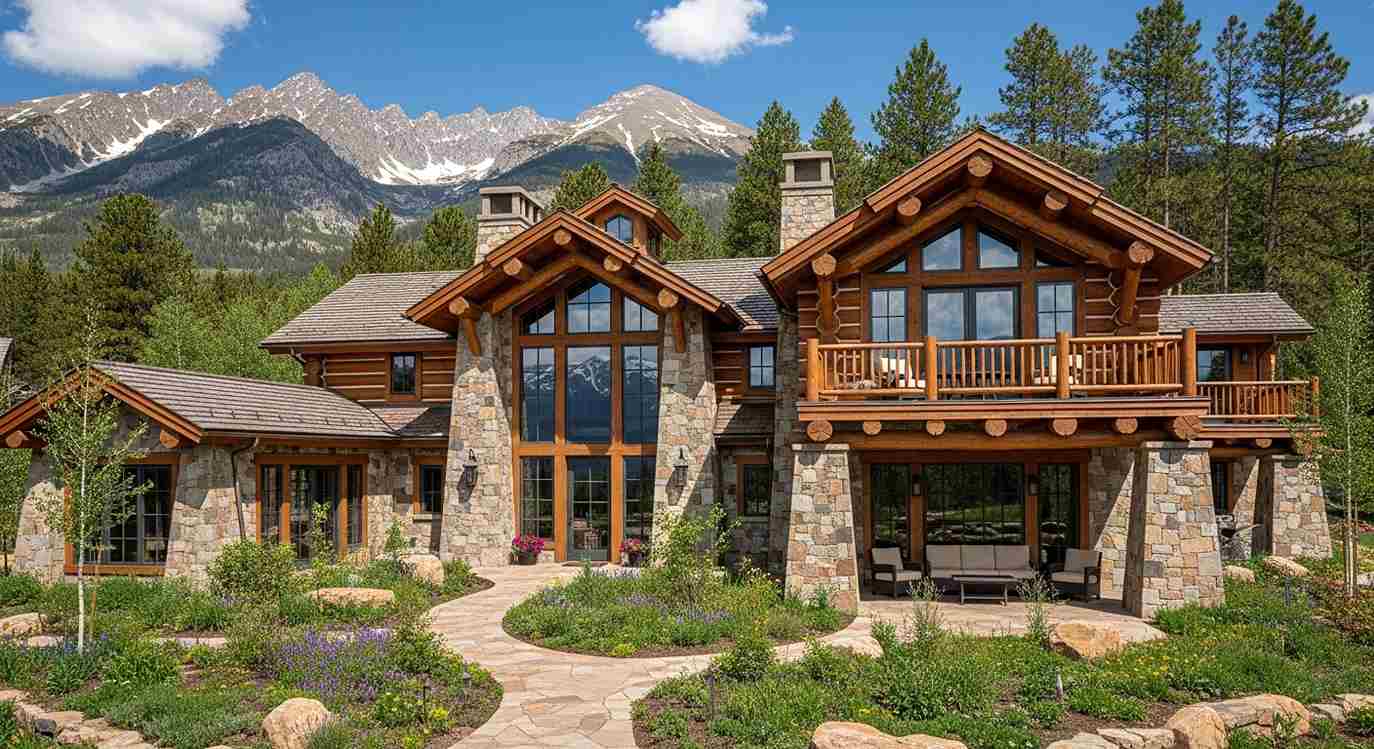

4,200 sq ft * 4 Bedrooms * 3 Bathrooms * Bunkroom * Wraparound deck
This plan is designed to look like a mountain cabin, with its stone and steeply pitched roof. That’s exactly what we wanted. Wraparound decks offer views from all three sides. The great room is anchored by a double-sided fireplace, while the bunkroom located on the upper floor can accommodate a large group.
Classic White Farmhouse


3,800 sq ft 3 Bedrooms 2.5 Bathrooms Wraparound porch
This plan has a farmhouse feel with its white board-and batten siding and dark framed windows. Wraparound porches run the entire perimeter of the house, providing outdoor living spaces in all directions. The kitchen is centered on a large, central island and a walk-in pantries are just a few steps away. The master bedroom has a soaking bathtub and a separate rain shower. The laundry room also doubles as an entryway to the mudroom from the side yard.
Rustic Welcome


2,200 sq ft * 4 bedrooms * 3 bathrooms * loft * 2-car garage + work bay
This warm and inviting design features cedar, board-and batten, and stone. Main floor is for daily living. Open great room, gourmet-style kitchen, master bedroom with walk-in wardrobe, and dedicated laundry room. The loft and two bedrooms on the upper level overlook the great room. This is a perfect place for children to play, as well as a home office or reading area.
Mountain View Craftsman


3,600 sq ft * 4 Bedrooms * 3 Bathrooms * Fireplace * Rear patio
Craftsman style is anchored by arched garages, exposed timber beams, and tapered stone columns. The great room and dining area are both organized around the central fireplace on the main floor. For privacy and accessibility, the master bedroom is located on the main floor. Three additional bedrooms are upstairs. Spray foam insulation keeps the energy costs consistent throughout all seasons.
Autumn Ridge

3400 sq ft 4 Bedrooms 3.5 Bathrooms Home Office Butler’s Pantry
This plan’s warm stone and cedar shades are not an accident. They make it look great in the autumn light. The great room and master bedroom are framed by large windows in the rear elevation. Off the foyer is the dedicated home office, which is quiet enough to focus on work while still being connected enough to make you feel like you are part of the house. The butler’s pantries between the dining room and kitchen make entertaining much easier.
Morning Sunrise

3,100 sq ft * 3 Bedrooms * 2 Bathrooms * Safe room * 3-car garage
This plan shows that a one-story home does not necessarily have to be modest. The signature timber gable entrance sets an architectural style that continues inside, where the 30-foot-long great room leads to a chef’s kitch and a dining space large enough for 10. The safe room is integrated without disrupting the flow of the house. It’s practical and doesn’t draw attention. A mudroom connects the three-car garage.
Prairie Barn with Shop

2,400 sq ft * 3 Bedrooms * 2 Bathrooms * Attached shop * Front porch
This plan has a contemporary, clean look with its white metal siding and dark window trimming. Interior features include a great room with coffered vaulted ceilings, a kitchen open to the living area and an island at its center, as well as a spacious master bedroom with a walk-in wardrobe. A 14-foot-long roll-up garage door at the north end provides a dedicated workspace for vehicles, tools or equipment. The living area is separated by a utility hallway that keeps dust and noise out of the home.
The Charlie

1,677 sq ft * 2 Bedrooms * 2.5 Bathrooms * Safe room * Garage/shop
This plan is not a compromise. It’s smartly sized, and it’s designed to be efficient. The plan includes two bedrooms, each with a private bathroom, as well as a half bath for guests. It also features an open kitchen and living area, plus a mudroom and utility room. The garage can be used for parking, or to store tools and hobbies. The design incorporates a reinforced safe room without being awkward. Regularly constructed for less than $140,000.
Loft Barndominium With 1,432 Square Foot Garage

2,683 sq ft * 4 Bedrooms * 3 Bathrooms * Loft * Front & rear porch
This plan offers maximum flexibility with three bedrooms on the first floor, including a master bedroom with its own bathroom. A fourth private bedroom with an ensuite is located upstairs. The massive 1,432-square foot garage is connected directly to the mudroom, which keeps outdoor gear contained while keeping the living spaces clean. The loft space above the great-room is perfect for a small reading room or secondary living area. The front and rear porches have full depth, not just a token gesture.
Hampton Estate

4 918 sq ft 3 Bedrooms 3.5 Bathrooms Loft * Garage for 4 cars * Wrap around porch
The Hampton Estate is a plan for buyers who are not willing to compromise. It has a total of 5,000 square foot, three bedroom suites, each with their own bathroom, an entire building-circling porch, a loft area and a 4-car garage. The Hampton Estate plan is not for buyers who are willing to compromise. The secondary loft is unfinished to allow for future expansion as owner needs change — whether it’s a home media room, gym or extra sleeping quarters. The mechanical room has been sized and positioned for easy service access.
Building One: Expectations from start to move-in
The barndominium construction process follows the same general sequence as a home — site preparation, foundation, framing and enclosure, mechanical rough in, and interior finishing. However, the timelines tend to be compressed at each stage. This is the typical sequence of events:
Before the first shovel
First, you need to verify the zoning and select a suitable land. Rural counties do not always allow steel-frame construction in standard residential zones, but the majority of them do. In rural areas there are usually minimal restrictions. The cost of a building permit can range from $500 to $2,000, depending on your state and project size. Budget between $1,500 and $3,000 if your county requires stamped engineered drawings by a structural engineer.
The foundation and shell
The cost of a concrete slab foundation is typically $4 to $7 per sq. foot for a plan measuring 2,400 square feet. Pier-and beam foundations are slightly more expensive in areas where soils are expansive. Once the foundation is cured, it takes two to three weeks to build a steel or post frame shell. The frame, metal siding and roofing, as well as the windows and exterior doors are covered in this phase.
Mechanical systems and insulation
After the shell has been enclosed, plumbing, electrical and HVAC rough in are usually done simultaneously. Spray foam insulation, applied before drywall creates a continuous moisture and air barrier which improves energy efficiency. Barndominiums often use mini-split HVAC units, which do not require the ductwork of central forced-air systems. They cost between $3500 and $5,000 to install for a standard size home.
Interior Finishing
This phase is the longest: 6 to 8 weeks on average for a new build. This is where you will find the drywall, cabinets, countertops, tiles, fixtures, trim, and paint. Interior painting, cabinet assembly, and flooring installation are all projects that can be completed by the buyer themselves. This will save them between $10,000 and $20,000. Materials purchased during off-season can be discounted by up to 25%.