
Sunken Above Ground Pool Ideas That Actually Look Inground

That’s exactly what we’re covering today.
Sunken above ground pool ideas are one of the most searched backyard projects right now — and for good reason. A traditional inground pool runs anywhere from $35,000 to $100,000+ depending on your region. A quality above ground pool with a smart sunken design? You can pull it off for $5,000 to $15,000 in many cases. Sometimes less.
And honestly? Done right, the result is just as beautiful.
Whether your yard has a natural slope you’ve been staring at for years, or you’re working with a flat suburban lot and big dreams, these 12 ideas will give you real direction — not just pretty pictures.
Learn more:Fall Porch Decorating Ideas on a BudgetThat Look Expensive
What Is a Sunken Above Ground Pool, Exactly?
Before we get into the designs, let’s make sure we’re on the same page.
A sunken above ground pool is exactly what it sounds like — an above ground pool that’s been partially (or fully) recessed into the ground. The pool itself is still a standard above ground model, but instead of sitting fully on top of the soil, it’s dug down anywhere from 12 inches to fully flush with the surrounding grade.
The result looks like an inground pool. But you’ve paid a fraction of the cost.
There’s a reason this approach is blowing up on Pinterest and Instagram right now. It works. And homeowners across the US are figuring that out.
A few things to know before you start:
- Not all above ground pools are rated for partial burial. Check your pool manufacturer’s specs before digging anything. Resin and steel pools with extra sidewall bracing are typically your safest bet.
- Retaining walls are your best friend. They hold the excavated earth in place and give your design a finished, architectural look.
- Drainage matters more than most guides mention. When you bury a pool partially in the ground, water needs somewhere to go. Plan for it early.
1. The Classic Deck Surround with Half-Buried Pool
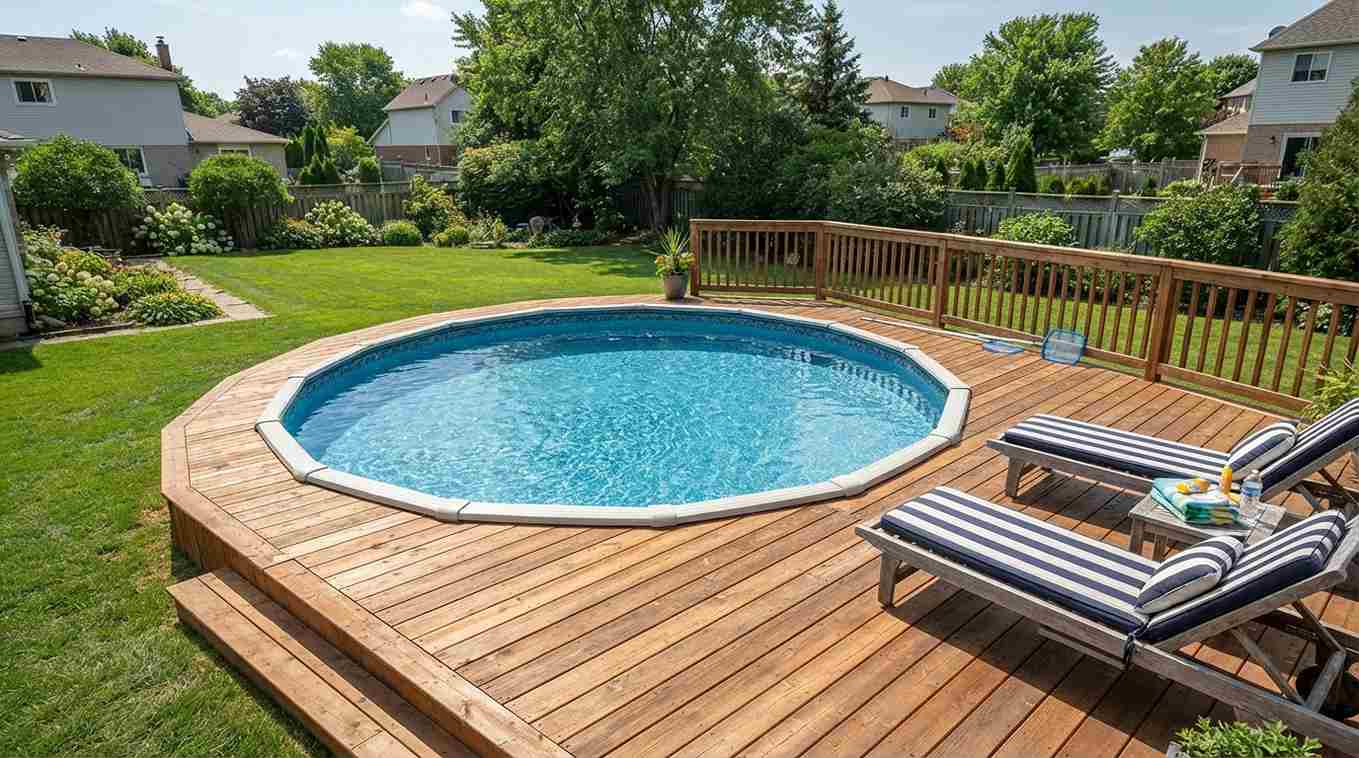
This is the most popular approach — and the most beginner-friendly.
You dig the pool down about halfway, then build a wooden or composite deck around the exposed upper half. The deck sits flush with the pool rim, giving you that seamless “inground” look from the outside. From inside the pool, you look out at deck level, which feels much more like a real inground experience than standing in a pool that towers above your yard.
Cedar and composite decking both work well here. Composite holds up better against constant water exposure and splash-back, but cedar has a warmer, more natural look that ages beautifully.
Best for: Flat or gently sloped yards, first-time pool builders, homeowners who want maximum deck space around the pool.
2. Sloped Yard Sunken Pool with Tiered Retaining Walls
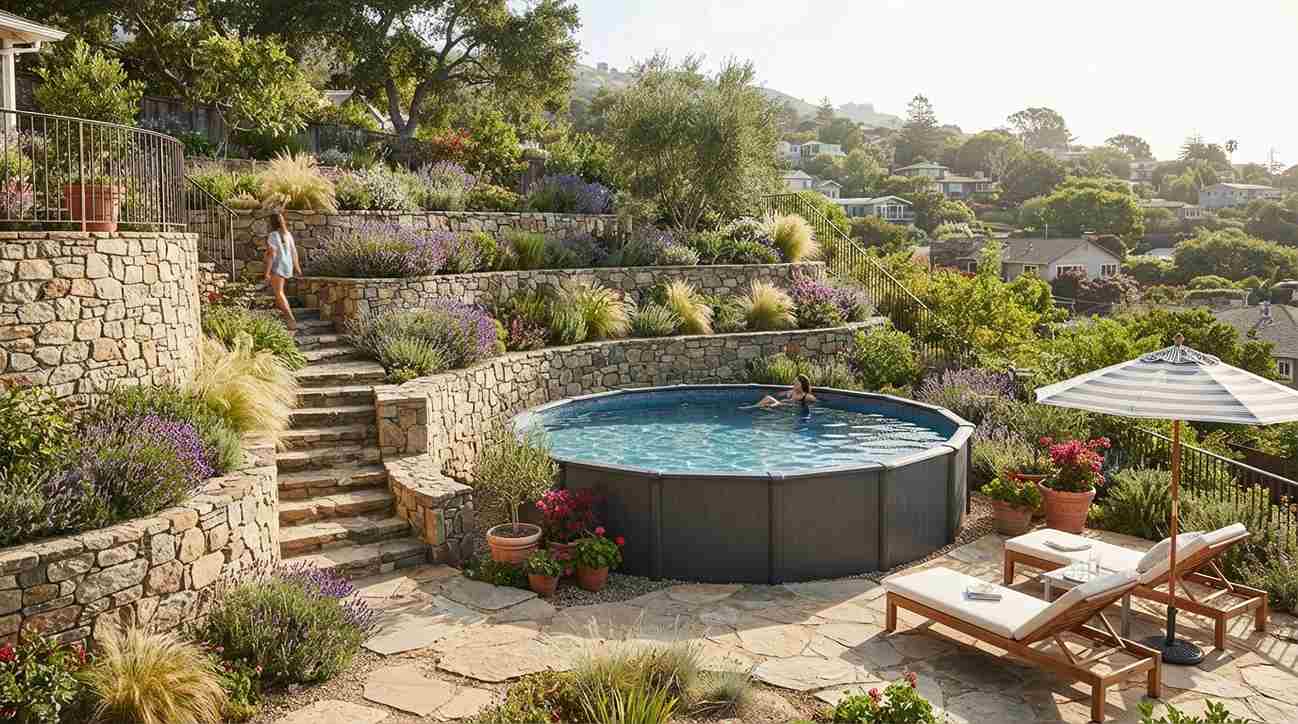
Got a hill in your backyard? Don’t fight it. Use it.
This design works with the natural slope of your yard by digging the pool into the hillside and building tiered retaining walls on the uphill side. The lower side of the pool sits nearly at grade, while the uphill retaining walls create natural terracing that you can plant, pave, or use for seating.
Many homeowners in hilly neighborhoods — think Pacific Northwest, Appalachian regions, Southern California hillside communities — have used this exact approach. The result looks intentional, almost like the yard was designed around the pool from the beginning.
Timber, concrete block, and natural stone are the most common retaining wall materials here. Stone looks the most premium. Timber is the most affordable.
Best for: Sloped yards, homeowners who want a resort-style terraced backyard.
3. Fully Recessed Pool at Grade Level

This one takes more work — and more budget — but the payoff is a pool that genuinely looks inground from every angle.
The pool is buried fully to the rim, with the pool wall sitting entirely below grade. You finish the surrounding area with concrete, pavers, or natural stone right up to the pool edge. Add some good lighting, a few well-placed planters, and a comfortable lounge area, and you’ve got something that would make your neighbors do a double-take.
The key here is choosing the right pool. Not every above ground pool can handle full burial — the walls aren’t designed for that kind of lateral soil pressure. You need a pool specifically rated for full or near-full inground installation. Oval pools, in particular, can be tricky — the end caps on oval above ground pools are generally not built to handle soil pressure the same way round pools are.
Best for: Homeowners with a higher budget, those who want the most authentic inground look.
4. Sunken Pool with Natural Stone Coping

This detail makes an enormous difference.
Coping is the material that edges the top rim of a pool — and it’s what separates a “this is clearly an above ground pool” look from a “wait, is this inground?” look.
Natural stone coping — bluestone, travertine, flagstone — laid around the perimeter of a sunken above ground pool instantly gives it a luxury finish. It also protects the pool wall from weather and UV exposure.
You don’t need a massive budget for this. Many homeowners do this as a DIY project over a weekend, purchasing stone from a local landscape supply company. Travertine pavers, in particular, are very forgiving to work with and available in most US markets.
Best for: Any sunken pool design where you want to add a high-end finishing touch.
5. The Cocktail Pool — Small, Deep, and Fully Sunken

Not everyone needs a full-size pool. Not everyone has the yard for it, either.
A cocktail pool (sometimes called a plunge pool) is a smaller, deeper pool — typically 10 to 14 feet in diameter — designed more for cooling off, relaxing, and entertaining than for lap swimming. When you sink one of these fully into the ground and surround it with a nice patio, the result looks genuinely luxurious.
Round above ground pools in the 12-foot range work perfectly for this concept. And because the footprint is smaller, the excavation cost is considerably lower than a full-size pool.
Add a fountain spitter or two for water movement, some underwater LED lights, and a couple of comfortable deck chairs, and you’ve built a true backyard retreat.
Best for: Small yards, homeowners who entertain often, couples without young children.
Learn more:Apartment Room Ideas That Actually Work in Small Spaces
6. Sunken Pool on a Concrete Pad with Paver Surround

Here’s an approach that works beautifully on flat yards.
Instead of digging the pool into the earth directly, you excavate a level pad, pour concrete for structural support, and set the pool partially into that. Then you bring the surrounding grade up to meet the pool rim using compacted fill and a paver patio.
Wait — you’re raising the yard to meet the pool, not just burying the pool? Yes. Sometimes that’s actually easier, depending on your soil type.
This hybrid approach gives you more control over drainage and the final grade, and it results in a very clean, finished look. Concrete pavers or natural stone around the perimeter keep it looking sharp for years.
Best for: Flat yards with good drainage, homeowners who want extra structural stability.
7. Sunken Pool with Built-In Bench Seating

This one’s underrated.
When you’re designing the deck or patio around your sunken pool, build in bench seating at the pool edge. Concrete benches, stone benches, or simple wood bench framing integrated into the surrounding structure — they make the pool area feel like an intentional outdoor room instead of just a pool plopped in the yard.
Kids especially love being able to sit at the edge and splash. And for adults, it’s a comfortable perch for watching the pool while staying dry. Or for gradually cooling off on a hot afternoon before committing to a full swim.
Built-in benches also eliminate the need for a bunch of patio furniture crowding the space.
Best for: Family yards, entertainment-focused homeowners, smaller pool areas.
8. Landscaped Berm Pool — Nature Does the Work
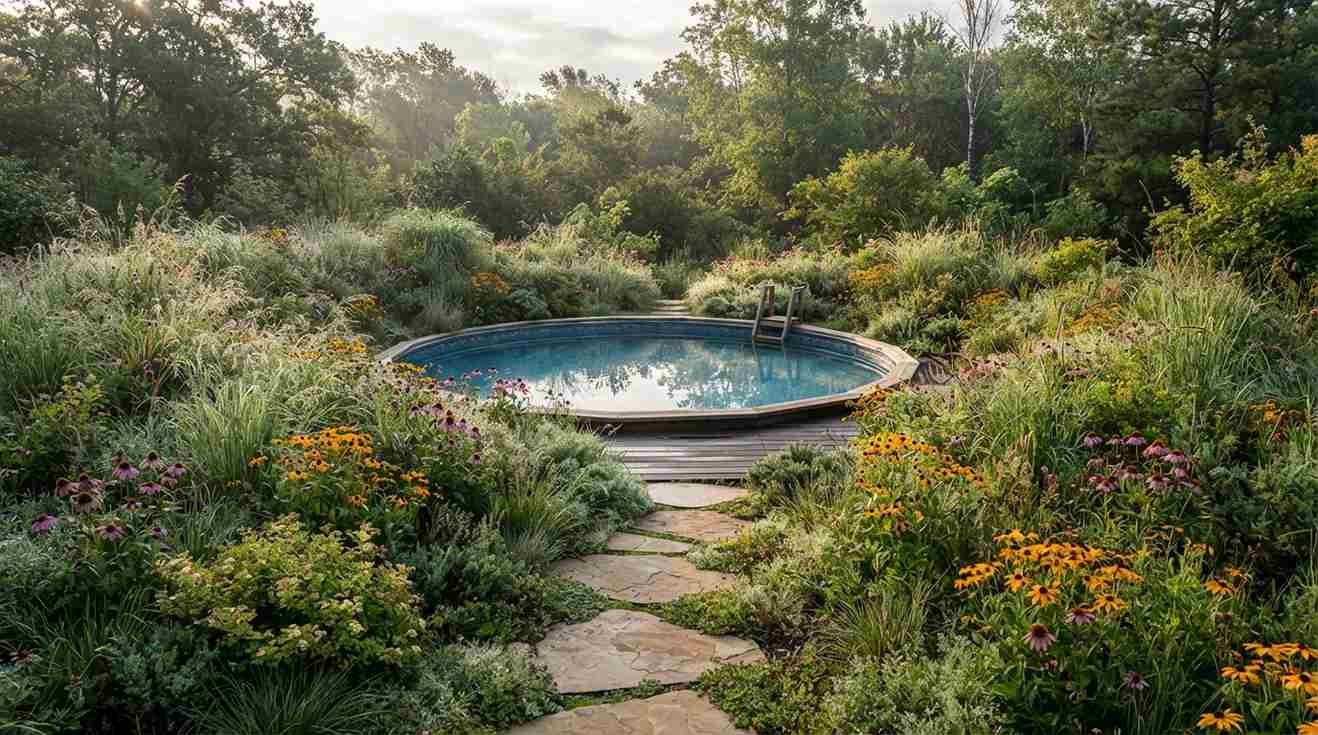
Instead of building retaining walls, some homeowners build up natural berms — mounded earth — around three sides of the pool to create the sunken effect visually.
You’re not actually digging the pool as deep here. Instead, you’re creating the impression of a sunken pool by raising the surrounding landscape. Planted with ornamental grasses, native perennials, and low shrubs, a berm-surrounded pool can look gorgeous — lush, private, and completely natural.
This approach is especially nice in regions where you want visual screening from neighbors without building a fence. The landscaping creates a natural privacy barrier while also giving the pool area a soft, organic feel that contrasts beautifully with the clean lines of the water.
Best for: Privacy-conscious homeowners, gardeners, naturalistic backyard styles.
9. Modern Sunken Pool with Concrete Surround

Clean lines. Gray concrete. A rectangular pool sitting perfectly at grade.
This is the design that’s dominating contemporary backyards right now, and it works just as well with an above ground pool as with a custom inground build. The key is keeping everything geometric and minimal — no busy patterns, no ornate details.
A rectangular or oval above ground pool works best for this aesthetic. Surround it with brushed or stamped concrete, add some black metal furniture and minimalist planters, and you’ve got a backyard that looks like it belongs in an architecture magazine.
The concrete pour is the biggest cost here, but in urban and suburban markets, this kind of modern pool area adds real property value.
Best for: Modern homes, urban backyards, design-forward homeowners.
10. Sunken Pool with Pergola or Shade Structure

A pool area without shade gets old fast — especially in states like Texas, Arizona, or Florida where afternoon sun is genuinely brutal.
Adding a pergola over part of the sunken pool area does two things: it makes the space more usable on hot days, and it gives the entire pool area a more finished, architectural feel. A pool with a pergola looks like a designed outdoor room. Without one, it sometimes just looks like a pool.
Cedar pergolas are the most popular option. Aluminum pergolas are lower maintenance. Either works well.
String lights under the pergola for evening. A ceiling fan for hot afternoons. A couple of hanging planters. That’s a backyard that gets used every single day in summer.
Best for: Hot climate regions, homeowners who entertain in the evening, family backyards.
11. Split-Level Sunken Pool Design for Sloped Lots

This is a more advanced design — but stunning when done well.
On a property with a significant slope, you can create a split-level design where the pool occupies the lower level, and a raised patio or deck occupies the upper level, connected by a few steps. The pool appears to be sunken from the upper patio view, while sitting at grade level from the lower yard perspective.
It uses the natural topography of your land instead of fighting it. The retaining walls between levels can be planted with trailing plants — creeping thyme, ground cover sedum, trailing rosemary — which soften the hard edges and make the whole design feel intentional.
Best for: Properties with significant grade changes, homeowners who want multi-level outdoor living.
12. Sunken Pool with Integrated Water Features

The last idea — and honestly one of my favorites.
Adding a water feature to your sunken above ground pool setup makes it feel like a real luxury pool. And the options are more affordable than you’d think.
- Deck jets shoot arcs of water from the pool edge into the water — dramatic at night with LED lighting
- Cascade spillways create a waterfall effect from a raised wall or retaining wall into the pool
- Fountain spitters (ceramic or bronze frog, lion head, etc.) mounted in the surrounding coping add whimsy and sound
The sound of moving water alone transforms how a backyard feels. It masks neighborhood noise. It makes the space feel calming and resort-like. And it’s one of those upgrades that costs relatively little but makes an outsized impression on anyone who visits.
Best for: Any sunken pool design — seriously, almost every pool benefits from this.
5 Mistakes to Avoid
1. Skipping the drainage plan.
Water has to go somewhere when it rains. A partially buried pool in poorly drained soil can shift, tilt, or cause the surrounding ground to heave. Grade the area before the pool goes in — not after.
2. Using a pool not rated for burial.
Read this twice. Check your pool manufacturer’s specs before any digging happens. Voiding your warranty before the pool is even installed is not a great way to start.
3. Ignoring local permits.
Many US counties require a permit for pool excavation and installation. It varies widely by municipality — but getting caught without one during a home sale is a headache nobody needs.
4. Building the deck before the pool equipment is accessible.
Leave service access for your pump, filter, and skimmer. You’ll thank yourself the first time something needs maintenance.
5. Underestimating the landscaping budget.
The pool itself is just the beginning. The landscaping, coping, and surrounding patio are what make it look finished. Budget for all of it upfront.
Final Thoughts
A sunken above ground pool is one of the best bang-for-your-buck backyard projects a homeowner can tackle. You get the look of an inground pool, a usable and beautiful outdoor space, and a real boost to your backyard’s appeal — all without the $80,000 price tag that would give most of us a minor heart attack.