
Minimalist Backyard Landscaping: 12 Designs That Actually Work

I spent three years watching my backyard sit there — just grass, a fence, and this vague feeling I should probably do something with it.
The problem? Every landscaping idea I found online looked like it required a full crew, a bottomless budget, or some kind of innate design talent I definitely don’t have.
Then I discovered minimalist landscaping. Not the cold, sterile kind. The kind that looks intentional, feels calm, and — here’s the important part — doesn’t require you to become a master gardener overnight.
If you’re staring at your backyard right now wondering where to even start, these 12 designs actually work. I’ve either tried them myself or watched neighbors pull them off without hiring anyone.
Let’s get into it.
Learn more:Fern Varieties and Care: 12 Types That Thrive Indoor
What Makes Minimalist Backyard Landscaping Different?
Before we jump into specific designs, let me clear something up real quick.
Minimalist landscaping isn’t about making your yard look empty or boring. It’s about being selective. You pick a few elements that work together, repeat them, and let each one breathe.
Most traditional backyards try to do everything at once — flower beds, water features, decorative rocks, garden gnomes, three different patio materials. Your eye doesn’t know where to land.
Minimalist design picks maybe three focal points and builds around those. The result feels bigger, cleaner, and way easier to maintain.
Which, honestly, is the whole point.
12 Minimalist Backyard Landscaping Ideas You Can Actually Pull Off
1. The Single-Material Patio with Container Plants

This is where I started, and I recommend it if you’re overwhelmed.
Pick one paving material — concrete pavers, large stepping stones, or even poured concrete if you’re feeling ambitious. Lay them in a simple grid pattern in one corner of your yard.
Then add four to six matching planters along the edge. Fill them with the same type of plant (I used ornamental grasses because they’re nearly impossible to kill).
That’s it. The repetition makes it look intentional. The simplicity makes it manageable.
It cost me about $300 for a 10×10 space, and I did it over two weekends.
2. Gravel Yard with Strategic Green Zones
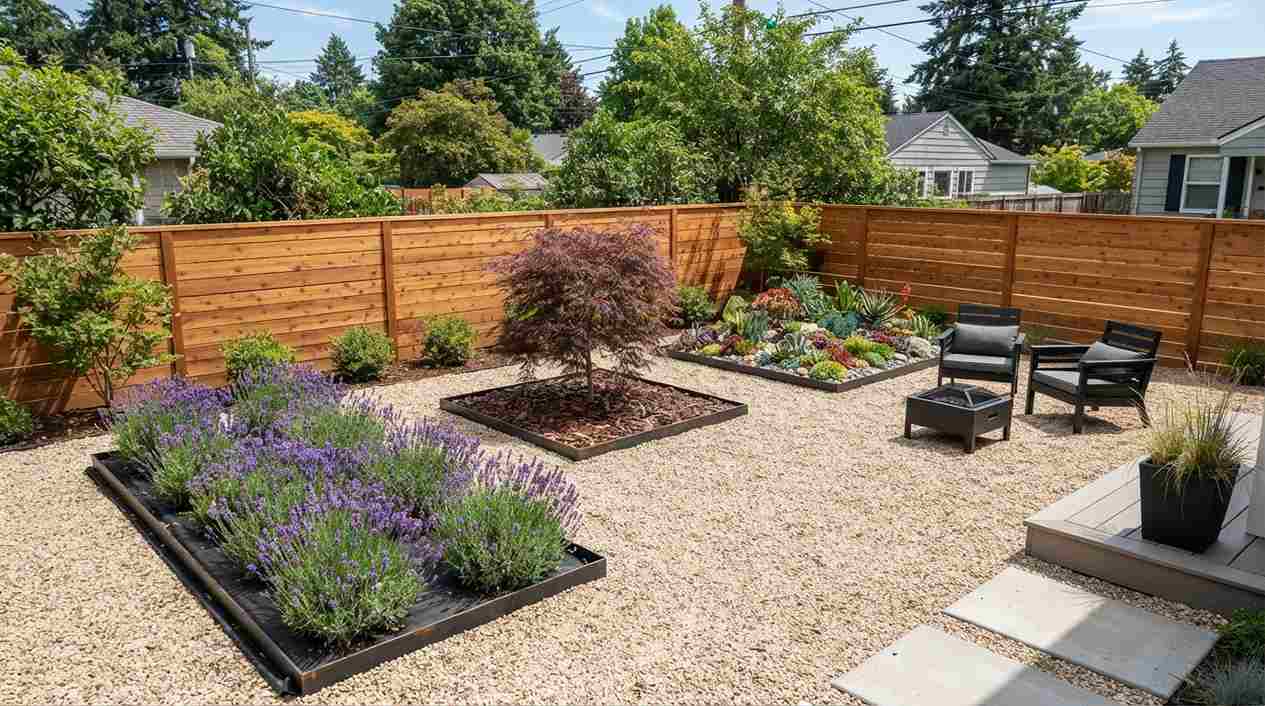
My neighbor Sarah did this one, and I was skeptical until I saw the final result.
She covered about 70% of her small backyard in light-colored gravel. Then she left three rectangular sections open — planted one with lavender, one with a Japanese maple, and one with low-maintenance succulents.
The gravel is permeable, so no drainage issues. The plants pop against the neutral backdrop. And she basically never has to mow again.
Worth noting: she put landscape fabric under the gravel. Don’t skip that step unless you enjoy pulling weeds every weekend.
3. Linear Raised Garden Beds Along the Fence

If you’ve got a fence, use it.
Build two or three raised beds in matching materials (cedar’s nice, but even cinder blocks painted black look clean). Run them parallel to your fence line, spaced evenly.
Plant them with identical shrubs or perennial grasses. The linear repetition creates this really satisfying rhythm — your yard suddenly looks like someone who knows what they’re doing lives there.
I’ve seen this done with boxwoods, ornamental grasses, and even dense rosemary bushes in warmer climates. All of them worked.
4. The All-Green Courtyard (Zero Flowers)

This sounds boring until you see it.
Pick four or five different types of greenery with contrasting textures — ferns, hostas, ornamental grasses, maybe a small evergreen shrub. Plant them in deliberate groupings.
No flowers. Just green.
The lack of color variety makes everything feel cohesive. And because you’re working with different leaf shapes and heights, it doesn’t look flat.
My friend did this in her shaded side yard, and people stop to compliment it constantly. She waters it maybe once a week.
5. Concrete Pavers Floating in Ground Cover
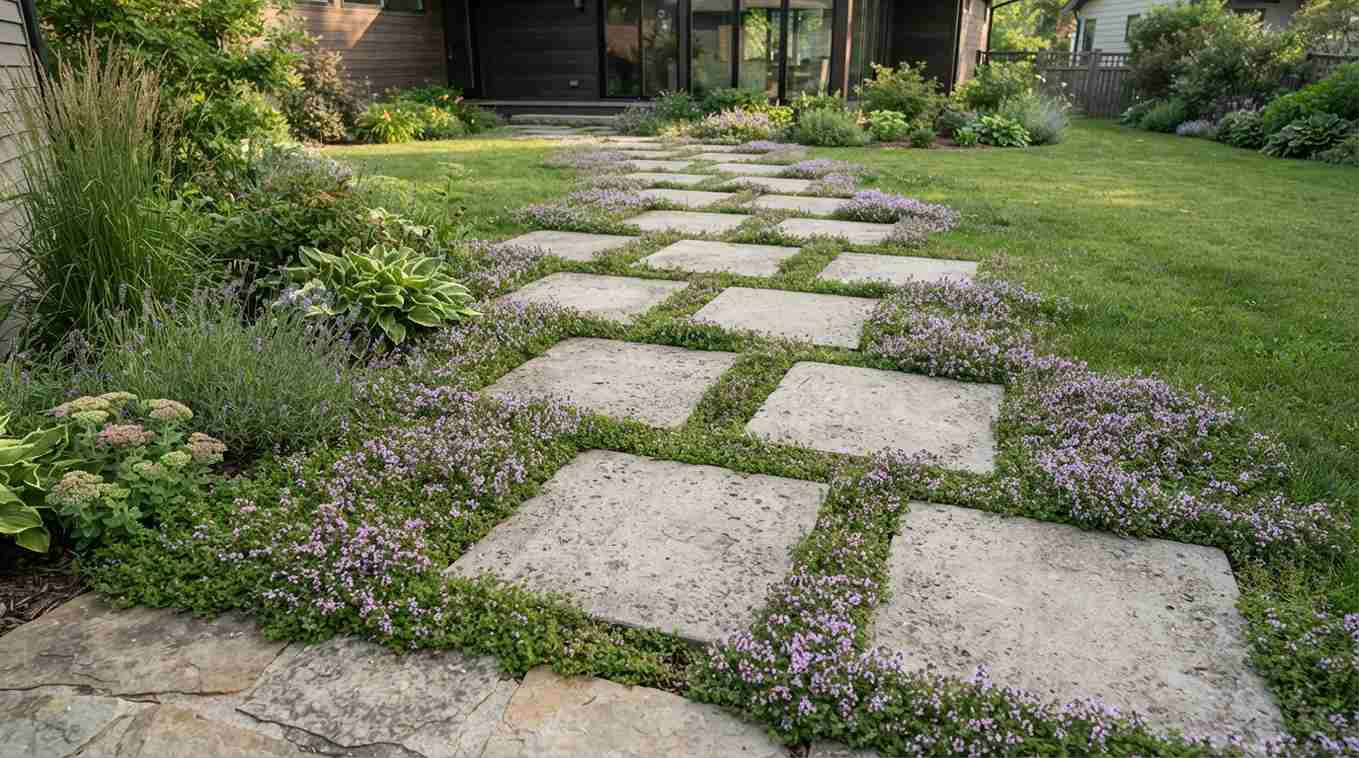
This is one of those designs that photographs really well (if that matters to you).
Lay large square concrete pavers in a staggered pattern across your yard — not touching, with about 6-8 inches between each one. Then plant low ground cover (creeping thyme works great, so does clover) in all the gaps.
Over time, the ground cover fills in around the pavers. You get this effect where the concrete squares look like they’re floating in a soft green carpet.
Bonus: the ground cover replaces grass, so you’re mowing way less.
6. Single Focal Tree with Clean Mulch Circle

Sometimes the simplest option is the best one.
Plant one really good tree — a Japanese maple if you want something ornamental, a small fruit tree if you want it to be useful. Create a perfect circle of dark mulch around it (use landscape edging to keep the line sharp).
Leave the rest of your yard as clean, well-maintained grass or ground cover.
That’s the whole design. One tree. One circle. Done.
It works because your eye goes straight to the tree. Everything else becomes background. And you can pull this off in an afternoon for under $200 if you buy a smaller tree.
7. Modern Deck with Built-In Planters

If you’re building or refinishing a deck anyway, consider this.
Instead of adding separate planters later, build planter boxes directly into the deck structure at the corners or along the railing. Use the same wood or composite material as the deck itself.
Fill them with matching plants — I’ve seen this done beautifully with tall grasses, small evergreens, or even dense lavender.
The built-in look is so much cleaner than random pots scattered around. And because the planters are part of the structure, they feel permanent and intentional.
8. Symmetrical Pathway with Matching Border Plants
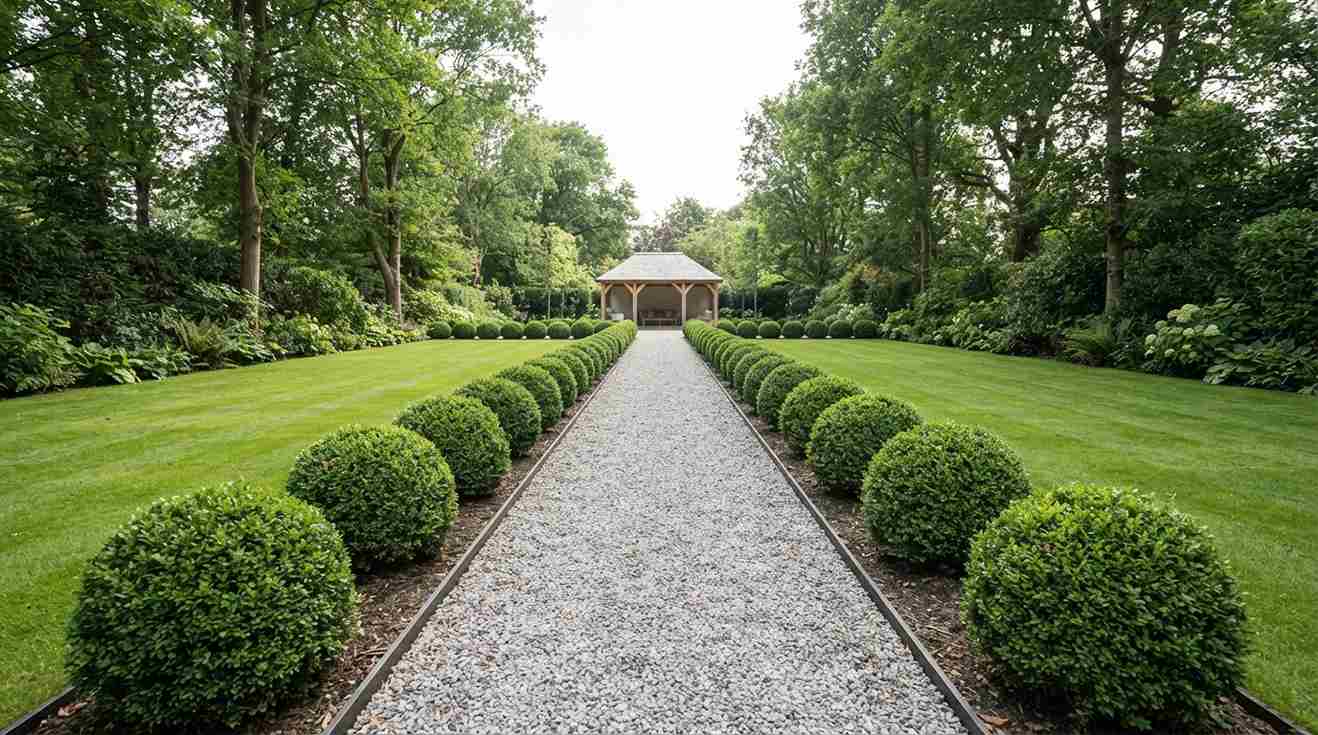
Symmetry is minimalism’s best friend.
Create a simple pathway (gravel, pavers, or stepping stones) down the center or side of your yard. Then plant identical shrubs or grasses on both sides, evenly spaced.
The mirror effect makes even a basic path look designed. And because you’re repeating the same plant, maintenance is predictable — you water them the same, prune them the same, and they grow at the same rate.
Works especially well in narrow side yards where you need to create some structure.
9. Stone Bed with Architectural Plants

This is the desert-modern look, and it’s having a moment.
Cover a section of your yard (or the whole thing, if you’re in a dry climate) with large river rocks or crushed stone. Then add just a few architectural plants — yucca, agave, ornamental grasses, or even large sculptural succulents.
Space them far apart. Let the stone be the dominant feature.
It’s dramatic. It’s low-water. And it looks expensive even when it isn’t.
I will say — if you live somewhere with actual seasons, make sure your plant choices can handle your winters. I learned that one the hard way.
10. Minimal Lawn with Defined Edges

Not every minimalist yard has to eliminate grass.
Sometimes the most striking design is just a perfectly maintained lawn with really sharp edges. Use metal or stone edging to create clean borders between your grass and any garden beds, pathways, or gravel sections.
Keep the lawn shape simple — a rectangle, a circle, an L-shape. No weird curves or fussy borders.
The precision is what makes it feel minimalist. A well-edged lawn looks intentional in a way that an overgrown one never will.
11. Wooden Deck with Single Seating Zone

Instead of scattering furniture all over your yard, create one really good seating area.
Build or define a wooden deck (even a small 8×8 platform works). Add one cohesive furniture set — a bench, two matching chairs, whatever fits your space.
Surround it with one type of planting (low boxwood hedge, ornamental grasses, or even just clean mulch with landscape lights).
The restraint makes the space feel intentional. And because you’re only maintaining one zone, it’s way easier to keep it looking good.
12. Vertical Garden on One Feature Wall

If your yard is tiny or oddly shaped, go vertical.
Pick one fence section or exterior wall and turn it into a vertical garden. You can use mounted planters, a trellis with climbing plants, or even a living wall system if you’re feeling ambitious.
Leave everything else simple — clean ground cover, maybe one small seating area.
The vertical element draws the eye up, which makes your space feel bigger. And because all your plants are concentrated in one area, maintenance stays focused.
What Actually Makes These Designs Work Long-Term
I’ve tried enough backyard projects to know that looking good in photos and staying manageable over time are two very different things.
These designs work because they follow a few principles that make life easier:
Repetition reduces decision fatigue. When you use the same plant in multiple spots, you’re not constantly Googling care instructions for twelve different species.
Fewer elements mean less to maintain. A yard with three focal points needs way less attention than one with fifteen.
Clean edges make everything look intentional. Even if your plants get a little overgrown, sharp borders keep the design readable.
Native and low-water plants save you time. I don’t care how pretty something is — if it needs constant babying, it’s going to stress you out.
Common Mistakes I’ve Seen (and Made)
Buying too many different plants at once. Your yard isn’t a botanical collection. Pick three to five types and repeat them. The cohesion is what creates the minimalist look.
Skipping landscape fabric under gravel or mulch. You’ll regret this in about six weeks when weeds start popping through everywhere.
Choosing high-maintenance plants for a low-maintenance design. Minimalist doesn’t mean zero upkeep, but it also shouldn’t mean you’re out there every weekend with pruning shears and a watering can.
Not planning for growth. That cute little shrub you planted six inches from your pathway? It’s going to be three feet wide in two years. Give things space.
Final Thoughts:
Look, I get it. Redoing your entire backyard feels like a huge project.But here’s what I’ve learned: you don’t have to do it all at once.Pick one of these ideas. Do just that one thing. See how it feels.Maybe you start with a simple gravel path and matching border plants. Next season, you add a seating area. The year after, you tackle that back corner you’ve been ignoring.