
Bonsai Garden Ideas That’ll Transform Your Space

Turns out — and I’m speaking from three years of trial, error, and more than a few accidentally murdered junipers — starting a bonsai garden is way more doable than it looks. You don’t need a massive yard. You don’t need a Zen master’s patience. And you definitely don’t need to spend hundreds of dollars upfront.
What you do need is the right approach, a handful of beginner-friendly ideas, and maybe one decent tree to start with.
Let me walk you through 20 bonsai garden designs that actually work in real homes — the kind with limited outdoor space, unpredictable weather, and owners who occasionally forget to water things.
Learn more:Is Planting a Bradford Pear Tree a Good Idea? Here’s Why You’ll Regret It.
1. The Windowsill Starter Garden

Let’s start with the most accessible option.
If you live in an apartment or don’t have a yard, you can absolutely start a bonsai garden indoors. The trick is picking species that tolerate indoor conditions — which, spoiler alert, is not the most traditional outdoor bonsai.
Best indoor-friendly bonsai:
- Ficus (especially Ficus retusa)
- Chinese Elm
- Jade plant (technically a succulent, but works beautifully as bonsai)
- Fukien Tea
I keep a small indoor setup on my east-facing kitchen windowsill. Three trees, all under 10 inches tall, sitting on a humidity tray filled with pebbles and water. The whole thing fits in about 18 inches of counter space.
Pro tip: Rotate your trees every few days so all sides get equal light. Otherwise you’ll end up with lopsided growth — learned that one the hard way.
2. The Balcony Corner Display

Got a balcony? Even a tiny one?
You’ve got enough room.
I’ve seen incredible bonsai gardens set up in corner arrangements on balconies no bigger than a yoga mat. The key is using vertical space — staggered plant stands, wall-mounted shelves, or even repurposed wooden crates stacked at different heights.
What works here:
- 2–4 small to medium bonsai
- A backdrop (bamboo fence panel, lattice, or even a painted board)
- Ground cover like moss or fine gravel to tie it together
One woman I know in Brooklyn uses her fire escape (totally against building code, but we won’t talk about that) to display five different bonsai in various stages of training. She rotates them seasonally and swears it’s the most calming part of her morning routine.
3. The Raised Bed Bonsai Garden (My Personal Favorite)

This is the setup I built two years ago, and honestly, it’s been the easiest to maintain.
I used a 4×2 foot raised cedar planter — the kind you’d normally use for vegetables — and filled it with a mix of bonsai soil and decorative rock. Inside, I keep 3–5 trees depending on the season, arranged in a shallow landscape style.
The raised bed gives you:
- Better drainage (critical for bonsai)
- Easier access (no bending over constantly)
- Built-in boundaries (keeps the design contained)
- Protection from ground pests
Cost breakdown when I built mine:
- Cedar planter: $45 at Home Depot
- Bonsai soil mix: $18 for a big bag
- Decorative river rock: $12
- Three starter trees: $60 total (bought from a local nursery sale)
Total: about $135. Still going strong.
4. The Tabletop Zen Garden with Living Bonsai

If you want something you can keep indoors and rearrange when the mood strikes, try a tabletop tray garden.
These are basically shallow containers (usually rectangular, 12–20 inches long) filled with sand, small rocks, and one or two miniature bonsai. You can rake patterns in the sand, move elements around, and change the whole layout whenever you want.
I made one using:
- A shallow wooden serving tray from Target ($8)
- Play sand from the hardware store ($4 for way more than I needed)
- Two small jade bonsai ($15 each)
- A couple smooth river stones I found on a hike
Takes up less space than a laptop. Looks way fancier than it has any right to.
5. The Entryway Welcome Garden

Here’s an idea I stole from a garden center I visited in Oregon.
Place a single statement bonsai — something a bit larger and more dramatic — right by your front door. Add a complementary ground cover (moss, small ferns, or creeping thyme) and maybe a decorative rock or lantern.
Why this works:
- Creates an immediate impression for guests
- Easy to maintain (just one or two plants)
- Can be swapped seasonally (flowering in spring, evergreen in winter)
The owner of that garden center told me she changes hers four times a year. Spring: flowering cherry bonsai. Summer: Japanese maple. Fall: cotoneaster with berries. Winter: pine or juniper.
Each swap takes maybe 15 minutes. The effect? People always comment on it.
6. The Multi-Level Bonsai Display Shelf

If you’ve got wall space, you’ve got options.
A simple wooden ladder shelf (the kind that leans against the wall) can hold 4–6 bonsai at different heights. This works indoors or on a covered porch.
Design tips:
- Place your tallest tree on the bottom or top shelf (not the middle — looks weird)
- Use odd numbers (3, 5, 7 trees look more natural than even numbers)
- Mix pot colors and textures, but keep them in the same general style
I’ve seen people do this with old library shelves, reclaimed wooden pallets, and even vintage metal baker’s racks. As long as it’s sturdy and gets decent light, it works.
7. The Seasonal Rotation Garden

This one’s for people who get bored easily.
Instead of committing to one permanent setup, create a small dedicated space (could be a corner of your patio, a shelf, or a tabletop) and rotate your bonsai collection through it based on what’s looking good that month.
Spring? Show off your flowering trees.
Summer? Bring out the lush green maples.
Fall? Display anything with good color change.
Winter? Evergreens and interesting bark textures.
The “off-season” trees can hang out in a less prominent spot while they do their thing.
8. The Rock Garden Integration

Bonsai and rocks go together like coffee and mornings.
If you’ve already got a rock garden or are thinking about starting one, adding a few bonsai creates instant focal points. The contrast between living trees and static stone is what makes Japanese gardens so visually satisfying.
What to use:
- Larger landscape rocks (limestone, granite, river rock)
- Low-growing ground covers between rocks
- 1–3 bonsai placed strategically (not clumped together)
A neighbor of mine did this with her existing rock garden last year. She added two dwarf junipers trained as bonsai and said it “finally felt finished.” Her words, not mine — but I totally got it.
9. The Container Grouping

Don’t want to build anything? Don’t.
Just group 3–5 bonsai pots together on your patio, deck, or even a wide porch step. Vary the heights slightly using pot feet, bricks, or upturned terracotta saucers.
The rule of thirds:
One tall element, one medium, one short. Repeat as needed.
I keep a simple grouping like this near my back door. Three trees, three different pot styles, all sitting on a repurposed wooden pallet. It takes two minutes to rearrange. Looks intentional every single time.
10. The Water Feature + Bonsai Combo

This is next-level, but not as complicated as it sounds.
Small tabletop fountains (the kind you plug in) pair beautifully with bonsai. The sound of running water plus the visual of miniature trees creates that “expensive spa” atmosphere people pay good money for.
I picked up a simple stone fountain at a yard sale for $15. Set it on my patio table, arranged two small bonsai on either side, and added some moss around the base.
Does it make me feel like I have my life together? Absolutely.
Is that feeling technically an illusion? Also yes.
Do I care? Not even a little.
11. The Hanging Bonsai Garden

Certain bonsai styles — especially cascade and semi-cascade — look incredible in hanging containers.
I’ve seen people use:
- Traditional hanging baskets with moss lining
- Macramé plant hangers (very on-trend right now)
- Wall-mounted brackets with shallow bonsai pots
Best trees for hanging:
- Juniper (especially cascade style)
- Cotoneaster
- Wisteria (if you’re feeling ambitious)
The trick is making sure the pot has good drainage and the hanger is strong enough. Bonsai pots + soil + water = heavier than you think.
12. The “Fairy Garden” Bonsai Hybrid

Okay, hear me out.
I know fairy gardens can veer into kitschy territory fast. But done right — miniature bonsai, tiny moss paths, small stone elements, maybe one tasteful miniature structure — they’re genuinely charming.
My sister made one for her daughter using:
- A wide, shallow ceramic pot
- Two 4-inch bonsai starters
- Sheet moss
- A tiny wooden bridge (actually a craft stick painted and weathered)
- Pea gravel for a “path”
Her daughter’s friends ask about it every single time they visit. Adults do too, but pretend they’re asking “for their kids.”
13. The Office Desk Bonsai Setup

If you work from home (or have a sympathetic office manager), a small bonsai setup on your desk is shockingly effective for mental clarity.
I keep a single small Chinese Elm on my desk in a 6-inch pot. That’s it. One tree, one humidity tray, one spot next to my monitor.
Why it works:
- Gives your eyes something natural to focus on during screen breaks
- Needs minimal care (I water mine twice a week, trim once a month)
- Takes up less space than most desk organizers
Three people I know have copied this setup after seeing mine. One guy now has four trees rotating through his home office. He claims it’s “for variety.” I think he’s just hooked.
14. The Vertical Wall Garden with Bonsai Pockets

This is for the ambitious DIYers.
Vertical garden systems — those wall-mounted pocket planters — can be adapted for very small bonsai or pre-bonsai material. You’ll need:
- A sturdy vertical planter (fabric or plastic pockets)
- Fast-draining bonsai soil
- Small, shallow-rooted varieties
Best candidates:
- Baby jade
- Small succulents trained as bonsai
- Dwarf varieties of traditional species
I haven’t done this myself yet (on my list for next spring), but I saw an incredible version at a botanical garden in Seattle. Maybe 20 pockets, each with a different miniature plant, all on one 4×6 foot wall panel.
It looked like living art.
15. The Traditional Japanese Display Tokonoma (Simplified)

In traditional Japanese homes, the tokonoma is a small alcove used to display art, scrolls, and — you guessed it — bonsai.
You don’t need an actual alcove. Just a dedicated shelf, corner, or tabletop with:
- A simple backdrop (plain wall, painted board, or fabric)
- One featured bonsai
- One complementary element (stone, scroll, small ceramic piece)
- Nothing else
The whole point is restraint. One perfect thing, displayed with intention.
I tried this in my living room using a small console table, a Japanese maple bonsai, and a single river stone. It’s been there for eight months. I change the tree seasonally, but the setup stays the same.
People notice it way more than when I had three trees crammed on the same table.
16. The Patio Corner Bonsai Landscape

If you’ve got an unused corner of your patio or deck, you’ve got room for a contained bonsai landscape.
Basic setup:
- Define the space with edging stones or a low border
- Fill with a mix of bonsai soil and decorative gravel
- Add 3–5 bonsai at varying heights
- Include at least one accent plant (moss, small fern, ground cover)
I built one of these in about two hours on a Saturday. It’s maybe 3 feet x 3 feet. Holds four trees. Costs maybe $80 all-in if you buy everything new.
Worth every penny and every minute.
17. The Indoor Forest Grouping

This is where you plant multiple small bonsai (or pre-bonsai) in one large, shallow container to create a miniature forest scene.
How to do it:
- Use an oval or rectangular pot (at least 12 inches wide)
- Choose 3, 5, or 7 trees of the same species (odd numbers look better)
- Vary the heights and trunk thicknesses
- Plant them in a natural, non-symmetrical arrangement
- Add moss between the trunks
The effect is a tiny grove of trees that looks like it’s been growing for decades.
I made one using five small juniper cuttings I got from a friend. Planted them all in one long ceramic container. Two years later, it actually looks like a forest. A very, very small forest.
18. The Bonsai + Succulent Garden Mix

Not traditional, but it works.
Bonsai and succulents have similar care requirements (well-draining soil, careful watering, bright light), so combining them in one display makes practical sense.
What I’ve used:
- One small bonsai (jade or dwarf jade works great here)
- 3–4 small succulents in complementary colors
- Decorative sand or fine gravel
- A wide, shallow pot or tray
The mix of tree form and succulent textures creates visual interest without looking cluttered.
19. The Outdoor Year-Round Bonsai Bed
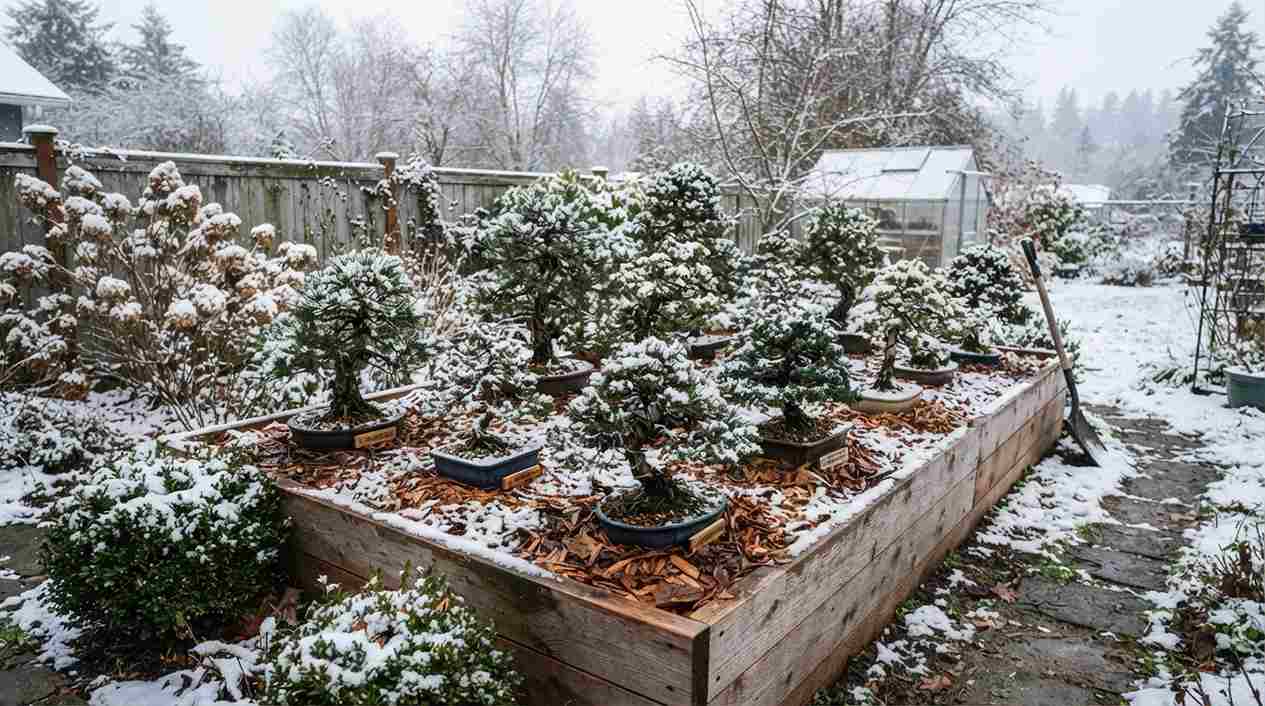
If you live somewhere with real winters, you’ll need cold-hardy species, but it’s absolutely doable.
Best cold-hardy bonsai:
- Juniper (can handle serious cold)
- Pine (most varieties)
- Larch (deciduous, but winter-hardy)
- Some maples (depending on your zone)
I keep mine in a raised bed with extra mulch in winter. They go dormant, look a little rough from December to March, then come back strong in spring.
The key is choosing species that are hardy to at least one zone colder than yours. Gives you a buffer for unexpectedly harsh winters.
20. The Minimalist Single-Tree Showcase
Sometimes one tree is enough.
Pick your best specimen — the one with the most interesting trunk, the best shape, the most personality — and give it a dedicated spot with nothing else competing for attention.
This works especially well with:
- A dramatic cascade-style tree
- A flowering variety in bloom
- An ancient-looking specimen with exposed roots
I rotate different trees through a single showcase spot on my porch. Right now it’s a small trident maple that’s just starting to leaf out. Next month I’ll probably swap it for a flowering azalea.
The single-tree approach forces you to actually appreciate what you’re looking at instead of letting your eye bounce around.
Final Thoughts
Look, I’m not going to pretend bonsai gardening is life-changing.But.There’s something genuinely satisfying about watching a plant you shaped with your own hands grow exactly the way you envisioned. Or surprise you with something better.It’s slow. It requires patience. It teaches you to pay attention.And in a world that feels increasingly chaotic and out of our control, having a tiny tree that responds to your care and actually thrives because of your decisions?