
Shade Garden: 15 Design Ideas with Best Plants and Expert Tips

Shade gardens are one of the most rewarding areas you can create in your home. Shade is often seen as a negative thing, a place where nothing can grow. In reality, the truth is quite opposite. Once you know how to do it, a shade garden can look lush, colorful and easy to maintain.
This guide includes everything you need to know: what is a shade garden, 4 different types of shade, 15 ideas for design, the best plants in each zone, a bloom calendar and expert tips.
Once established, shade gardens require the least amount of maintenance. Shade suppresses weeds naturally, reduces the need for watering, and many shade plants are perennials.
Learn More, Backyard Paver Patio Ideas
What is a Shade Garden?

Shade gardens are any areas of planting that receive less than three hours direct sunlight each day. A partial shade garden gets between 3 and 6 hours. Shade can come from trees or fences, buildings, or even the natural location of your house.
You need to rethink your garden because shade reduces the amount of energy that plants can get from sunlight. You should focus on the foliage, texture and structure of your garden, rather than chasing large blooms. Flowers can be added as a seasonal highlight.
- Full shade: under 3 hours of sunlight per day (North-facing beds and dense tree canopy).
- Partial shade: 3 to 6 hours per day with protection from the sun in the morning and afternoon.
Learn about the 4 types of shade before you plant.
All shades are not the same. This is the first step to successful shade gardening. If you choose the wrong plant for your type of shade, they will struggle to thrive no matter how much care you give them.
1. Wet Shade

The soil is moist or soggy for a long time. When the soil remains wet for extended periods. Choose plants that thrive in moisture and will not rot under wet conditions.
Plants to grow: Astilbe ligularia cardinal flower marsh fern rodgersia
2. Dry Shade

This is the most common and difficult type. This occurs under large trees, such as oaks, Douglas Firs and maples. The roots of the trees soak up all moisture. From the first day, new plants will have to compete with existing plants for water.
Best plants: Epimedium (also known as hellebore), lungwort, Solomon’s seal, Solomon’s seal, and brunnera
3. Shades of Deep Shade

There are less than three hours of light each day. Imagine walls facing north, hedges on the inside, or dense evergreen canopy. Here, only the shade-tolerant species can survive.
Best plants: Lady fern, Hostas (hostas), Toad Lily, Wild Ginger, and lily of the valley
4. Shade from the Afternoon Sun

The sun is hot in the west for a few afternoon hours. It’s trickier than you think — plants with soft, large leaves can burn. Select varieties that can handle spikes in heat.
Best plants: Heuchera, hardy geranium, foxglove, hydrangea, Siberian bugloss
15 Shade Garden Design Ideas
Shade gardens can be designed in a variety of ways, from the simple and beginner-friendly to the more ambitious.
1. Classic Woodland Carpet
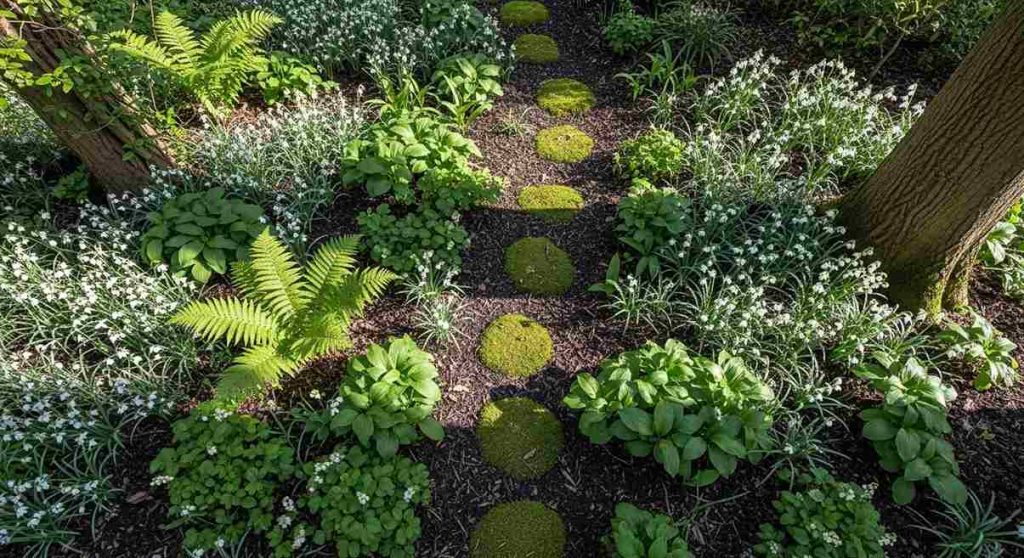
Under mature trees, layer ferns, wild ginger, and lily of the valley. Allow plants to spread naturally for a woodland look. No edging or mowing required, just lush greenery.
Best for: Full shade * Zones 3-8 * Beginner-friendly
2. The All-Green Formal Garden
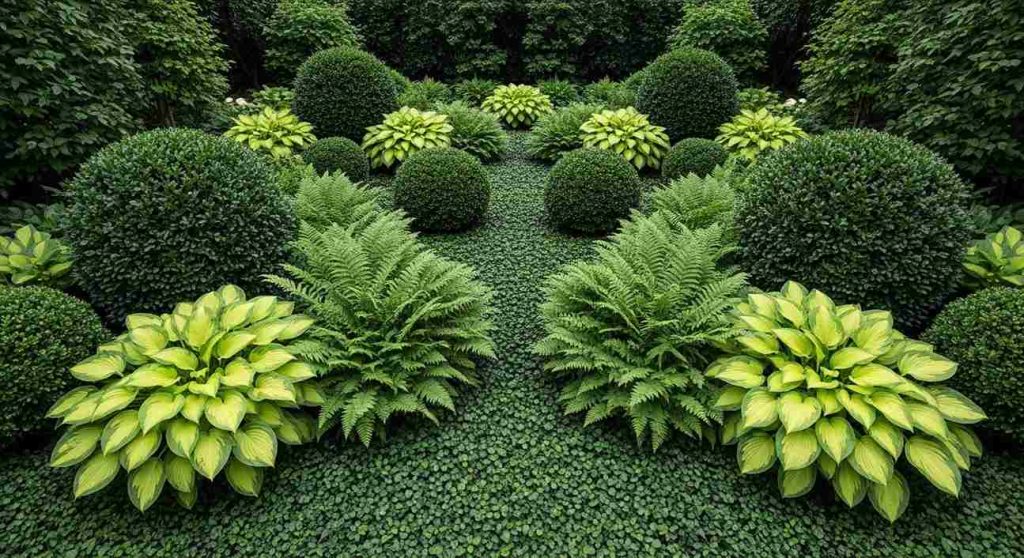
Only use green plants, but make sure to choose the right shade. Chartreuse hosts, dark ferns and clipped boxwood edges create an elegant, calm look that will never go out of fashion.
Best for: Partial shade * Zones 5-9
3. Spring Ephemeral Border

Add spring bloomers like Virginia bluebells and columbine. By summer they will be dormant, so plant hostas in their place to fill up the space.
Best for: Partial shade * Zones 4-8
4. Silver & Blue Cool Toned Garden

The combination of silver-leaved lungwort and brunnera with blue-flowered Jacob’s ladder creates a cool-toned palette which seems to glow in the deepest shade. Great for brightening dark corners.
Zones 3-8: Best in partial to full shade
5. Shade Pollinator Garden

Shade gardens are full of pollinators. Astilbes, foxgloves, hellebores, and cardinal flowers attract bees and butterflies all season.
Best for: Partial shade * Zones 4-9
6. Four-Season interest garden
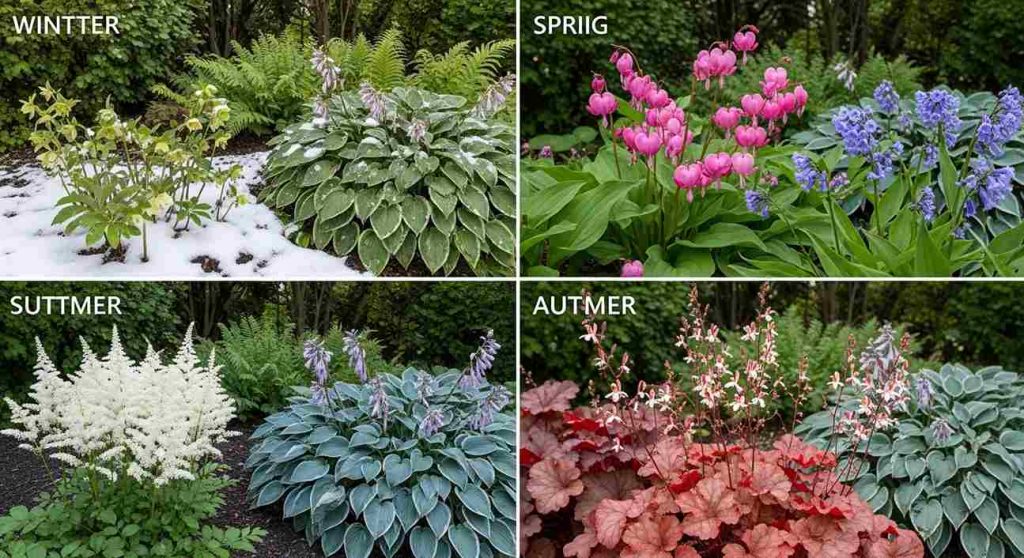
Select at least one plant per season: Hellebores in late winter, bleeding hearts in spring, astilbes for summer and toadlilies in fall. For winter structure, add evergreen ferns. Never leave a bed empty.
Best for: Partial shade * Zones 4-9
7. Tropical Shade Garden (Warm Zones)
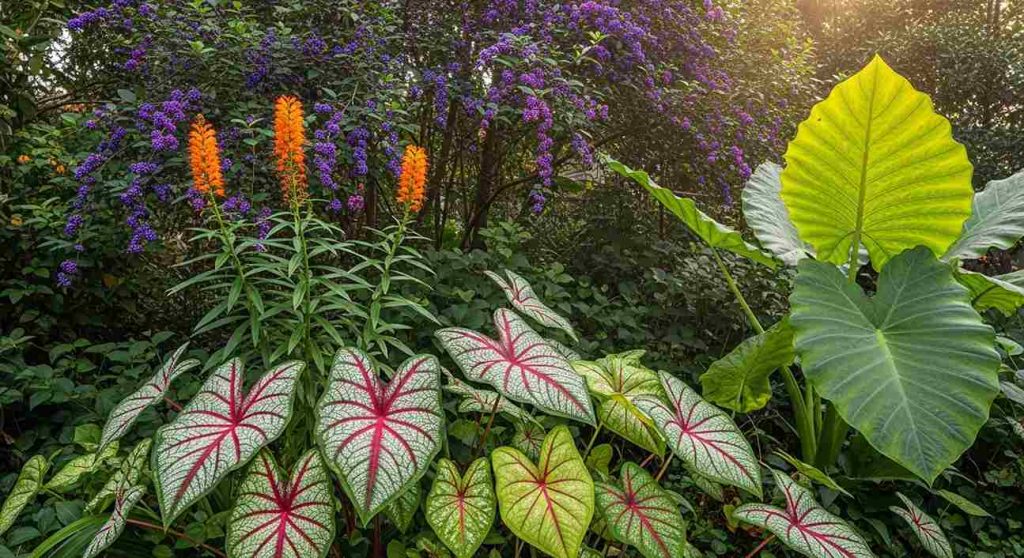
Caladiums and gingers are thriving in Zones 7-10. Firespike, beautyberry, ti plant, and caladiums also thrive. These plants will create a tropical feel in Florida or the Southeast.
Best in: Zones 7-10, partial to full shade
8. Modern Minimalist Shade Garden

Replace the lawn with stepping stones or gravel. You only need one bold hosta, Japanese Forest Grass, and an evergreen shrub to create a modern, stunning look.
Best for: Partial shade * Zones 4-9
9. Golden Glow Garden

Plants in yellow and chartreuse literally light up a dark space. Gold Standard hostas, golden Japanese forest Grass, and yellow-tipped Solomon’s Seal create the illusion that sunlight is even present under dense foliage.
Shade: Zones 3 to 9
10. Waterside Wet Shade Garden

Astilbe, cardinal flower, and ligularia can be used to frame a small stream or pond. You can add a stepping stone path to avoid getting muddy. This is one of the most dramatic styles for shade gardens.
Best for: Wet shade * Zones 4-9
11. White Moonlight Garden

At dusk, white-variegated hosts, white-astilbes, white bleeding hearts, and white-lily-of the-valley shine. The white will really stand out in low-light conditions.
Best in: Zones 3-9, partial to full shade
12. Pacific Northwest Native Garden
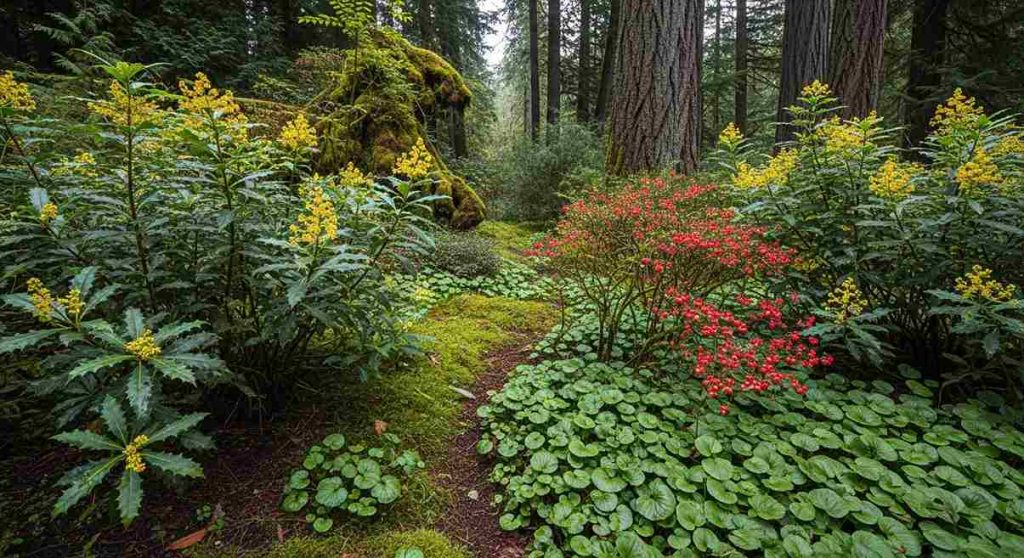
Oregon grape, salal huckleberry and wild ginger create a beautiful, tough understory perfectly adapted to the PNW rain patterns and shade patterns. Native plants require less maintenance because they belong in the area.
Shade: Zones 6-9, full to partial shade
13. Dark Drama: Burgundy & Purple Garden
![Moody Dark Drama Burgundy Shade Garden [Design Idea 13 — Dark Drama Garden]](https://www.claytonhomesgarden.us/wp-content/webp-express/webp-images/uploads/2026/03/Whisk_2d3cdf374d36879b6f946774ae6c1716dr_11zon.jpeg.webp)
Burgundy Heucheras and dark-leafed Japanese Maples combine to create a dramatic, moody garden that will surprise every visitor. This is one of the most unusual shade garden designs you can create.
Best for: Partial shade * Zones 4-9
14. Wildlife Habitat Shade Garden

Combine camellias that bloom early, berrying plants, native ferns and a shallow birdbath. This garden is both beautiful and useful to birds, bees and beneficial insects.
Best for: Partial shade * Zones 5-9
15. Shady Porch Container Garden

No space on the ground? Fill a large container with coleus, impatiens, caladium and a trailing plant. This classic container combination will add color to any porch or balcony that is shaded.
The best for: partial to full shade
Shade Garden Plants for Each Zone
Here are 15 plants that will thrive in a shaded garden.
| Plant | Shade Type | Zones | Why it’s great |
| Hosta | Full or partial | 3-9 | The best all-around leaf plant with thousands of varieties |
| Astilbe | Partially wet shade | 4-9 | Summer plumes are feathery and attract pollinators |
| Hellebore | Full or partial | 4-9 | Blooms in late winter; evergreen; deer resistant |
| Bleeding Heart | Partial Shade | 3-9 | Spring bloomer that goes dormant in midsummer |
| Heuchera | Partial Shade | 4-9 | The best foliage for all seasons in over 100 colors |
| Toad Lily | Full Shade | 4-9 | Rare Fall Bloomer with orchid-like flowers |
| Ferns | Full or partial | 3-8 | Most are drought tolerant once established. |
| Lily-of-the-Valley | Full Shade | 2-9 | Spreads of fragrant spring bells |
| Brunnera | Partial Shade | 3-8 | Silver heart-shaped leafs; blue forget-me not flowers |
| Caladium | Partial Shade | 9-11- / annual | Shades of tropical color that are unbeatable |
| Foxglove | Partial Shade | 4-9 | Tall dramatic spikes, reseeds easily |
| Epimedium | Dry Full Shade | 4-9 | Best performer under trees; deer proof |
| Hydrangea | Partial Shade | 5-9 | Low care; large blooms; long season |
| Virginia Bluebells | Partial Shade | 3-8 | Native; vivid blue spring flowers |
| Coleus | Full or partial | All Zones | The easiest shade to use; unlimited colors |
Shade Garden Bloom Calendar
Shade gardens are often thought to only be attractive in the spring. You can add color and interest to your garden from February until October with the right mix of plants.
Early Winter (February to April)
- Hellebore (Lenten Rose).
- Snowdrops
- Virginia Bluebells
- Lungwort (Pulmonaria)
- Bloodroot
Late Spring (May to June)
- Bleeding Heart
- Columbine
- Brunnera
- Solomon Seal
- Foxglove
Midsummer (July-August)
- Astilbe
- Hosta (flowers)
- Cardinal Flower
- Hydrangea
- Ligularia
Autumn (September to October)
- Toad Lily
- Japanese Anemone
- Camellia
- Obedience Plant
- Heuchera (foliage stays colorful)
9 Tips from Experts for a Successful Shade Garden
- First, determine your shade type. Before buying anything, spend a day observing the light moving across your garden.
- Plant foliage first and flowers second. Flowers are short in the shade. Foliage can be used all year long. Mix leaf textures, sizes, and colors.
- You can’t grow grass in deep shade. Grass requires full sun. Replace it with mulched planting beds, a gravel path or shade groundcover.
- Mulch generously. Mulch generously. A layer of 2-3 inches will retain moisture, suppress weeds and make every plant look more attractive.
- Early control is key. Slugs love moist shade. Use organic iron phosphate to control slugs in the spring before damage occurs.
- Avoid invasive plants. Yellow archangel, Bishop’s weed and ostrich fern will spread. Before planting something unfamiliar, research its spreading habits.
- Plant in drifts and not dots. Planting in groups of 3 to 5 plants looks naturalistic and deliberate. Single plants scattered around look like a mistake.
- Know your USDA zone. Check the zone hardiness of plants before purchasing. Zone hardiness is important when buying plants.
- Add a water feature or a bench. With a bench, birdbath or small pond, you can transform a plant bed into something that is actually used.
Shade Garden FAQ
Final Thoughts
Shade gardens are not just a solution to a problem, but an opportunity to create’ something special’. Shaded areas naturally encourage lush, cool plantings and a calm atmosphere.
It’s simple: choose plants that are zone-appropriate, know your shade type and prioritize foliage. Give it time. Shade perennials generally follow the rule of sleep, crawl, leap: quiet in year 1, growing in year 2, spectacular in year 3.
This guide can help you create a beautiful shade garden in any season.