
Kitchen Garden Ideas: Guide to Growing Vegetables at Home

There’s something magical about stepping outside your door, scissors in hand, and snipping fresh basil for tonight’s pasta. Or pulling a sun-warmed tomato off the vine for lunch. That’s what a kitchen garden gives you — not just food, but a connection to what you eat that most people have completely lost.
I started my first kitchen garden three years ago in a space barely 10 feet wide. Honestly, I thought I’d kill everything within a month. But here’s what happened instead: I got hooked. And once you taste the difference between grocery store herbs and the ones you grew yourself? There’s no going back.
Learn more: Black Accent Wall Ideas: 12 Designs for Every Room
What Exactly Is a Kitchen Garden?
A kitchen garden isn’t your grandmother’s sprawling vegetable plot (though those are great too). It’s a dedicated space — could be a few raised beds, containers on a patio, or even a sunny corner of your yard — where you grow the things you actually use in your kitchen. Herbs, salad greens, tomatoes, peppers, whatever you cook with most.
The French call it a “potager.” The British have their cottage gardens. Americans are rediscovering it as the kitchen garden. Same idea: grow what you eat, close to where you cook it.
What makes it different from a regular vegetable garden? Two things.
First, it’s designed to be both functional and beautiful. You’re not hiding it behind the garage. This is a garden you want to see, walk through, maybe even sit near with your morning coffee.
1. The Classic Four-Square Layout
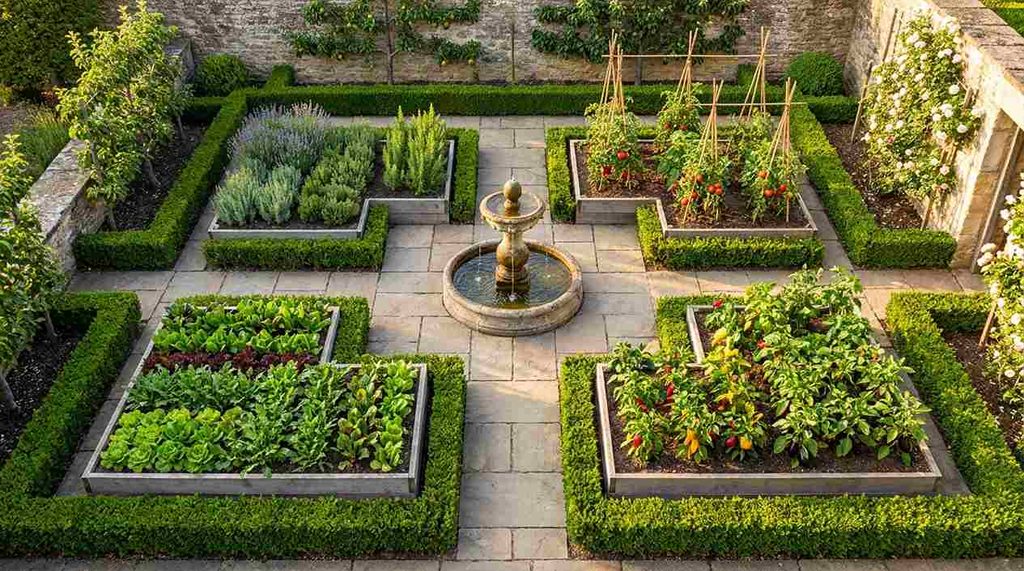
This is the traditional French potager design — four raised beds arranged in a square with pathways between them. Each bed gets a different category: herbs in one, salad greens in another, tomatoes and peppers in the third, whatever you want in the fourth.
Why it works: You can rotate crops easily. The paths make everything accessible. And it looks intentional, not chaotic.
Best for: People with at least a 10×10 foot space and who like structure.
2. Herb Spiral
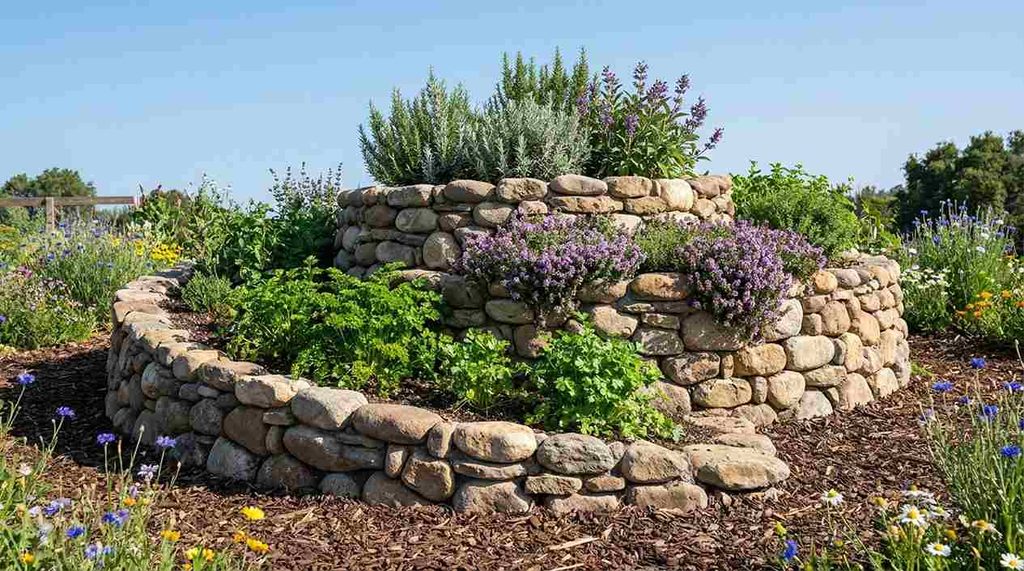
A spiral-shaped raised bed that creates different microclimates as it winds upward. Mediterranean herbs (rosemary, thyme, oregano) go at the top where it’s drier. Moisture-loving herbs (mint, parsley, cilantro) go at the bottom.
I’ve seen these built with stacked stone, bricks, even old concrete blocks. They’re conversation pieces.
Best for: Small spaces where you want maximum herb variety.
3. Countertop and Windowsill Gardens

Don’t have a yard? Join the club. A south-facing windowsill can grow basil, chives, and small-leaf lettuce year-round. Add a small LED grow light (about $25 on Amazon), and you can do this even without perfect sun.
I keep a countertop herb garden in winter — three 6-inch pots with basil, parsley, and thyme. Doesn’t produce huge amounts, but enough to season most dinners.
Best for: Apartment dwellers or winter growing.
4. Raised Bed Rows
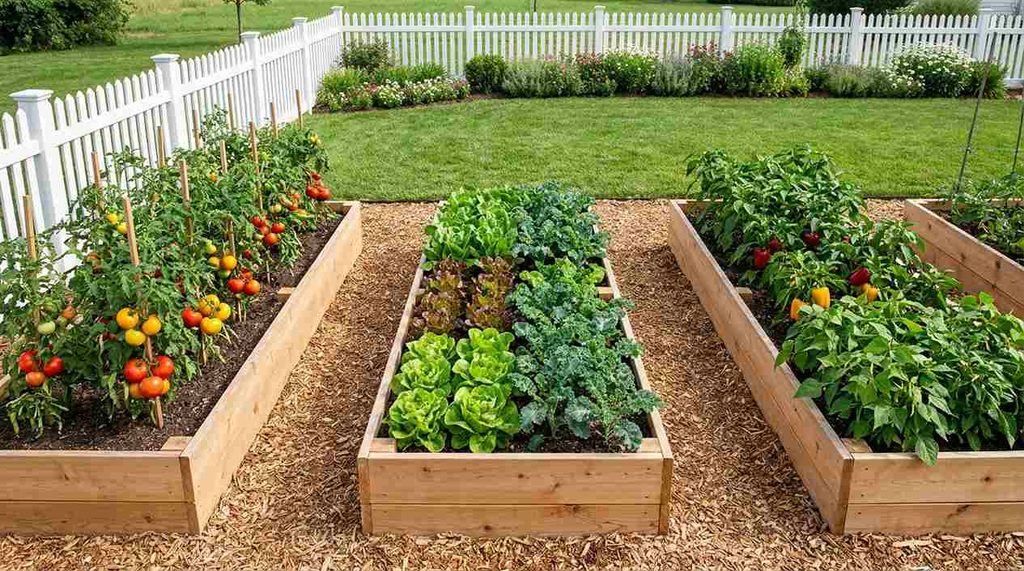
The American backyard standard. Three or four raised beds, 4 feet wide and however long you want, lined up with walking paths between them.
Not fancy. But effective. You can cover them with row covers in early spring, add trellises for beans or cucumbers, and they’re easy to maintain without bending over constantly.
Best for: Beginners who want something simple and expandable.
5. Container Garden on a Patio

No yard? No problem. A 10×10 patio can hold eight to ten large containers (at least 12 inches deep), which is enough for a solid kitchen garden.
I’ve grown tomatoes, peppers, lettuce, kale, and about six different herbs all in pots. You’ll water more often than with in-ground beds, but it works.
Pro tip: Use quality potting mix, not garden soil. And make sure every pot has drainage holes.
Best for: Renters or anyone without ground space.
6. Vertical Wall Garden

Mounted planters, pocket planters, or even repurposed pallets turned into vertical gardens. Great for herbs, strawberries, and small lettuces.
These don’t replace a full garden, but they’re perfect for adding extra growing space to a small patio or balcony.
Best for: Maximizing tight spaces.
7. Edible Flower and Herb Border

Plant your kitchen garden right into your existing flower beds. Tuck basil between the marigolds. Add chives as a border plant. Grow nasturtiums (the leaves and flowers are both edible) as a colorful ground cover.
This is how cottage gardens worked for centuries — food and flowers mixed together so the whole thing looked beautiful and fed you at the same time.
Best for: People who already have ornamental gardens and want to sneak in some food.
8. Rooftop Kitchen Garden for Restaurants

If you own a restaurant or café with rooftop access, this is next-level. Imagine telling customers their micro greens were harvested from the roof an hour ago.
You’ll need weight considerations checked (wet soil is heavy), good drainage, and wind protection. But restaurants in Brooklyn, San Francisco, and Chicago are already doing this successfully.
Best for: Restaurants serious about farm-to-table branding.
Learn more: Common Culinary Herbs: Uses, Tips & What to Grow at Home
9. Greenhouse or Hoop House Add-On
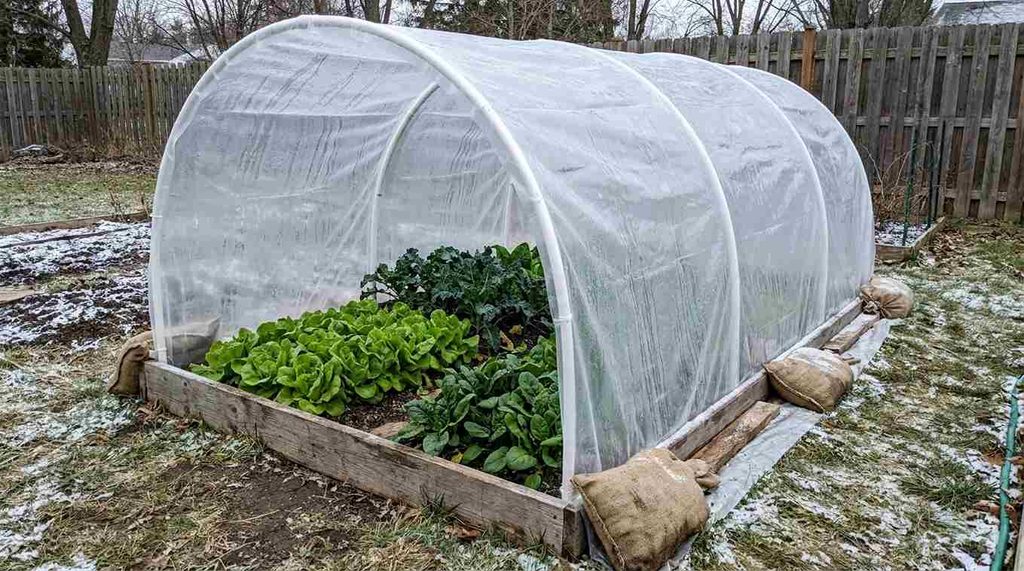
Extend your growing season by months with a small greenhouse or a simple hoop house (PVC pipe and greenhouse plastic).
I built a 6×8 hoop house for under $150. It lets me grow lettuce, spinach, and kale through November in Zone 6. Some people in colder climates keep theirs going all winter with minimal heat.
Best for: Year-round growing in cold climates.
10. Outdoor Kitchen Garden Integration

If you’re building or upgrading an outdoor kitchen, design the garden right next to it. Raised beds within arm’s reach of the grill. Herbs planted around the prep counter.
It’s not just convenient — it’s also impressive when you’re hosting. “Let me just grab some rosemary real quick” hits differently when you’re literally snipping it fresh.
Best for: Homeowners investing in outdoor living spaces.
11. Keyhole Garden
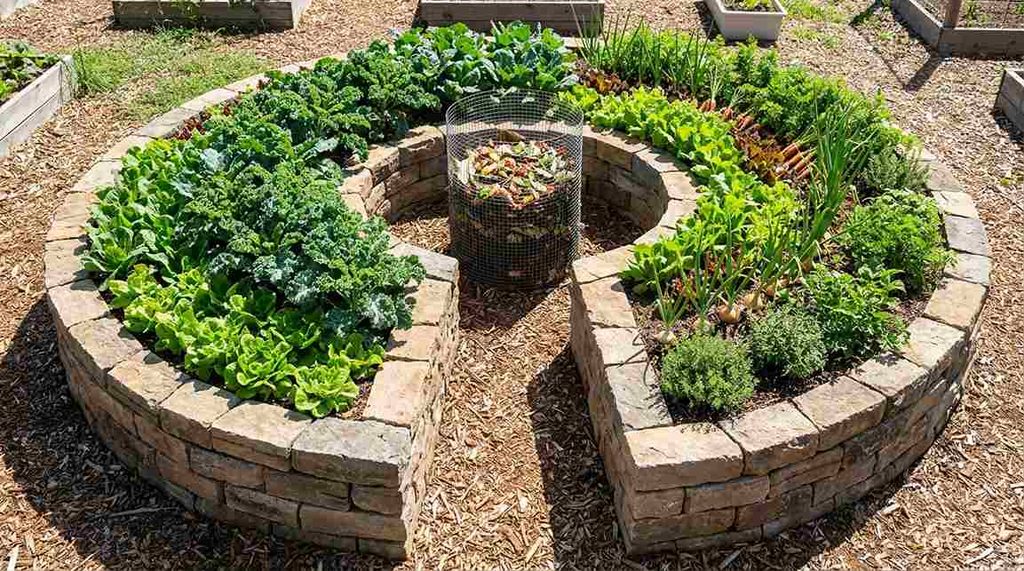
A circular raised bed with a composting basket in the center. You toss kitchen scraps into the middle, and they feed the plants around the edges as they break down.
Originally designed for arid climates in Africa, but they work anywhere. Efficient use of space and built-in fertilization.
Best for: Eco-conscious gardeners in smaller yards.
12. Companion Planting Mixed Bed
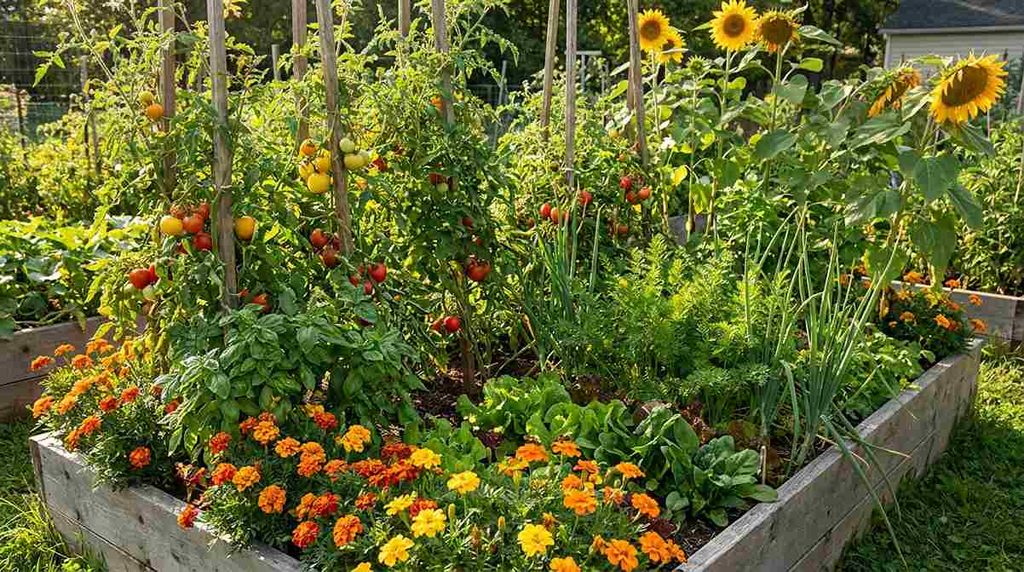
Instead of organizing by plant type, you mix everything based on companion planting principles. Tomatoes with basil. Carrots with onions. Lettuce in the shade of taller plants.
It’s more complex to plan, but when done right, plants help each other grow better and pests get confused.
Best for: Experienced gardeners who like experimenting.
Best Plants for a Kitchen Garden
Here’s what I actually grow, year after year, because they’re worth the space:
Herbs (grow these first):
- Basil — doesn’t survive frost, but easy and productive in warm months
- Parsley — biennial, survives light frost, constant harvests
- Cilantro — grows fast, bolts in heat, plant every 3 weeks for continuous supply
- Thyme — perennial, low maintenance, survives winter
- Rosemary — perennial in warm climates, needs to come inside in Zone 6 and colder
- Chives — perennial, one of the first things up in spring
- Oregano — perennial, spreads like crazy (in a good way)
- Mint — perennial, grows aggressively, keep it in a pot or it’ll take over
Vegetables I always plant:
- Cherry tomatoes — higher yield and fewer problems than big slicing tomatoes
- Lettuce and salad greens — cut-and-come-again varieties give you weeks of harvests
- Peppers — bell or hot, both produce a lot in a small space
- Kale — one plant feeds you for months, survives frost
- Green beans — bush varieties don’t need staking and produce heavily
- Radishes — ready in 3-4 weeks, great for beginners
Nice-to-haves if you have room:
- Zucchini (but seriously, one plant is enough)
- Cucumbers
- Swiss chard
- Snap peas
- Strawberries
Setting Up Your First Kitchen Garden
Location
You need at least 6 hours of direct sun for most vegetables. 8+ is better. Leafy greens and herbs can tolerate a bit less.
Close to your kitchen is ideal. Sounds obvious, but if your garden is a 3-minute walk away, you won’t use it as much.
Near a water source matters too. Hauling hoses across the yard gets old fast.
Soil Prep
If you’re doing raised beds or containers, buy quality soil. Cheap topsoil compacts and drains poorly.
For in-ground beds, work in compost. A lot of it. Like, more than you think you need.
Start Small
Don’t try to plant 15 different things your first year. Pick 5-6 that you actually eat a lot, and get good at growing those.
I started with basil, cherry tomatoes, lettuce, and parsley. That’s it. All succeeded. Built confidence. Added more the next year.
Watering
Most kitchen gardens need about an inch of water per week, from rain or hose.
Container gardens need more — sometimes daily in hot weather.
Drip irrigation or soaker hoses save time if you’re serious about this.
Maintenance
Weeding: Do it weekly when weeds are small. Wait until they’re big and it’s three times the work.
Harvesting: Pick things regularly. Basil gets bushier when you trim it. Lettuce keeps producing if you cut the outer leaves. Tomatoes ripen faster when you pick the ripe ones.
Fertilizing: I use compost and an occasional dose of fish emulsion. Some people swear by specific fertilizers. Start simple.
Is It Worth It?
Financially? If you’re growing herbs and salad greens, absolutely. Tomatoes and peppers can save money too if you eat a lot of them.
But honestly, money isn’t the main reason most people keep doing this.
It’s stepping outside before dinner and coming back with everything you need for a salad. It’s knowing exactly what’s on your food (because you put it there). It’s the weird pride you feel when a recipe turns out great and you grew half the ingredients yourself.