
Aesthetic Lily Flower Wallpapers and Designs That Transform Into a Garden

I started with one accent wall in my bedroom. Then the home office. Now I’m eyeing the hallway and honestly considering my kitchen backsplash area too — which might be taking things too far, but here we are.
The thing is, lilies have this weird ability to make a space feel both calming and impressive at the same time. You walk into a room with a good lily design on the wall, and it just… breathes differently. Sounds dramatic, but it’s true.
So if you’re thinking about bringing some lily magic into your home through wallpapers or wall art, I’m going to walk you through everything I learned — the designs that actually work, the mistakes I made so you don’t have to, and exactly where these flowers fit best in a real home.
Learn more:Checkout Counter Designs That Will Transform Your Retail Space
Why Lilies Work So Well as Wall Art (Better Than You’d Think)
Most floral wallpapers can go wrong fast. Too busy, too grandma’s-house, too “I bought this because it was on sale and now I regret everything.”
Lilies dodge most of these problems because of their structure.
The stems are clean and vertical — they naturally draw your eye upward, which makes rooms feel taller. The blooms are big enough to make an impact but spaced out enough that they don’t overwhelm. And unlike roses or peonies that can look cluttered in repeating patterns, lilies have this architectural quality that holds up even when repeated across an entire wall.
I tested this theory in my 10×12 bedroom. Put up a large-scale white lily pattern against a soft gray background. The room immediately felt bigger and calmer. My friend tried something similar with a rose pattern in the same size room — it looked like a fabric store exploded.
Not her fault. Just how the flowers work spatially.
1. Classic White Stargazer Lilies on Charcoal Background

This was my first lily wallpaper, and I still think it’s the most foolproof option.
White stargazer lilies — the ones with the dramatic backward-curved petals — printed large-scale on a dark charcoal or deep navy background. Works in bedrooms, dining rooms, powder rooms. Anywhere you want drama without color commitment.
I hung this in my bedroom behind the headboard. Creates this hotel-lobby effect that makes the bed feel like the main event. Visitors always comment on it, which doesn’t happen with most wallpaper choices.
Tip: Go larger than you think. Blooms should be at least 8-10 inches across in the print. The smaller one looks busy.
2. Watercolor Blush Pink Lilies with Green Stems

Soft, painterly, zero harshness.
This style uses watercolor-effect lilies in blush pink tones with visible green stems and leaves running vertically. The background stays white or cream. The whole thing feels like someone painted your wall by hand.
Perfect for nurseries, reading nooks, or any space where you want gentle and feminine without going full cottage-core.
My sister used this in her baby’s room. Eighteen months later, still getting compliments. The watercolor effect hides wall imperfections better than solid prints too — learned that the hard way with my office wall that has three patched nail holes.
3. Minimalist Line-Drawing Lily Outlines

For people who want the lily vibe without committing to full floral.
These are simple black line drawings of lily blooms and stems on white or off-white backgrounds. Very Scandinavian. Very “I have my life together even though I definitely don’t.”
Works incredibly well in modern spaces, small apartments, anywhere traditional floral would feel too heavy. I used a version of this in my home office on one accent wall. Gives the space personality without screaming for attention during video calls.
4. Vintage Botanical Illustration Style

If you’ve ever seen those old botanical textbooks with the detailed plant drawings and Latin names underneath — that’s this.
Realistic lily illustrations in their full structure: bulb, stem, leaves, bloom, sometimes even the stamen detail. Usually printed on aged-paper-looking backgrounds in sepia tones or muted greens.
This works shockingly well in kitchens, mudrooms, and home libraries. Adds this collected, layered look that makes a space feel like it has history even if you moved in three months ago.
I haven’t tried this one personally yet, but my neighbor did her kitchen breakfast nook with a vintage tiger lily botanical print. Looks like it’s been there for decades. (It’s been there for eight months.)
5. Monochromatic Black Lilies on White

Bold. Graphic. Not for everyone, but incredible when it works.
Black lilies printed large and dramatic on pure white backgrounds. High contrast, high impact. Makes a statement without using any color at all.
Best in small doses — one accent wall in a living room, behind a bar area, in a modern bathroom. I tried this in my powder room on the wall behind the toilet. Every single person who uses that bathroom mentions it. Literally every one.
Warning: Don’t use this in small bedrooms. Tested it with peel-and-stick samples first. It felt like the walls were closing in. The powder room works because you’re only in there for a few minutes.
6. Tropical Calla Lily Leaves and Blooms

Calla lilies have a completely different energy than stargazers or tiger lilies.
They’re sculptural, modern, almost architectural. Big paddle-shaped leaves in deep green with the smooth, cone-shaped white or cream blooms.
This style works beautifully in contemporary spaces, especially paired with natural wood furniture and lots of natural light. I’ve seen this done incredibly well in sunrooms and breakfast nooks.
My friend Anna put a calla lily and leaf pattern in her entryway. Creates this immediate “you’ve arrived somewhere special” feeling when you walk in. She went with a design that had both the blooms and the big leaves — the leaves do a lot of the heavy lifting visually.
7. Sunset Orange and Coral Tiger Lilies

If you want warmth and energy, this is your answer.
Tiger lilies in those gorgeous orange, coral, and deep peachy tones with their characteristic dark spots. Usually paired with green leaves and stems on a neutral background.
Works great in dining rooms, kitchens, creative studio spaces — anywhere you want conversation and energy. Maybe skip the bedroom unless you’re a morning person naturally.
I used this in my dining area on one wall. Makes dinner feel like an event. The orange tones pick up candlelight really well, which I didn’t expect but absolutely love.
Learn more:Salon Bathroom Ideas: Easy Ways to Impress Every Single Client
8. Dark Moody Burgundy and Deep Purple Lilies

For people who want floral but refuse to go light and airy.
Deep burgundy, wine, plum, and dark purple lilies on charcoal, black, or deep forest green backgrounds. Romantic but in a Gothic romance novel way, not a Valentine’s Day card way.
Incredible in bedrooms, home libraries, wine cellars if you’re fancy enough to have one. Creates this cocooning effect that makes a space feel intimate and special.
Haven’t tried this myself yet — my house gets too much bright sun for dark walls to work — but I’m watching for the right opportunity. Maybe when I finally get around to finishing the basement.
9. Japanese Ink-Style Lilies

Inspired by traditional Japanese ink paintings.
Black ink lily blooms and stems with that characteristic brushstroke quality — some areas solid black, others fading and gestural. Usually on white or cream backgrounds, sometimes with a hint of subtle texture.
Works in meditation spaces, minimalist bedrooms, modern bathrooms. Anywhere you want calm and focus.
My yoga-instructor friend put this in her home practice room. Fits perfectly with the whole vibe she’s going for. She found a version that includes some gold leaf details mixed in with the black ink — subtle but makes a difference.
10. Bright Yellow Lilies on White (Energizing Spaces)

Yellow lilies are underrated.
Bright, sunshine yellow blooms on clean white backgrounds. Cheerful without being childish. Fresh without being too spring-garden.
Perfect for kitchens, breakfast nooks, home offices where you need energy, mudrooms. Basically anywhere you need a mood boost.
I tested this in my kitchen on a small wall section. It worked great. Made my morning coffee routine feel more intentional somehow. I ended up keeping it even though I originally planned it as temporary.
One warning: Yellow can look dingy if your room doesn’t get good natural or warm artificial light. Test samples in your actual space first.
11. Mixed Lily Garden Scene (Maximal Style)
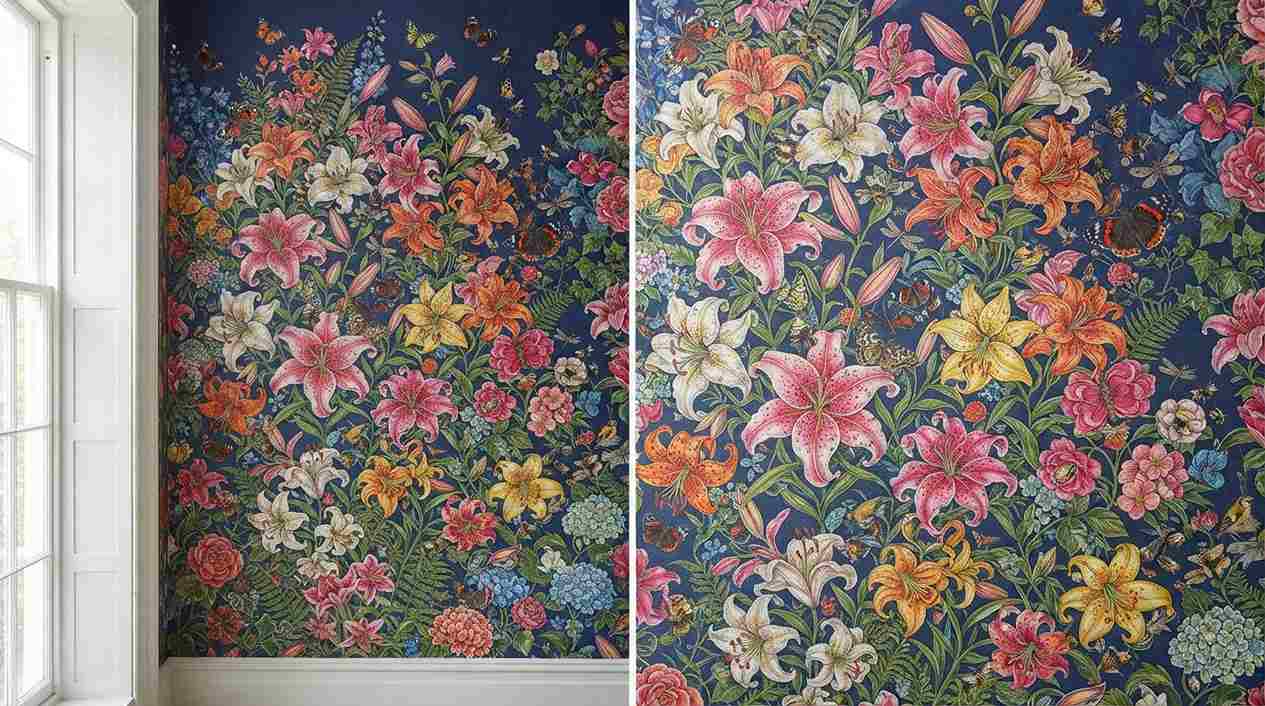
For people who want to commit fully.
This is the “entire garden on your wall” approach. Multiple lily varieties, multiple colors, stems and leaves layering over each other, sometimes butterflies or bees included. Rich, layered, maximal.
Works in eclectic homes, maximalist spaces, large dining rooms or living rooms where you want the walls to be the main feature. Not for minimalists or anyone who gets visually overwhelmed easily.
My aunt did her entire dining room in a mixed lily garden scene — pink, white, orange, and yellow lilies all together. Sounds like it would be too much. Somehow it isn’t. Makes family dinners feel like events.
12. Oversized Single Lily Bloom (Statement Wall)

One giant lily bloomed. That’s it.
Usually 4-6 feet across, printed as a mural or oversized wallpaper panel. Pick your color — white, pink, coral, whatever fits your space.
This works as a headboard wall treatment, behind a sofa, in an entryway. Anywhere you want one big statement instead of a pattern.
I almost tried this behind my bed before going with the charcoal stargazer pattern. Still thinking about it for the living room. The impact is immediate and dramatic, but you have to really commit to it being the main focus of the room.
Where Each Design Works Best (Room by Room)
Bedrooms: Classic white stargazers on dark backgrounds, watercolor blush pink, dark moody burgundy. You want to be calming or romantic here.
Living Rooms: Oversized single blooms, mixed garden scenes (if your style is maximal), minimalist line drawings. Depends entirely on your overall design direction.
Dining Rooms: Sunset orange tiger lilies, mixed garden scenes, vintage botanical. You want energy and conversation here.
Bathrooms: Monochromatic black on white (powder rooms), calla lily designs (main baths), Japanese ink style (spa bathrooms).
Home Offices: Minimalist line drawings, yellow lilies on white, vintage botanical. You want focus and light energy.
Kitchens: Yellow lilies, watercolor styles, vintage botanical in breakfast nooks. Fresh and energizing works best.
Installation Tips I Learned the Hard Way
Start with one accent wall. I know you want to do the whole room. Don’t. One wall is almost always enough, and if you hate it, you’re only repainting one wall.
Order samples. Every single wallpaper company offers samples now. Order them. Look at them in your actual room, in your actual lighting, at different times of day. What looks perfect at 2 PM might look completely different at 8 AM.
Peel-and-stick is your friend for renters and commitment-phobes. The quality has gotten shockingly good in the last few years. I’ve used three different peel-and-stick lily wallpapers. All still look great, none have peeled or bubbled.
If you’re doing traditional paste wallpaper, hire a professional unless you’ve done it before. I tried to DIY my first installation. Disaster. Bubbles everywhere, seams didn’t match, wasted an entire roll. Paid a pro the second time. It took him 90 minutes, and it looked perfect.
The One Design Mistake Everyone Makes (Including Me)
Going too small with the pattern scale.
Small lily prints feel safe when you’re looking at samples. Then you put them on the wall and they just look… busy. Cluttered. Like floral fabric instead of intentional design.
Bigger is almost always better with lily patterns. Blooms should be at least 6-8 inches across in the print, and honestly 10-12 inches works even better in most rooms.
I made this mistake in my first attempt. Bought a beautiful lily pattern where the blooms were maybe 4 inches across. It looked amazing in the sample book. On the wall? It looked like I’d hung the curtains vertically. Returned it and went up two sizes in pattern scale. Night and day difference.
Final Thoughts
Lily wallpapers and designs work because they bring that garden feeling indoors without requiring you to keep anything alive — which, let’s be honest, is a big selling point for some of us.
They work in almost every room if you match the right style to the space. They scale up or down depending on your commitment level. And they create that “pulled together” look that’s surprisingly hard to achieve with paint alone.
If I were starting over knowing what I know now, I’d start with a watercolor blush pink lily design in a bedroom or a minimalist line-drawing version in a home office. Both are beautiful, both are flexible with different decor styles, and neither is so bold that you’ll be sick of it in six months.